Chief Seattle
 By the mid 1850’s the Pacific Northwest was becoming heavily settled by whites. The area had traditionally been occupied by the Duwamish and Suquamish Indian tribes. They were headed by a chief from both tribes by the name of Chief Seattle. As the early settlers came to the area Seattle welcomed them, and the settlers treated his tribes with kindness.
 Chuckwagon: Southern Fried Apples
To make Southern Fried Apples:
Fry 4 slices of bacon in a Dutch oven. Remove bacon.
Peel and slice 6 to 8 Granny Smith apples.
Put apples in Dutch over with bacon grease, cover and cook down the apples, but not to mush.
Serve topped with butter or cream and crumbled bacon. They’re great for breakfast or desert.

Old West Book Review: A Thousand Texas Longhorns
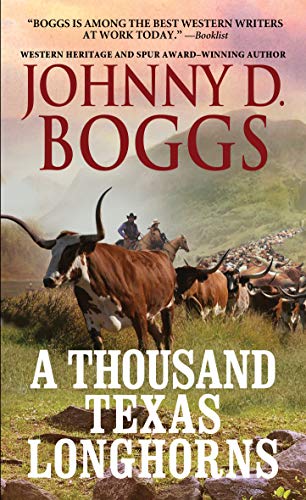 A Thousand Texas Longhorns, Johnny D. Boggs, Pinnacle Books Kensington Publishing, paperback, $8.99, 500 Pgs, Western Fiction.
The time period for this novel is shortly after the American Civil War. The protagonist is a surly individual named Nelson Story living in a rough mining town in Montana Territory. Nelson Story wants to make money and become a successful rancher, and gets the brainstorm to acquire a herd of cattle lie must buy in Texas, and drive the herd back to Montana where the population is hungry for beef. So the adventure begins. He heads for Texas and prepares to drive a herd of longhorns all the way across the country filled with sheriff’s posses and angry homesteaders afraid the Texas cattle will bring fever to their own stock. Meanwhile Nelson Story has to maintain discipline among the drovers and freight wagon drivers, plus having to face electrical storms, driving rain, roaring rivers, drown cowboys, hordes of insects, cantankerous military commanders and Indians on the warpath.
Some of the cowboys are ex-Civil War veterans, both North and South. Two young women disguised as men sign on to drive freight wagons filled with goods for the trip. One is wanted for murder and both fool Nelson Story until one gets her clothing eaten off during a locust attack. Tired men commit mutiny, one cowboy dies in river, another is the victim of a rattlesnake, plus several others are brutally killed by Sioux stalking the herd hoping to rustle horses and beeves.
Nelson Story left a wife back in Montana when he skedaddled for Texas, and the book switches occasionally to what is going on with her as she anxiously awaits her husband’s return. She is pregnant when he departs, and must handle delivering and caring for a baby while keeping her meager household together. Her doctor fails in love with her although she remains faithful to Nelson Story, the author takes his readers from the gritty trouble-filled cattle drive to the desperately poor circumstances of a Montana mining town struggling to survive hard times, including a diphtheria epidemic.
Nelson Story eventually makes it to Montana with most of the herd, and there is a happy reunion with his wife who is nearly as tough as he is. Unfortunately readers never really get to know Nelson Story. He’s tough and determined, but rarely shows empathy or compassion that we can relate to. We never find ourselves cheering for his success. His quick temper and tough as nails attitude works to bring in the herd, but we never feel like we’d want to ride with him. Don’t look here for a John: Wayne or Matt Dillon hero. This story is mostly about grit and determination with little room for sentiment.
Author Johnny D. Boggs, a Spur Award winner, knows his business. Before writing this book, he followed the trail in an automobile to get the feel of the land, weather, and what it must have been like to cover all those hard miles on horseback. It is well told, with lots of realistic Old West action, and sometimes a tough book to read, but we find this story a good Western adventure for sure.
Editor’s Note: The reviewer Phyllis Morreale-de la Garza is the author of numerous books about the Old West, including Lost Roundup, published by Silk Label Books, P.O. Box 399, Unionville, New York, 10988, Ph. (845) 726-3434. www.silklabelbooks.com
Some New Arithmetic
April 15, 1882, Mountain Democrat, Placerville, California – Some New Arithmetic: 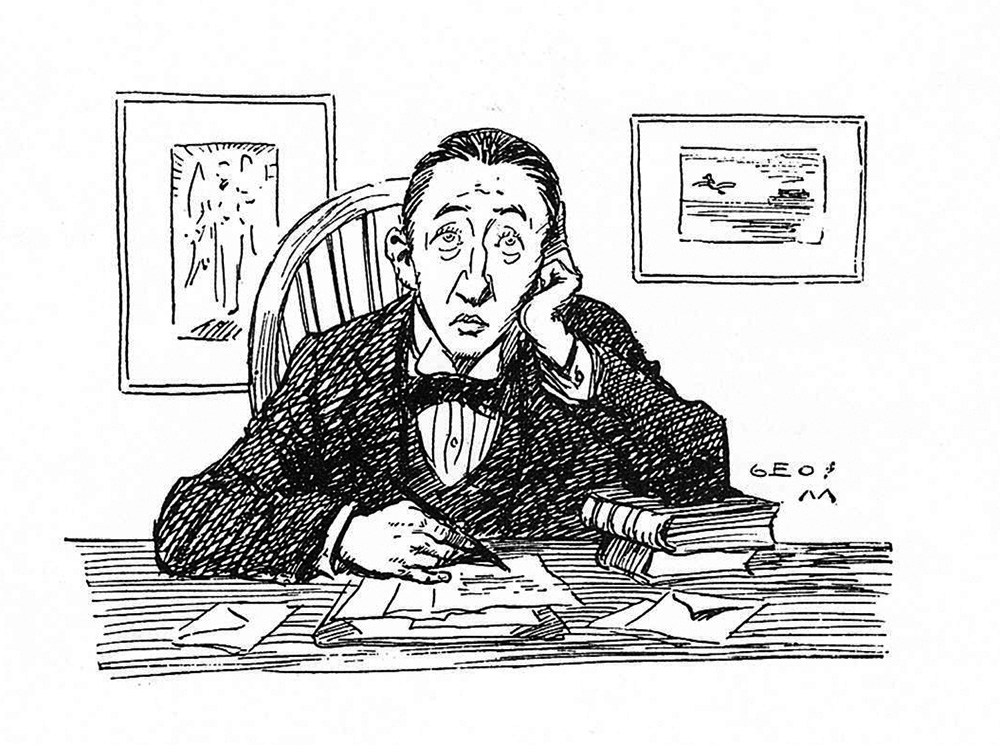 In a schoolroom are twelve benches and nine boys on a bench. Find who stole the teacher’s gad.
A laundress takes in twelve shirts and has four stolen from her line. How many are left and what are the losers going to do about it.
A farmer sold eleven bushels of potatoes, with the product purchased two gallons of whisky at 90 cents per gallon. How much per bushel did he get for his tubers, and where did he keep the jug.
What velocity must a locomotive have to pick up a dead man walking on the track and fling him so high that six cars pass before he comes down?
A boy earned 20 cents a day for 18 days and bought his mother a muskrat muff costing $2.10. How much did he have left to go to the circus with?
A mother standing at the gate calls to her boy who is just 68 feet distant. It takes two minutes and twenty-two seconds for the sound to reach him. Find from this the velocity with which a woman’s voice travels.
A woman earned 42 cents a day by washing, and supported a husband who consumed $1 worth of provisions per week. How much was she in debt at the end of each month up to the time he was sent to the workhouse.
A father agreed to give his son four and a half acres of land for every cord of wood he chopped. The son chopped tree-sevenths of a cord and broke the ax and went off hunting rabbits. How much land was he entitled to?
A certain young man walks five-sevenths of a mile for seven nights in the week to see his girl, and after putting in 112 nights he gets the bounce. How many miles did he foot it altogether, and how many weeks did it take him to understand that he wasn’t wanted?
Two men agreed to build a wall together. One does four-fifths of the bossing and the other three-tenths of the work, and they finally conclude to pay a man $18 to finish the job. What is the length and height of the wall?
The Jersey Lily Mine
 March 31, 1897, Weekly Journal-Miner, Prescott, Arizona – In company with Gil S. Ferguson, a former owner of the Jersey Lily mine, the editor of the Journal Miner visited the above property this week, and was very courteously received and hospitably entertained by General Manager W. C. Bashford and Superintendent J. E. Clark. The underground workings were visited and examined—not in the capacity of an expert, but simply out of curiosity.
The shaft is 370 feet deep. It is sunk on the ledge, which pitches at an angle of 44 degrees. The shaft is one of the best timbered ones in the county, everything being as neat and workman like as it is possible to make it. In addition to an old level, run at a depth of thirty feet, which is called the grass root level, but which is not now used, there are three levels run, one at each hundred feet of depth. At the 200 foot level, a south drift is in 250 feet and a north drift 180 feet. The latter is in good high grade ore all the way, while the former is also in ore, part of which is high grade and part of ore of lower grade, but good milling ore.
At the 300 foot level, the north drift is in 110 feet, with a solid body of ore all the way, averaging from three to four feet, and with a fine body of high grade ore on the face of the drift. The south drift is in 100 feet, but owing to the pitch of the ore chute on this side, the ore encountered in this is of lower grade, but improving now with every foot of work done. A small amount of stoping has been done, and the stopes also show up good ore bodies.
In the “grass root” level, a large body of rich honey comb ore, which made the Jersey Lily famous, even in the days of its infancy, remains exposed to view. It is very high grade, and a moderate fortune can be obtained from it at any time that it may be desired to take it out. Mr. Bashford has about twenty men at work at the present time, and on April 1st he will increase this force and will sink the shaft to a depth of over 500 feet, and will open up the 400 and 500 foot levels respectively.
The mine is equipped with one of the finest friction hoists in the territory. It is of sufficient capacity to sink to a depth of 1,000 feet or more.
The Lily Company also owns the Gold Treasure claim, a very promising one, which adjoins the Jersey Lily on the north, but on which very little development work has been done.
The company expects, during the summer, to erect a mill for the reduction of the ore. This will be done just as soon as the mine is opened up to a depth of 500 feet.
Northwest of the Jersey Lily, W. C. Bashford, J. E. Clark and Fred Smith own a claim, called Point Look Out, from which they have taken ore for shipment which went $250 per ton.
Old West Book Review: Thunder in the West; The Life and Legends of Billy the Kid
 Thunder in the West; The Life and Legends of Billy the Kid, Richard W. Etulain, University of Oklahoma Press, $29.95, Non-fiction, Cloth. Illustrations, Photos, Essay on Sources, Bibliography, Index.
At various times he was called Henry McCarty, Kid Antrim, and Billy Bonney. However, most of us know him as Billy the Kid. This biography of the Western outlaw is carefully researched and well written in a style that keeps readers turning pages even though we have been exposed to this character via books and movies as far back as we can remember.
The author, Richard W. Etutain is the former Director of the University of New Mexico. He has had a long and important career as a writer and editor of more than 50 books pertaining to the American West. This book takes the reader on a journey beginning with Billy’s original birth place in New York in 1859. His mother moved west with young Billy and his one brother when the boys were children; it is not known who Billy’s father was. The family’s trait continued to New Mexico Territory, and the information includes the death of Billy’s kind, hardworking mother of consumption. Billy meandered after that from one situation to another.
Without real parental supervision or help, he drifted in and out of trouble, killed a man in Arizona before his 20th birthday, fled back to New Mexico ahead of a hot Arizona posse, and was arrested several times always managing to escape. Later, arrested for murders in New Mexico, he was jailed and awaited execution when he escaped again this time shooting and killing two sheriff’s deputies in Lincoln, New Mexico.
New Mexico politics comes into the life of Billy the Kid as he got mixed up in shoot-outs and became a gun-for-hire as various powerful political factions and wealthy land owners vied for power. In time, Billy ran with a gang of outlaws stealing horses and cattle.
Meanwhile, there were many people who considered Billy a good friend and many girls were attracted to him. He had friends in the Hispanic community, and spoke Spanish fluently. Eventually Billy was shot and killed by Sheriff Pat Garret inside a house in Fort Sumner, New Mexico in 1881.
Everything pertaining to Billy the Kid has some controversy involved. His birth, his little known family history, his mothers brief life, her marriage to a man who seemed to take no interest in his stepson, Billy’s involvement with politicians as well as land owners and desperadoes is all mired in controversy. As his fame grew, many people remembered him and wrote or talked about their relationships with him even many years after his death, thus adding to the intrigue.
The second part of the book delves into all the best-known books and movies featuring Billy the Kid. Etulain separates fact from fiction, complimenting those authors who have done serious and lengthy research. The movies featuring Billy the Kid are mostly contrived plots filled with fistfight action and gun battles. In the end we are still wondering why all the interest in a young, wayward character who even by modern standards would be known as little more than a dangerous juvenile delinquent.
This book takes the reader on a detailed, from beginning to end, Wild West journey featuring everything you ever wanted to know about Billy the Kid. It belongs in your Old West library.
Editor’s Note: The reviewer, Phyllis Morreale-de La Garza is the author of many books about the Old West, including Death For Dinner, the Benders of (Old) Kansas, Silk Label Books, P.O. Box 399, Unionville, New York 10988. www.silklabelbooks.com
Heard Around The Bunkhouse #8 – Western Frontier Terms and Sayings
 In our feature Heard Around the Bunkhouse we bring you Western frontier terms and sayings that they used back in the Old West. Hope you enjoy them, and send us your favorite terms from those past times.
WEARING THE BUSTLE WRONG: A pregnant woman.
BEST BID AND TUCKER: Wearing your best clothes.
GET THE MITTEN: Being rejected by a lover.
BEND AN ELBOW – Have a drink.
BANG UP JOB – First Rate.
PONY UP – Hurry Up.
ROOSTERED – Drunk.
*Courtesy of Chronicle of the Old West newspaper, for more click HERE.
Another Killing For Dodge

Ben Daniels.
April 20, 1886, Globe Live Stock Journal, Dodge, Kansas – On last Thursday evening at about six o’clock, a shooing took place on the south side of the railroad on the sidewalk in front of Utterback’s hardware store, two doors west of Ed Julian’s restaurant, the latter gentleman being the victim in the affray; and his antagonist, ex-assistant city marshal Ben Daniels.
Four shots were fired, all by Daniels, all of which took effect on Julian. While Julian was found to be armed, he however, did not get to fire a shot; there is much diversity of opinion in the matter, some claiming it to have been a deliberate murder, while others assert it to have been justifiable. The evidence taken at the preliminary trial does not fully sustain either. It was a well known fact that these parties had been bitter enemies to each other for a long time, and both had made threats against each other, which fact was not only elicited at the preliminary, but was know to many of our people long before the shooting took place. Ben Daniels, at the preliminary before Justice Harvey McGarry, was placed under a $10,000 bond for his appearance at the next term of court.
The remains of Ed. Julian were taken in charge by the member; of Lewis Post, G. A. R., of this place, who gave them a very respectable burial with appropriate ceremonies. This was a very unfortunate occurrence for this place, and that too at a time when everything appeared to be moving along so harmoniously and quietly. But it appears that no one could have prevented this tragedy, not even our officers, no matter how vigilant they might have been; the bitterness which existed between them was almost certain to bring them together sooner or later, and as many predicted, that one or the other or perhaps both would be mortally wounded, if not killed outright.
Artist Frederic Remington
 Although artist Frederic Remington had the look of an eastern lawyer or banker, on the inside he was a cowboy who could shoot and ride with the best.
 Old West Book Review: The Devil’s Triangle
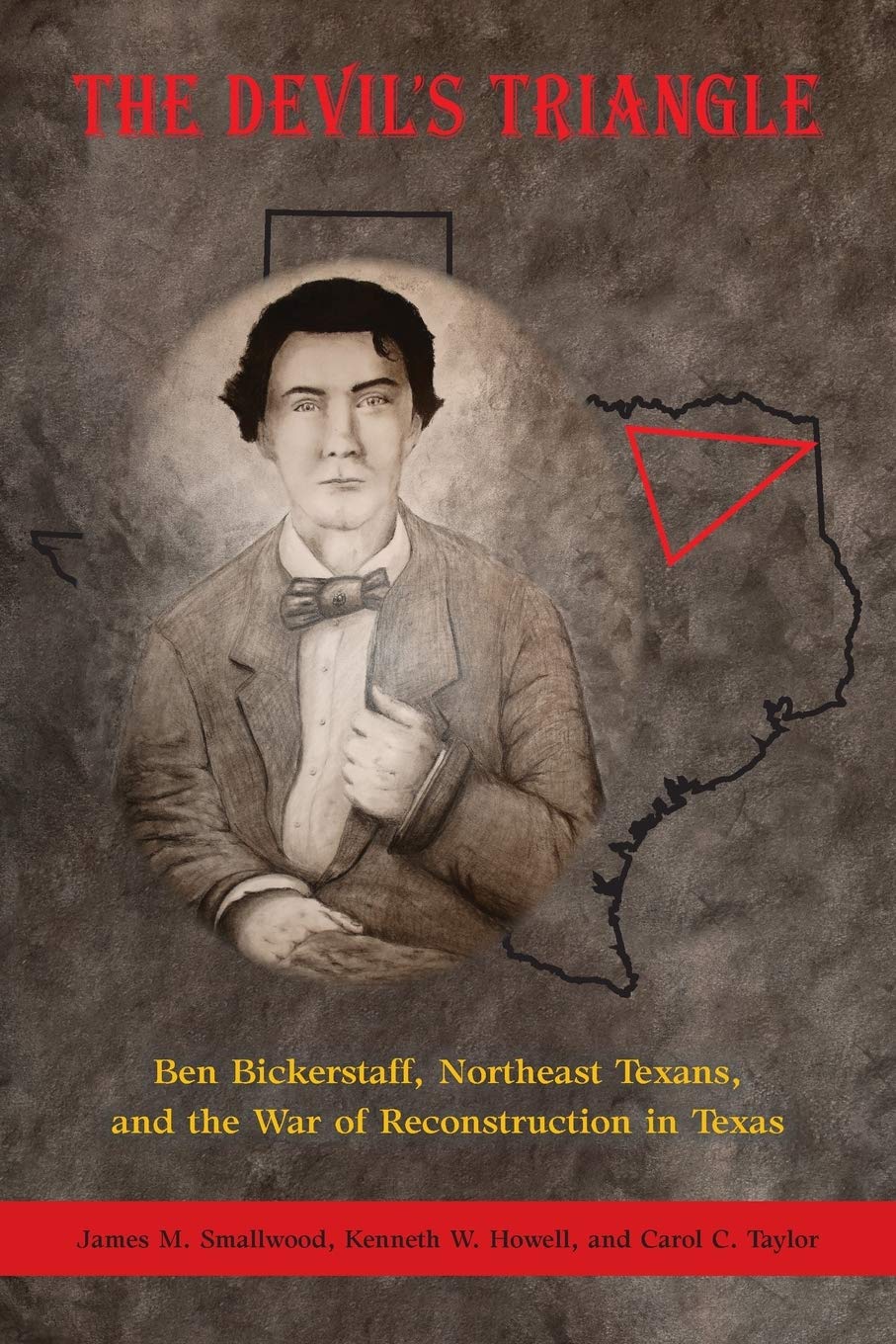 The Devil’s Triangle, James Smallwood, Kenneth Howell, Carol Taylor, University of North Texas Press. Paper, $19.95. Non-fiction, Maps, Notes, Bibliography, Index.
This book is a well-written study of the War of Reconstruction in Texas between 1865 and 1877. Gangs of ex-Confederate soldiers returning home to Texas after the “Lost Cause“ harbored hatred and resentment toward freedmen (ex-slaves) and Northern sympathizers who tried to begin new lives after the Civil War.
For more than ten years, roving bands of robbers and highwaymen, acting under the guise of getting even for past grievances were determined to use the war as an excuse for the murder and mayhem they created. Most were really bandits and renegades using their hatred for a good excuse for their skullduggery.
One young ex-Confederate soldier, born and raised on a successful Texas farm, is featured in this book as one of the ringleaders operating throughout various Northeastern counties in Texas. Ben Bickerstaff came from a disciplined, hard-working family. He took to soldering at a young age, joined the Confederate Army when Texas went with the South and saw military action in a number of battles. He eventually became a prisoner of war and spent time in a Northern prison camp. A series of harsh experiences drove his hatred for the North, and by the time he returned home in Texas at Warts end, he was a bitter, battle-hard soldier determined to get even with everybody.
Bickerstaff was one of the organizers of the Ku Klux Klan, and apart from robbing and looting, he took part in the murders of many freedmen trying to live in their own new world. With peace officers few and far between, Bickerstaff and his followers created nearly constant fear and unrest in the entire Northeastern corner of the state of Texas. Due to his familiarity with the countryside learned from his boyhood, Bickerstaff and his followers were able to hide in heavily wooded areas where lawmen and bounty hunters could never successfully follow.
The book goes into detailed political maneuvers among those trying to create a. safe environment for law-abiding citizens living both in towns as well as on ranches. The emotional turmoil spilling over after years of war continued to cause harsh feelings among the people, and some even privately took sides with Bickerstaff’s hatred for the North. Bickerstaff’s crimes were horrific; folks who sympathized with the North were in peril until Bickerstaff’s own death at the hands of an armed group of townsfolk who had finally had enough of him. Bickerstaff was a married man, and it sounds like his wife was as tough as he was. Upon learning of his death, she angrily retrieved the body for burial in a place of her choice, even though the corpse had been beheaded.
We read about influential people such as Sam Houston trying to establish peace and tranquility in Texas newly returned to the Union. The history of Texas Reconstruction between 1865 and 1877 is fascinating and sometimes shocking. The authors have presented a serious, hard-hitting view of a difficult time in Texas history that has been mostly forgotten today. This book belongs in your Old West library.
Editor’s Note: The reviewer Phyllis Morreale-de la Garza is the author of numerous published books about the Old West, including 9 Days At Dragoon Springs, published by Silk Label Books, P.O. Box 399, Unionville, New York 10988 www.silklabelbooks.com
*Courtesy of Chronicle of the Old West newspaper, for more click HERE.
Chuckwagon: Cowboy Corn Muffin
COWBOY CORN MUFFIN FOR BREAKFAST
Farmer’s Almanac 1885

Pour one quart of boiling milk over one pint of fine cornmeal. While the mixture is still hot, add one tablespoonful of butter and a little salt, stirring the batter thoroughly. Let is stand until cool, then add a small cup of wheat flour and two well-beaten eggs. When mixed sufficiently, but the batter into well-greased shallow tins (or, better yet, into gem pans) and bake in a brisk over for one-half hour, or until richly browned. Serve hot.
*Courtesy of Chronicle of the Old West newspaper, for more click HERE.
Grand Duke Alexis
 In January of 1872, the Russian Grand Duke Alexis went on what was called a “millionaire hunt.”
Cattle Industry Decimated
 By the mid 1880’s the cattle industry was going wild. Speculators were overstocking the grazing ranges of Montana, Wyoming and the Dakotas. And with several mild winters they were also saving money by not putting up feed for wintertime. The summer of 1886 was a dry one. By autumn the range was almost barren of grass… And then winter came early with record-breaking snow falls. January 9, 1887 was the worst day of the worst winter, with an inch of snow falling each hour for 16 hours. The temperature went as low as 63 degrees below zero. It ended up with the cattle industry decimated.
Heard Around The Bunkhouse #7 – Pioneer Terms and Sayings
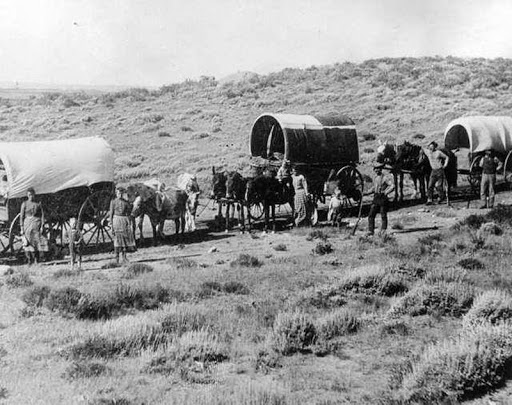
In our feature Heard Around the Bunkhouse we bring you pioneer terms and sayings that they used back in the Old West. Hope you enjoy them, and send us your favorite terms from those past times.
PACK – In the old west nothing was carried. Whether it was transported on a person or animal, the item was packed.
PACKER- The man in charge of pack animals.
PACK IRON – To carry a pistol.
SURFACE COAL – Buffalo or cow dung fuel.
SWITCHES – Thorny thickets in which cattle can hide.
PULL LEATHER – To hold on to the saddle while riding a pitching horse.
*Courtesy of Chronicle of the Old West newspaper, for more click HERE.
Old West Book Review: Wrecked Lives and Lost Souls
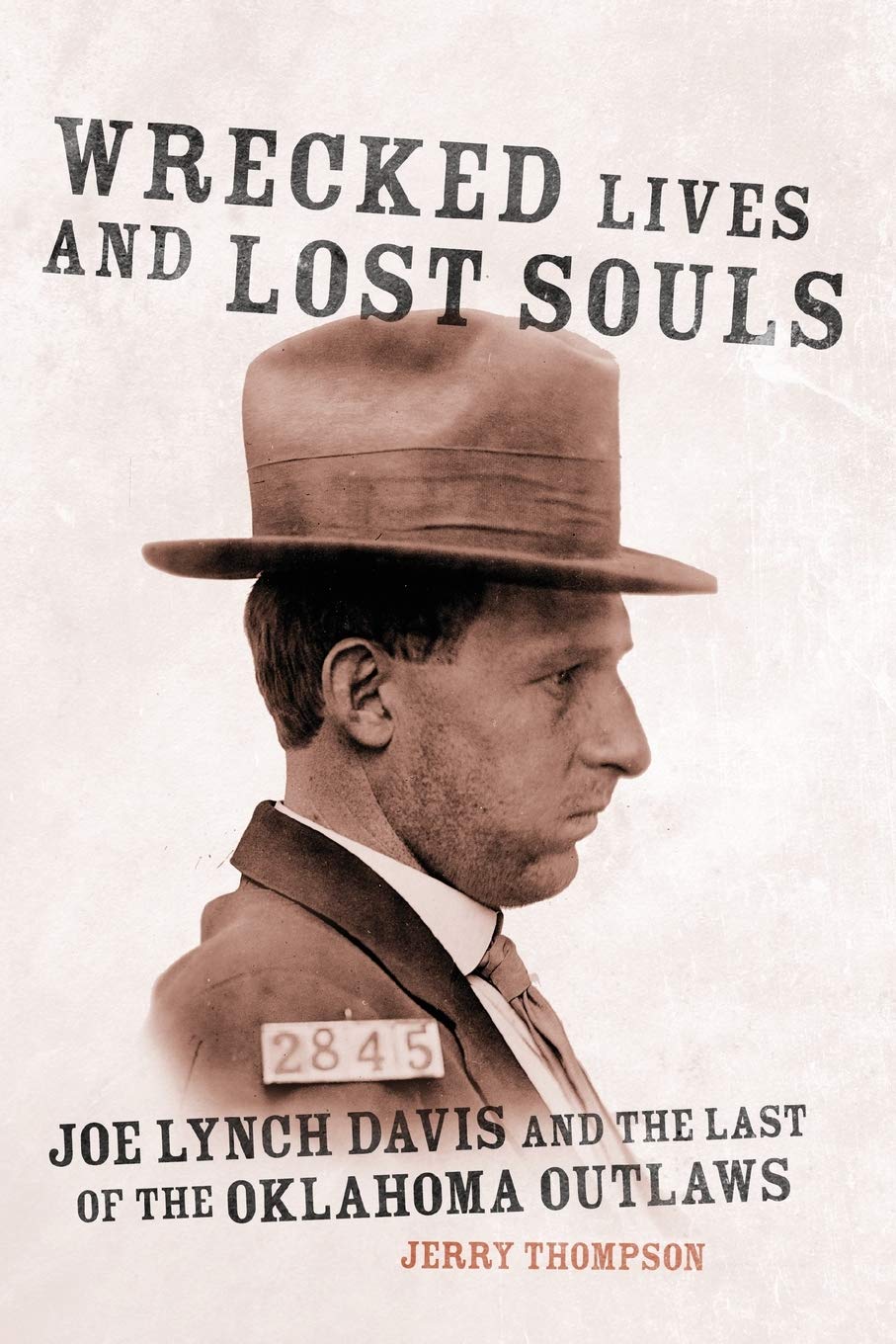 Wrecked Lives and Lost Souls; Joe Lynch Davis and the Last of the Oklahoma Outlaws, Jerry Thompson, University of Oklahoma Press, $24.95, Paper. Nonfiction, U.S. History, Illustrations. Maps, Notes, Bibliography, Index.
Born in 1891, Joe Lynch Davis was the second of five children born to Jack Davis and Bessie Satterwhite. The first part of this biography explains how the early Davis family migrated from northern Georgia to Oklahoma before the Civil War, accumulating land and becoming successful ranchers.
Jack Davis and his kin were tough people, allowing nothing to stand in their way of gaining vast amounts of cattle, horses, and other business interests through hard work. However, friends and neighbors were of the same cloth, and some of their endeavors were mixed with cattle rustling, horse theft, bank heists, train robberies and murder. In the midst of all this, Joe Lynch Davis, the main subject of this nook, grew into a tough young hellion good with guns and horses. By the time he was in his late teens he had already been involved in much of the mayhem. He seemed never to quell his enthusiasm whether in a roping contest at the local rodeo, or riding hard one step ahead of a sharp-shooting posse.
Joe’s family was mixed up in a Porum, Oklahoma feud that left more than 20 men dead. The Davis clan along with friends and enemies shot it out resulting in night-riding, arson, ambushes, missing persons, maimed bodies, and bloody folks getting even with each other by a variety of aggravated misunderstandings that end like all feuds do – with nobody knowing for sure what started it all.
During and after all this, young Joe was involved in one scrape after another quite fearlessly planning and carrying out cattle rustling, bank holdups and train robberies. Sometimes he and his gang pulled off more than one heist in one day. When occasionally Joe got caught and had to stand trial, he was let go by juries too scared of his family to find him guilty. Behind the scenes was Joe’s rich daddy who always found top-notch, high-priced lawyers to defend his son.
The book goes into detail about all the train and bank robberies, how much was stolen, and the aftermath. Somewhere along the way Joe met an attractive young lady named Lula Cobb, and together they had a little girl.
In 1917 Joe got caught after another train robbery that included the shooting death of a railroad employee. Railroad and Postal detectives this time got their man. Joe and his buddies did not get away with it. Joe did 17 years at Leavenworth Penitentiary, including several years in solitary confinement living on bread and water. The Davis family spent all their money hiring lawyers to free their son. Eventually President Herbert Hoover gave him a conditional commutation. Joe quietly returned to a desolate Oklahoma, ravaged by the Dust Bowl era’s Great Depression. His family was now poor, and Lula had been murdered years before by a violent and abusive husband who committed suicide.
Old and broken, in poor health, rebuffed by his family for having caused so much pain, Joe minded his own business, got a job, and never gave an interview. Joe died at age 86 in 1979. The author of this book is the son of Joe’s orphaned daughter. His interest in his grandfather was piqued when he found some old letters in a dresser drawer after his mother’s death. This led to years of painful research, thus readers feel the strength of his writing and depth of emotion, as he finds out about a grandfather whose outlaw life had been kept secret by the Davis family. Jerry Thompson is to be commended for his story, neither condemning nor defending a grandfather who was never part of his life.
Publisher’s Notes: The reviewer, Phyllis Morreale-de la Garza is the author of numerous books about the Old West, including Death For Dinner, the Benders of (Old) Kansas, Silk Label Books, P.O. Box 399, Unionville, New York, 10988. Ph. (845) 726-3434. www.silklabelbooks.com
*Courtesy of Chronicle of the Old West newspaper, for more click HERE.
Train Robbed By Road Agents
 January 22, 1883, Bee, Sacramento, California – Passenger train No. 1, which left Sacramento Saturday night, was captured at Montello last night by masked road agents who relieved the train men of their watches and money and then locked them up in the tank. They then cut the engine, postal and express cars off and put them on the sidetrack, and called express messenger Ross, who, thinking he was at Tacoma, opened the car door.
He was commanded to step out, but declined, and shutting the car door was fired upon and wounded in the hand. He kept the door closed and returned the fire as best he could. Some fifteen or twenty shots were exchanged, the door being badly battered up.
The section men were robbed and locked up just before No. 1 reached Montello. When No. 2 arrived at Montello, Conductor Clement was ordered to pull out, which he did, reaching Tacoma as soon as possible and reported train No. 1 as in the hands of robbers.
The train was released and reported at Tacoma before an armed force could be dispatched from Tacoma. The passengers were not molested and nothing was lost except the money taken from train employees. Their watches were returned.
The man who took charge of the engine is described as 5 feet 9 inches high, and of light complexion. Conductor Casson, who had charge of the train, thinks there were six men and nine horsed, while Clement thinks there were fifteen. They rode off in a southerly direction.
The Chinese section hands robbed were badly demoralized and will not work. Four of them walked to Tacoma and had their feet badly frozen.
The No. 2 was the westbound overland passenger train, which stopped at the place where the robbers were at work, and was ordered on and hurried to Tacoma, four miles away, to give the alarm. Had they got through with No.1 before No. 2 arrived it was doubtless intended to rob the latter also.
The robbery took place in Elko County, Nevada, 100 moles from Elko and 167 miles from Ogden. The train was due at the latter place at 8 A.M., but was about three hours late in consequence of the robbery.
The Central Pacific Railroad Company has offered a reward of $500 for each man arrested and convicted, in addition to the regular reward of Wells, Fargo and Co. All detectives and officers have been notified.
Death Valley Christmas
 For pioneers headed out west times were tough. But no matter what the circumstances, even the harshness of Death Valley, they took time out to celebrate a Death Valley Christmas.
Chuckwagon: Cowboy Pickled Eggs
Because it was difficult to keep eggs fresh without refrigeration, cowboy pickled eggs were a delicacy while on the trail. Once a cowboy got into town, he was able to get pickled eggs at his favorite tavern to add a little solid food to offset the beer and whiskey.
1-cup tarragon vinegar. ½ tsp celery seed.
1-cup water. 1 clove garlic, minced.
2 Tbs sugar. 2 bay leaves.
½ tsp salt. 12 shelled hard-boiled eggs.
Combine all ingredients in saucepan, except eggs. Simmer 30 minutes. Remove bay leaf. Cool. Pour over eggs in a crock or jar. Cover and refrigerate 2 to 3 days before eating.
*Courtesy of Chronicle of the Old West newspaper, for more click HERE.

John Chisum

John Chisum
The Old West had a couple of “Chisholms” who were cattlemen… Jesse Chisholm of the Chisholm Trail fame and John Chisum of Lincoln County, New Mexico. Although their last names are spelled differently, they often get confused. Since John Chisum is less well known, today we’ll take a look at this man.
Heard Around the Bunkhouse #7: Western Phrases
 In our feature Heard Around the Bunkhouse we bring you Western phrases and sayings that they used back in the Old West. Hope you enjoy them, and send us your favorite terms from those past times.
ON THE PROD: Anyone or anything wanting to do battle.
PROD POLE: A long pole for prodding cattle into railroad cars.
PRIORY: Open land – either rolling or flat that is covered with grass.
BEAR SIGN: Cowboy term for donuts. They were highly regarded.
SHAVE TAIL: A green, inexperienced person.
KICK UP A ROW: Create a disturbance.
*Courtesy of Chronicle of the Old West newspaper, for more click HERE.
Old West Book Reviews: Last Warrior
 The Last Warrior, W. Michael Farmer, Five Star Publishing, $25.95, Cloth. Historical Fiction.
This is the third book in the series featuring the Mescalero Apache known as “Yellow Boy.” Earlier books in this series are Killer of Witches, and Blood of the Devil.
Yellow Boy lived sometime from 1860 through 1950, giving the author Michael Farmer an historical time frame through which the Mescalero Apaches survived the great changes brought upon them due to the arrival and domination of white men in the Southwest.
These Yellow Boy books are not only exciting, but help give readers an understanding of Apache culture. Their food, living conditions, beliefs and traditions are carefully woven into the stories. Some words in Apache are introduced, and fictional characters are mixed with some real people who lived during this time. Everything is carefully researched.
This third book is narrated by Yellow Boy himself as he tells his life story to another fictional character, Henry Fountain, who, as a child, had been rescued by Yellow Boy and has remained a close friend and ally of his Apache friend and teacher. While Henry listens, Yellow Boy explains about the most important adventures of his life dealing with both white people and various Apache enemies, plus some escapades that took Yellow Boy far into Mexico while having to deal with characters such as Pancho Villa.
Readers like Yellow Boy. He is not only a straight shooter in life, but a keen marksman having special Powers. A crack shot with his rifle, he is highly respected and carries great pride in the handling of firearms. He uses that to his advantage, but remains always fair in his dealings with friends as well as foe.
In this story Yellow Boy is determined to keep his family safe, while making necessary adjustments to their new life on a reservation. The story moves along quickly with good descriptions of the countryside, weather, animals, and all that is encountered during long rides through this unforgiving desert region.
We learn how a vindictive witch, who is the half-sister of the villain in a previous story, is determined to get even with Yellow Boy for having killed her murderous brother. This witch is nearly as bad as her brother and Yellow Boy must find a way to settle her hash. Her name is Ojo Verde, having one green eye and one brown eye. She plots the demise of Yellow Boy, cooking up all sorts of terrible revenge.
Of course Yellow Boy wins at the end of the story, but just when he is resting on his laurels and enjoying a peaceful smoke, there is more trouble on the horizon. Yellow Boy and both his wives hear talk about some missing friends. Supplies are short, and winter is coming on. It looks like Yellow Boy is in for yet another exciting adventure.
Stay Tuned.
Publisher’s Notes: The reviewer, Phyllis Morreale-de la Garza is the author of numerous books about the Old West, including Death For Dinner, the Benders of (Old) Kansas, Silk Label Books, P.O. Box 399, Unionville, New York, 10988. Ph. (845) 726-3434. www.silklabelbooks.com
*Courtesy of Chronicle of the Old West newspaper, for more click HERE.
William Crabtree and the Horrell Gang

Chuckwagon: Mincemeat Pie
 With the holidays just around the corner we wanted to come up with something festive. So, here’s an “old timer’s” recipe for mincemeat pie.
Boil the neck meat of a cow, deer or elk until tender. Grind the meat. Cook with a cup of vinegar for about three hours. Add cooked apples, raisins, some allspice, cinnamon, cloves, molasses and black pepper. Heat thoroughly all ingredients. If you want a little kick, add some brandy or whiskey.
The ingredients can be stored in a covered bowl in a cool place until you are ready to use them. Just before placing the mincemeat in a pie crust you can add some freshly diced apples.
*Courtesy of Chronicle of the Old West newspaper, for more click HERE.
Heard Around the Bunkhouse #6 – Old West Lingo
 In our feature Heard Around the Bunkhouse we bring you Old West lingo and sayings that they used back in the Old West. Hope you enjoy them, and send us your favorite terms from those past times.
JIG IS UP: The scheme or game is over. We’ve been exposed.
KNOCKED INTO A COCKED HAT: Fouled up or rendered useless
WIND UP: Settle. “Let’s wind up this business and go home.”
WEARING THE BUSTLE WRONG: A pregnant woman.
BEST BID AND TUCKER: Wearing your best clothes.
GET THE MITTEN: Being rejected by a lover.
*Courtesy of Chronicle of the Old West newspaper, for more click HERE.