Medicine Lodge Treaty

Lew Wallace
 As a young man Lew Wallace practiced law in Indiana. With the outbreak of the Civil War, he was named the adjutant general for Indiana, and served with distinction. Following the war, he went back to his law practice. But he worked just hard enough to pay his bills.
Chuckwagon: Chocolate Cowboy Caramels
Below is a candy recipe from the October 23, 1893 Albuquerque Evening Citizen.
Chocolate Cowboy Caramels – boil together a pound of white sugar, a quarter of a pound of chocolate, four tablespoons of molasses, a cup of sweet milk, and apiece of butter as big as a walnut. When it will harden in water, flavor with vanilla and pour on a buttered slab. When nearly cold, cut in squares.

*Courtesy of Chronicle of the Old West newspaper, for more click HERE.
Old West Book Review: Villa Lobos
 Villa Lobos, Michael Zimmer, Five Star Publishing, $25.95, Hardcover, Western Fiction.
Author Michael Zimmer has written an action-packed, fast-paced western novel that will appeal to readers thirsty for tough adventure tales about the Old West. Sit back, read, and have fun with it, but don’t try to spend much time trying to figure out who all the characters are. The names are many.
The story titled Villa Lobos, means “Village of Wolves” giving an apt description of where this story is headed. You will find four groups of individuals riding south out of Texas and across the Rio Grande river where they are going to collide in a flurry of treachery, gun smoke, slashing knives, and dynamite.
The first group is made up of a gang of American outlaws who have just robbed a bank in Texas. Some people were killed, the town is in shock, and the gang now heads south where they plan to divide the loot. The leader is an ex-Confederate soldier named Hollister.
The second group consists of the American sheriff, leading a posse of adventuresome cowboys and townspeople who want their money back. The sheriff is an old hand at law enforcement and trailing felons, but desert heat and whining store keepers not used to riding with a posse slow him down.
The third group presents a half dozen soldiers escorting three runaway prostitutes back to the town they came from. The women are riding in a wagon, dressed as soldiers, and voicing more than their share of complaints as they plod along only to be ambushed and taken prisoners by the outlaw Hollister gang who seem to think the women will make valuable hostages in case the sheriff catches up. The surprised soldiers are embarrassed, and decide to go after the outlaws to get the women back.
Now the story presents a fourth group made up of Mexican bandits, cutthroats, liars and thieves. They are scalp hunters attacking Indian bands in Mexico for scalp bounty. They also take children and young women prisoners to be traded or sold deep in the Mexican interior as household servants, prostitutes and slaves. Known as “The Hunters” this outfit has not one individual that readers would care to-deal with. They headquarter in Villa Lobos, giving the town its name, and through murder and fear, control everybody. The leader is so vicious and corrupt we despise him instantly. (Remember The Magnificent Seven?) The old priest in town is the only person who escapes the bandit leader’s wrath.
By now, you have guessed you will have lots of names to wend through, but still there is no clear-cut protagonist whom we can cheer for, worry about, or hope he or she will come out on top. A character brave, respectable, wise, admirable, memorable, does not surface here. While we wonder why we are even reading this book, we find we cannot put it down. The action never stops, one shocking surprise after another finds us turning pages because we don’t want to miss anything.
The author has a good understanding of horses, guns, desert heat, the Spanish language, military procedure, historic Mexican villages, and the ability to put it on paper. Without a memorable protagonist the plot is shaky, but if you like western adventure stories, Villa Lobos will entertain you to the last page
Publisher’s Note: The reviewer Phyllis Morreale-de la Garza is the author of numerous books about the Old West including the novel Lost Roundup, published by Silk Label Books, P.O. Box 399, Unionville, New York 10988. www.silklabelbooks.corn
*Courtesy of Chronicle of the Old West newspaper, for more click HERE.
Wrong Men Hanged From the Gallows

Black Faced Charley
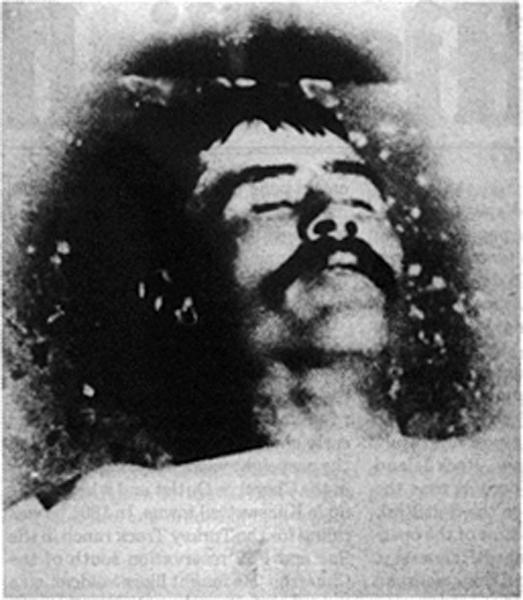 It seems that everyone in the Old West had nicknames… And some of them were very strange. But, none was as strange as Charles Bryant’s. He was called “Black Faced Charley.” It seems that he was shot point-blank in the face. The bullet just creased his cheek. But, the burnt powder coming out of the pistol imbedded in his face, giving him his nickname.
Heard Around the Bunkhouse #5 – Cowboy Lingo
In our feature Heard Around the Bunkhouse we bring you cowboy lingo and slang that they used back in the Wild West. Hope you enjoy them, and let us know your favorite terms from those past times.
BEND AN ELBOW – Have a drink.
BANG UP JOB – First Rate
PONY UP – Hurry Up
ROOSTERED – Drunk

*Courtesy of Chronicle of the Old West newspaper, for more click HERE.
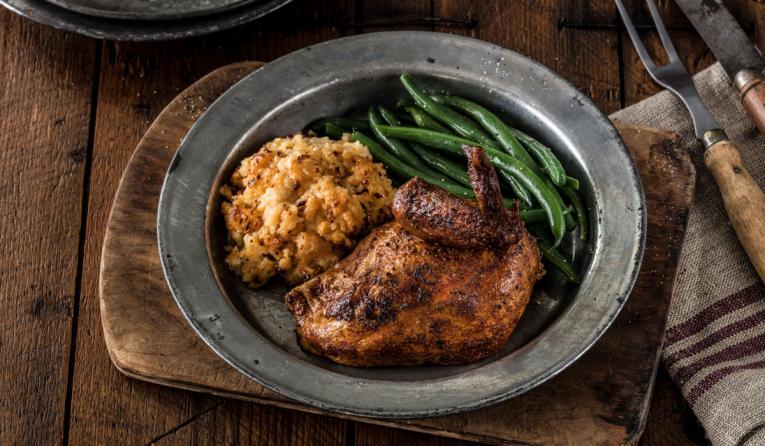
Chuckwagon: Simple Cowboy Chicken
This is a recipe for simple cowboy chicken (when they had them) or any other game bird, used often by the frontier settlers. Start with 3 to 4 pounds of foul.
¼ tsp sage ¼ tsp pepper
½ tsp salt ¼ tsp allspice
¼ tsp basil ¼ tsp coriander
Wash the bird or birds, and pat dry. Sprinkle cavity with mixed seasoning, except basil. Place in Dutch oven and sprinkle with basil. Cover and bake for 4 to 6 hours until tender.
*Courtesy of Chronicle of the Old West newspaper, for more click HERE.
One Who Yawns aka Geronimo
 One Who Yawns was born in 1823. He was known as an easygoing person. But, as a young man, while the men were away, Mexicans attacked his village and killed the women and children, among who were his mother, wife and three children. This instilled in him a hatred for Mexicans that lasted throughout his life. A year after the attack on his village, One Who Yawns and some other braves retaliated, killing several Mexicans. In this battle he won his more popular Spanish name… Geronimo.
Dentist Clay Allison
 Clay Allison was a hard-drinking, prankster of the type who becomes a legend in his own time. During his lifetime, Allison only killed four people. But the stories about him that didn’t involve killing are as entertaining as those that did. There’s the story of Dentist Clay Allison looking up gunman Mace Bowman with the object of killing him. But, Bowman was a congenial person, and the two men ended up getting drunk together. Still curious about who was the fastest, they decided to test each other’s speed with some fast draws. Allison found Bowman was faster than he was. So, Allison suggested they strip to underwear, and shoot at each other’s bare feet to see who could move faster. They were either poor shots or fleet of feet, because a short time later the two men, out of breath, bellied up to the bar for another drink.
Then, there was the time on August 16, 1874, when Allison arrived in Cheyenne, Wyoming. He had a raging toothache. Now, Cheyenne had two dentists. So, Allison chose the closest one and climbed in his chair. The dentist drilled away at the tooth, only to discover he was drilling the wrong one. When the dentist announced his mistake, Allison angrily jumped out of the chair, and went over to the other dentist’s office. The other dentist took care of the problem.
With his pain gone, Allison returned to the first dentist, and pinned the dentist in his chair. Grabbing the dentist’s forceps, Clay Allison proceeded to pull, according to different stories, one, three or all of the dentist’s teeth. I can assure you that dentist never drilled on the wrong tooth again.
Clay Allison, you sure are a card.
Old West Book Review: The Cornett-Whitley Gang; Violence Unleashed in Texas
 The Cornett-Whitley Gang; Violence Unleashed in Texas, David Johnson, University of North Texas Press, $29.95, Cloth. Non-fiction, 320 pages, Illustrations, Notes, Bibliography, Index.
The time period for this book is the late 1880s, the location is Texas, and the topic is about a gang of train robbers. The names of these men are mostly unfamiliar to readers of today. None of them stood out above the rest in romantic familiarity. Don’t look for Butch and Sundance, or the James brothers. These men came together in a secret hide-away, made their plans, and then held up the trains. Afterwards they parted, at least for a while, and did a good job of fooling law enforcement. Some were married with children, most were solitary drifters who kept low profiles.
There were three important train robberies that made headlines. One at McNeal Station, another at Flatonia, and finally a third robbery at a place called the Verdigris Bridge. All three robberies were daring, well-planned, done ruthlessly and with precision. Some people got hurt, a few were killed, one lady passenger was pistol whipped for being too slow in turning over her valuables. Money and personal items were grabbed before the gang mounted up and disappeared into the darkness.
The book tells how law enforcement was blamed and even chided in newspaper accounts, embarrassed by the Media for their inability to catch the bad guys right away. The Texas train robberies made headlines all across the United States and even some foreign countries. Newspaper editors were certain all the bad publicity would be detrimental to the financial growth of Texas.
Law enforcement entities such as the Texas Rangers, federal marshals, railroad detectives and Wells Fargo eventually worked together sharing information until most of the robbers were caught. Some of this work remains in place even to this day. However, in the old days before computers and telephones, news about the robberies moved laboriously via telegraph, word of mouth or riders on horseback.
Letters at the back of the book contain personal accounts from various individuals who were involved in all this. Some romantic stories told were clarified. It seems a lot of people had a lot to say as the robbing of trains made big news. Eventually arrested, one robber, “Bud” Powell, alias John Thompson wrote a lengthy autobiographical account filled with original detail as he explains about some of his adventures after he left the gang. He traveled for several years evading the law and claimed he tried to “go straight.” Words coming directly from the outlaw give readers much to think about.
The author of the book, David Johnson has penned other important nonfiction books including John Ringo, King of the Cowboys; The Mason County “Hoo Doo” War, and The Horrell Wars. All of David Johnson’s books are well-researched, easy to read, and packed with plenty of information. If you are particularly interested in Texas train robbers, this book is for you.
Publisher’s Notes: The reviewer, Phyllis Morreale-de la Garza is the author of numerous books about the Old West, including Death For Dinner, the Bender of (Old) Kansas. Silk Label Books, P.O. Box 399, Unionville, New York, 10988. Ph. (845) 726-3434. www.silklabelbooks.com
*Courtesy of Chronicle of the Old West newspaper, for more click HERE.
Chuckwagon: Lazy Cobbler
 Here is an updated version of an old cowboy dessert Lazy Cobbler, sometimes called dump cake.
Use a 12” Dutch oven. (Serves 12.)
Prepare 15 charcoal briquettes for the bottom and 10 for the top.
2 cans sliced peaches with syrup. (You can also use pineapple.)
1 package of white or yellow cake mix.
1/3 stick of butter.
Ground cinnamon.
Place oven over hot bottom briquettes. Pour contents of peach cans into oven. Spread dry cake mix evenly over peaches. Sprinkle on cinnamon. Cut butter into thin slices and place on top. Put lid on top of oven, add hot briquettes and bake for about 45 minutes or until done.
If you would like to mix the peaches into the cake, do so when the cobbler is about half done, and continue baking until done.
*Courtesy of Chronicle of the Old West newspaper, for more click HERE.
Wyatt Earp Kills Hoy?
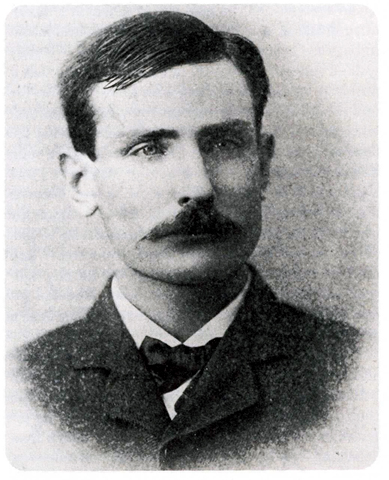
Jim Masterson
In 1876, Wyatt Earp became a policeman in Dodge City, Kansas. A fellow policeman was Jim Masterson, Bat’s brother. On July 29 1878, Wyatt and Jim were patrolling the streets. At about 3 o’clock in the morning three cowboys, after picking up their pistols, passed by the local dance hall. Thinking it would be a great joke, they fired several shots into the dance hall. Wyatt and Jim rushed to where the action was taking place. The cowboys immediately turned their guns on Wyatt and Jim. Had they not been plastered, the cowboys would have realized that up until then, what they had done would have just gotten them run out of town. However, with lead coming their way, both lawmen started shooting back.
The cowboys made it to their horses, and as they rode away both Wyatt and Jim emptied their pistols in their direction. Thinking they had missed, the policemen started walking away when George Hoy, one of the cowboys, fell from his saddle. Hoy had been shot in the arm. Hoy was taken to a doctor, and then jail. Unfortunately for him infection set into the wound and he died four weeks later.
Many historians credit Wyatt for the kill even though, with lead flying, it couldn’t be positively determined if Wyatt or Jim’s bullet did the damage. And, with Hoy dying, from what could have been considered a minor wound, quite possibly, it was the doctor that did the killing. But, then, as far as George Hoy is concerned, no matter who did the killing, the results were the same.
Wild Bill Hickok Shoots Soldiers
 On July 17, 1870 Deputy U.S. Marshal Wild Bill Hickok was in a bar in Hayes City, Kansas when two of a group of five Seventh Cavalry troopers suddenly attacked him from behind. It’s not quite clear what provoked the attack, but there is thought it might have had something to do with an encounter Wild Bill had earlier with Tom Custer, brother of George Custer and a member of the Seventh. So here’s the story – Wild Bill Hickok shoots soldiers.
Ella Watson – A Daredevil in the Saddle
 Ella Watson has been described as “a dare devil in the saddle, handy with a six shooter and adept with the lariat and branding iron.” She has also been described as a homely prostitute who happened to take the wrong form of payment for her services.
Texas – New York Cattle Drive
 On July 1, 1854 the first cattle driven from Texas arrived in New York City. New York City? That’s right New York City. Here’s the story of the Texas – New York Cattle Drive.
 Chief Eskiminzin
 In the early 1870’s Chochise and his band were raiding and killing white settlers in southern Arizona, and resentment was running high against all Indians. Chief Eskiminzin was the leader of a small group of Apache. Low on food and poorly clothed he brought his people to Camp Grant near Tucson, Arizona. Eventually more than 400 Indians had assembled in the area, and the citizens were becoming fearful. Following an incident where a couple of settlers were killed, a mob of almost 150 men were assembled to punish the wrong doers.
Chuckwagon: Sourdough Cornbread

Here is a recipe to use some of the Sourdough starter you made from a previous post. This recipe for sourdough cornbread comes from the Hashknife Outfit of Winslow, Arizona.
1 cup starter.
Enough cornmeal to make a beatable batter
1 ½ cups milk
2 tablespoons sugar
2 eggs beaten
¼ cup warm melted butter, or fat
½ teaspoon salt
½ teaspoon soda
Mix starter, cornmeal, milk, eggs and stir thoroughly in large bowl. Stir in melted butter, salt and soda. Pour into a 10 inch greased frying pan or Dutch oven, and bake for 25 to 30 minutes.
*Courtesy of Chronicle of the Old West newspaper, for more click HERE.
The “New” Lost Dutchman’s Mine
 In the past we have told the stories of two of Arizona’s lost treasures. One was the Lost Dutchman’s Mine located in the Superstition Mountains a short distance from a busy Phoenix freeway. Another was a treasure comprised of gold coins lost when a dam broke on the Hassayampa River just north of Phoenix.
Sodbusters
 In order to get, what were to become the plains states, settled, President Lincoln signed the Homestead Act on May 20, 1862. And, it worked as thousands of people, who were soon called Sodbusters, took up the government’s offer for free land.
Old West Book Review: Contention and Other Frontier Stories
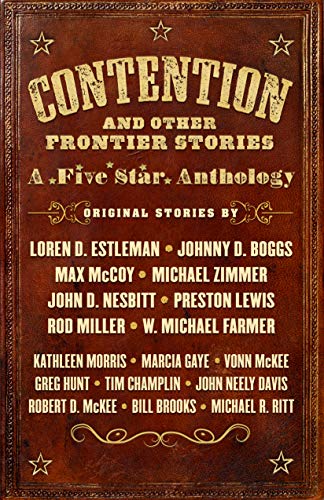 Contention and Other Frontier Stories: A Five Star Anthology of original Western stories by seventeen authors, Edited by Hazel Rumney, Five Star Publishing, $25.95, Cloth, Frontier Fiction.
Most of the authors of these short stories are well-known winners of writing awards, having plenty of experience with word-wrangling. These stories are fast- paced, filled with original detail. Here you will find a wide selection of ideas and varied circumstances pertaining to our American frontier.
A good short story hooks the reader right away, and almost always ends with a surprise. The reader will arrive at the end and get a laugh, or perhaps be entertained when the villain gets his or her comeuppance. Nearly all of these stories live up to our expectations.
The editor is Hazel Rumney who began working for Thorndike Press in 1983. By 1995 Thorndike began publishing the Five Star western series, and soon the books began winning awards. Hazel Rumney was right in the middle of it all. She retired in 2011, but in 2012 Five Star called her back, offering her the job doing work from home, via computer. She grabbed the opportunity to edit in the comfort of her own home “drinking coffee” and avoiding travel; her dream job. Writers will tell you she is strict, she’s demanding, she looks for good stories that are exciting, believable, and true to Old West authenticity.
This collection has all the right combinations that make short stories work. The authors keep you guessing until the last page. Here you will find a deserter from Teddy Roosevelt’s Rough Riders; another is about a young ranch wife avenging the brutal and sudden murder of her husband; a wounded Pony Express rider brings in the mail during a blizzard; Geronimo sends one of his wives away to save her from life in captivity; a young cowboy and his sweetheart get even with a nasty gambler; a Mormon wife treks across the plains toward Utah, protecting her family even after her husband was killed; a tough old buffalo hunter stands firm in the face of removal from his home by encroaching civilization; two cowboys stranded in the mountains with a cantankerous old cook resort to cannibalism; a mysterious rider rescues two young girls held captive on a lonely ranch-far from town; a cocky young troublemaker finds himself involved in a shotgun wedding; a city girl newspaper reporter gets stranded in a dust storm, a miner tries a variety of imaginative ways to bury his dead partner, an aged colonel from Civil War days struggles with his memory; a preacher is embroiled in a Texas blood feud; a baseball player living in the past tries to avoid the reality of giving up the team; a young man with a speech impediment finds clever ways to defend himself.
These stories highlight protagonists with grit and imagination, who forge ahead against difficult circumstances. A variety of provocative issues are explored. These were tough people surviving tough times. This is good frontier fiction, a fun book to read.
Publisher’s Notes: The reviewer, Phyllis Morreale-de la Garza is the author of numerous books about the Old West, including Death For Dinner, the Benders of (Old) Kansas, Silk Label Books, P.O. Box 399, Unionville, New York, 10988. Ph. (845) 726-3434. www.silklabelbooks.com
*Courtesy of Chronicle of the Old West newspaper, for more click HERE.
Chuckwagon: Cowboy Sourdough Starter
Cowboy Sourdough Starter
Sourdough biscuits were a delicacy whether on the trail or at the ranch. Once a cook got a good sourdough starter he cherished it like a baby. On the trail he would store it in a dark, cool place in his chuckwagon. Here is one cooks recipe for a sourdough starter.
2 cups of lukewarm potato water.
2 cups flour.
1 tablespoon sugar.
Make potato water by cutting up 2 medium-sized potatoes into cubes, and boil in cups of water until tender. Remove the potatoes and measure out two cups of the remaining liquid. (The potatoes can be used for the evening meal.) Mix the potato water, flour and sugar into a smooth paste. Set the mixture in a warm place until it doubles its original size.

*Courtesy of Chronicle of the Old West newspaper, for more click HERE.
Sitting Bull Goes to Canada
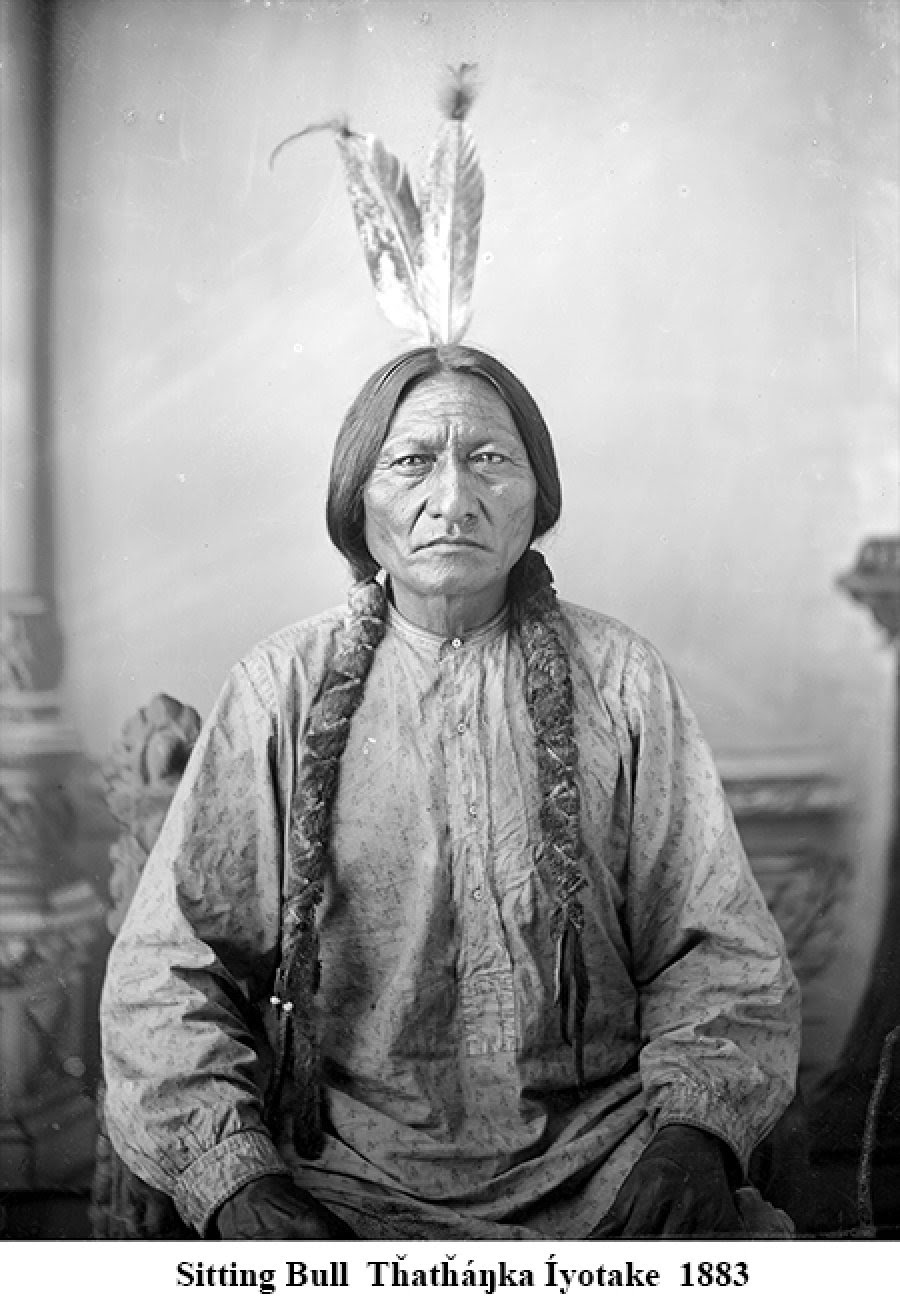 After the defeat of Custer in 1876, realizing there would be retaliations, the Indians broke up into smaller bands so they could move faster and not be easily found. But many of the bands were tracked down, and relocated to reservations.
Sitting Bull, in command of the western party, took his people to Montana, and avoided any major confrontations with the army. Four months after Little Big Horn, Sitting Bull met with American commander Nelson Miles. Sitting Bull refused to surrender. So Colonel Miles stepped up his campaign against him and his people.
With the scarcity of buffalo, the cold winter and the army’s constant pressure, Sitting Bull’s people began to suffer. So, on May 5, 1877, Sitting Bull decided to avoid war by going to Canada. The Canadian government, with a more tolerant attitude toward Indians, let them stay in peace. With plenty of buffalo and no harassment from the military, it was a great life. But within a couple of years the young warriors, who had grown up doing battle, became restless. They started making trouble with their neighboring tribes, and the Canadian government started putting pressure on Sitting Bull to leave Canada.
The final straw was the disappearance of Canadian buffalo. With promises that they would have plenty of food, and with most of his people having already returned to America, four years after he had left, and five years after his great victory at Little Big Horn, Sitting Bull returned to the United States leading just 187 Indians, most of who were old and sick.
Deacon Jim Miller
 Deacon Jim Miller was a little man who was quiet, and he never cussed. He dressed like a traveling minister, and was an avid churchgoer. At the same time, he was one of the most ruthless assassins of the Old West. It’s estimated that 40 or more people died from lead that came from his guns… Some of them were even his relatives. His contracts were usually carried out on unarmed men from behind a rock or tree, while using a rifle.