Stagecoach Driver Charley Parkhurst


A Preacher Robber
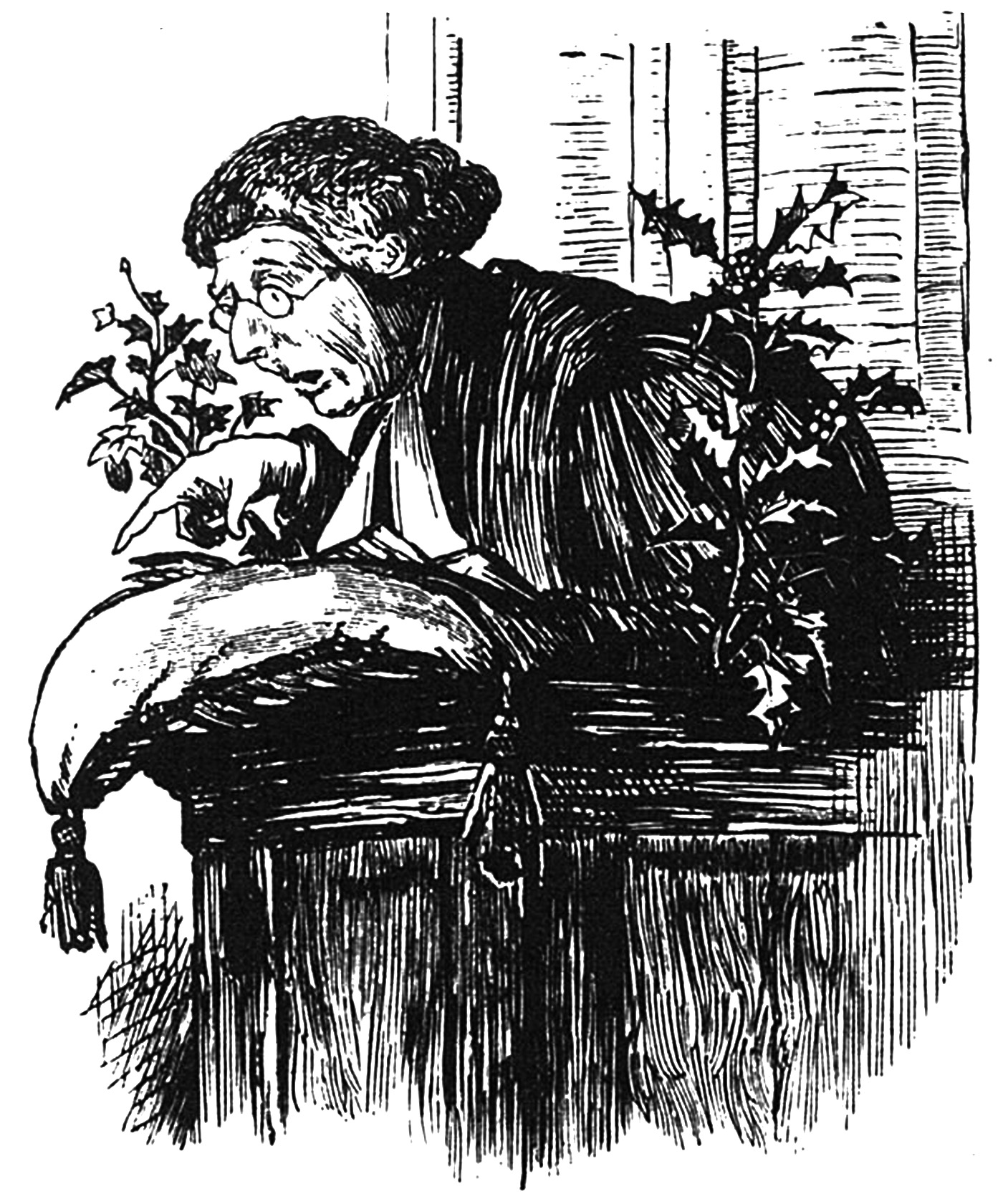 Preacher Robber Escapes Conviction of Bank Robbery on the Insanity Plea.
April 19, 1895, Deming Headlight, Deming, NM – Portland, Oregon, April 18. – Rev. J. C. Reed, the Baptist minister who is on trail for attempting to rob the First National bank of East Portland last February, was found not guilty by the jury on the ground that he is insane.
Judge Stevens remanded the prisoner to the custody of the sheriff and he will have an examination for commitment to the asylum.
Reed, armed with a pistol, had entered the bank at noon, held up the cashier, bound and gagged him and locked him in the vault. He was captured while he was emptying bags of gold.
Chuckwagon – Red Bean Pie
 Beans were a staple of the cowboy’s food, particularly when he was on the trail. Beans could be easily stored and they were inexpensive. And although it probably wasn’t known, Red Bean Pie is also nutritious.
Here is yet another way the cook could feed cowboys beans.
1-cup cooked and mashed pinto beans.
1-cup sugar.
3-beaten egg yokes.
1-teaspoon vanilla.
1-teaspoon nutmeg.
Place combined ingredients in an uncooked piecrust. Bake at 350 degrees for 30 minutes. Make a meringue with the leftover egg whites. Spread over baked pie and return to oven to brown.
*Courtesy of Chronicle of the Old West newspaper, for more click HERE.
Old West Book Review: Victorian Wedding Dress
 Victorian Wedding Dress in the United States; A History Through Paper Dolls, Norma lu Meehan and Mei Campbell, Texas Tech University Press, (800-832-4042), 32 Pages, $12.95, Paperback.
This unusual book is a wonderful collectors’ item for anyone interested in vintage clothing, in particular the wedding dress. Back in 1850, the Godey’s Lady’s Book featured a bridal gown on the cover, and that seemed to spark an unending fascination for brides in our country that continues today. The authors point out that in the United States, wedding gowns are a $160 billion dollar annual business.
This book uses paper dolls as models, and shows some magnificent wedding gowns designed and worn by American brides between the years 1859 to 1899. The authors point out that white was not always the chosen color for wedding dresses. It was Queen Victoria of Britain who wore a white satin gown when she wed Prince Albert of Saxe-Coburg in 1840. While the queen chose white, thereby setting a fashion trend, it would be many years before most women would wear the white gown because their wedding dresses were to be worn for numerous occasions after their wedding as a matter of frugality.
Co-author Meehan is a fashion illustrator who volunteers as costume curator at the Northern Indiana Center for History. Co-author Campbell is curator of ethnology and textiles at the Museum of Texas Tech University. Combining their talents and expertise, they have chosen twenty wedding dresses selected from both collections to give readers a unique opportunity to marvel at the lovely designs and intricate workmanship of these gowns.
Dresses in this collection are carefully sketched from the original garment; some photographs are included adding a personal touch showing the brides themselves. Each dress is unique not only in color, workmanship and design, but a brief history of the bride, and, or the wedding is included.
For instance, in 1871 Maggie Knott married Dr. Samuel L. Kilmer in South Bend, Indiana. She wore a two-piece, ice-blue silk-brocade gown. In 1882, Florence Miller married Frank Dwight Austin in Leavenworth, Kansas. The bride’s dress was made in Paris, France and cost an astonishing five hundred dollars. It became an Austin family heirloom worn fifty-five years later by a granddaughter. In 1893, Alice Rhawn wed Mr. Clement Studebaker, Jr., one of the founders of the Studebaker Corporation. Their wedding was a society event in Philadelphia social circles. The mansion the Studebakers occupied after the wedding is now on the National Register of Historic Places.
On and on, readers get to examine twenty gowns while reading about the women who wore them. Descriptions include satin panniers, full bustles, pleated hems, long-trained skirts, pointed front bodices, sleeve ends trimmed in Spanish blonde lace, flounces and peplums. Wool, alpaca, satin, ivory brocade silk, chiffon, crepe, velvet, ostrich feathers, beadwork, Chantilly lace and bands of pearls delight the eye.
Not every bride in the Old West had such wealth and opportunity. Thus, we usually read about lugging water, milking the cow, rattlesnake bites, Indian attacks, hog ranches and saloon shootouts. However, this book reminds us that there has always been wealth and privilege; not all women were ranch girls, dance hall queens or homesteaders. Writers seem to depict women in hardship roles and poverty as a source of Old West entertainment, but here we see that refinement, manners, delicacy and careful attention to detail also had its place in our American Western experience. The history of these magnificent gowns reminds us about the other side of life.
You can get you copy of Victorian Wedding Dress HERE.
Editor’s Note: The reviewer, Phyllis Morreale-de la Garza is the author of many published books, including Silk and Sagebrush: Women of the Old West, published by Silk Label Books, P.O. Box 700, Unionville, New York 10988 (845-726-3434) www.silklabelbooks.com
*Courtesy of Chronicle of the Old West newspaper, for more click HERE.
Trailing Louis L’Amour in Southeast Arizona

John Slaughter
Trailing Louis L’Amour in Southeast Arizona – Louis L’Amour chose to give his last look at Southeast Arizona in The Burning Hills. It is a romance and adventure novel that acknowledges the Arizona pioneer ranches. The novel occurs after 1891. That was the year John Slaughter moved permanently to the San Bernardino Ranch. The old Arizona was beginning to close, but the frontier still survived. The novel begins in the New Mexico boot heel, travels through northern Mexico’s Embudo Canyon and concludes at and near the vicinity of Slaughter’s San Bernardino ranch.
John Slaughter came to Arizona in 1877 but did not establish his headquarters on the San Bernardino until 1891. Slaughter had led a life of adventure as a Confederate soldier, Texas Ranger, and pioneer rancher before coming to Arizona. His first wife died while coming west to meet him in New Mexico. Slaughter married Cora Viola Howell, the daughter of a southeast New Mexico rancher. It was a life-long love affair. In later life as a Cochise County Sheriff, Slaughter cleaned up Southeast Arizona. He may be numbered with Milton, Mossman and Tilghman as the last of the great, old, frontier lawmen.
L’Amour had told of the Apache reservation emeute of 1882 in Shalako. The story occurs in the New Mexico boot heel just east of the Mesa.
The Spanish-American War of 1898 took many Cochise County men into the Rough Riders. The Mexican Revolution had the people of Douglas hunting cover. Poncho Villa raided Columbus to the east in the New Mexico boot heel in 1916. The Mesa again was manned by troops. The stone corrals are still there, probably built up again from the Apache wars and Mexican and Spanish redoubts. The U. S. Army Signal Corps’ new aviation section would fly their first combat missions from the nearby New Mexico Boot heel. Their underpowered Curtis JN-3 Jennies demonstrated that the U. S. needed better warplanes. These underpowered scout planes probably looked down on or dropped dispatches to the Mesa outpost.
Doc Holliday Obituary
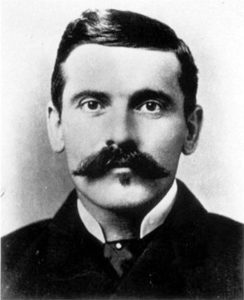 Doc Holliday Obituary, originally published in the November 12, 1887 edition of the Ute Chief, Glenwood Springs, Colorado – J. A. Holliday died, in Glenwood Springs, Colorado Tuesday, November 8, 1887, about 10 o’clock a.m., of consumption.
J .A. Holliday, or “Doc” Holliday as he was better known, came to Glenwood Springs from Leadville last May, and by his quiet and gentlemanly demeanor during his short stay and the fortitude and patience he displayed in his last two months of life, made many friends. Although a young man he had been in the west for twenty-five years, and from a life of exposure and hardship had contracted consumption, from which he had been a constant sufferer for many years.
Since he took up his residence at the Springs the evil effects of the sulphur vapors arising from the hot springs on his weak lungs could readily be detected, and for the last few months it was seen that a dissolution was only the question of a little time, hence his death was not entirely unexpected. From the effects of the disease, from which he had suffered probably half his life, Holliday, at the time of his death looked like a man well advanced in years, for his hair was silvered and his form emaciated and bent, but he was only thirty-six years of age.
Holliday was born in Georgia, where relatives of his still reside. Twenty-five years ago, when but eleven years of age, he started for the west, and since that time he has probably been in every state and territory west of the Mississippi river. He served as sheriff in one of the counties of Arizona during the troublous times in that section, and served in other official capacities in different parts of the west. Of him it can be said that he represented law and order at all times and places. Either from a roving nature or while seeking a climate congenial to his disease, “Doc” kept moving about from place to place and finally in the early days of Leadville came to Colorado. After remaining there for several years he came to this section last spring. For the last two months his death was expected at any time; during the past fifty-seven days he had only been out of his bed twice; the past two weeks he was delirious, and for twenty-four hours preceding his death he did not speak.
He was baptized in the Catholic Church, but Father Ed Downey being absent, Rev. W.S. Rudolph delivered the funeral address, and the remains were consigned to their final resting place in Linwood cemetery at 4 o’clock on the afternoon of November 8th, in the presence of many friends. That “Doc” Holliday had his faults none will attempt to deny; but who among us has not, and who shall be the judge of these things?
He only had one correspondent among his relatives – a cousin, a Sister of Charity, in Atlanta, Georgia. She will be notified of his death, and will in turn advise any other relatives he may have living. Should there be an aged father or mother they will be pleased to learn that kind and sympathetic hands were about their son in his last hours, and that his remains were accorded Christian burial.
Fourth of July in the Old West
Celebrating the independence of our country was important even in the Old West. And, as we shall see, people putting on the Fourth of July in the Old West ran into the same problems as today.
In 1868 the Nevada mining camps of Hamilton and Treasure Hill comprised of a few hardy miners and even fewer women. However, it was decided that they would have a 4th of July celebration.
They formed the flag committee, the music committee and the dance committee. The music committee’s job was simple, yet complicated. Therewas only one man in town who had a musical instrument, a violin. The complication was that he tended to get drunk. So, they had to regulate the flow of whiskey to the musician.
The dance committee comprised of all the women in town…a total of two. Like volunteer committees sometimes do, the flag committee waited until the last minute to get a flag. And then it was to late to travel the 120 miles to the nearest store. So, good ol’ American ingenuity took place. They found a quilt with a red lining, and some white canvas material. A traveling family camped nearby had a blue veil. This was doubly good because the family included a mother and four girls…more women for the dance. But the girls didn’t have shoes, making it impossible to dance on the rough planked floor. So, a collection of brogan shoes was taken up among the miners.
On the 4th of July, a parade formed at Hamilton and with the makeshift American flag proceeded to Treasure Hill. Speeches were made. Sentiment ran high. They decided to form a new town called the White Pine Pioneers, and that the flag should go into the town’s archives. Unfortunately, the town disappeared and the flag ended up being used as a bed sheet.
Chuckwagon: Old West Candy Recipe
 Below is an Old West candy recipe from the October 23, 1893 Albuquerque Evening Citizen.
Chocolate Carmels – boil together a pound of white sugar, a quarter of a pound of chocolate, four tablespoons of molasses, a cup of sweet milk, and apiece of butter as big as a walnut. When it will harden in water, flavor with vanilla and pour on a buttered slab. When nearly cold, cut in squares.
*Courtesy of Chronicle of the Old West newspaper, for more click HERE.
The Woman in Black in Sing Sing Prison
SHE FREQUENTLY VISITS SING SING PRISON.
A Mysterious Woman Whose Repeated Visits
to the Famous Penal Institution Have
Excited Interest as to Her Identity.
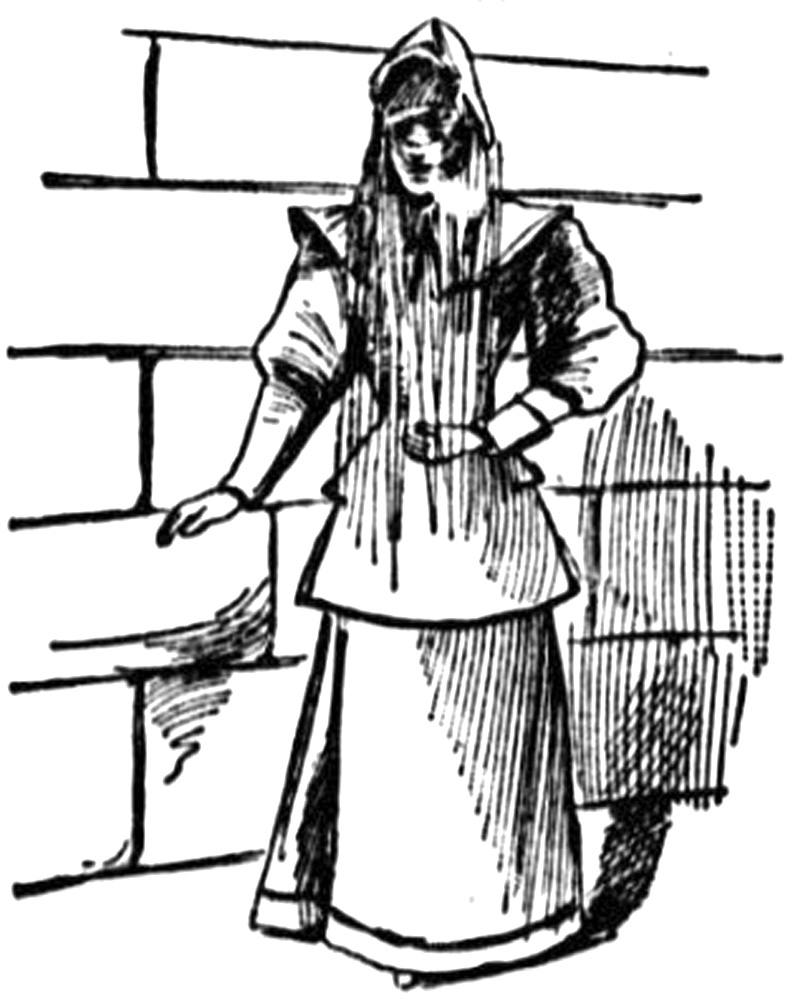 February 9, 1894, Chief, Red Cloud, Nebraska – Sing Sing Prison has a mysterious woman visitor, but that is not remarkable, because seven-eighths of the visitors to the convicts there are women. They all have burdens of sorrow to bear, but rarely of their own making, and they come and go year in and year out, to see beloved ones whom the world does not love and has put behind bars. The gray prison walls hold all that is dear in life to these mothers, wives, sweethearts and sisters.
The husband who has committed crime that his wife may have luxurious surroundings usually retains the affections of that wife, even when he dons stripes and is close cropped. The professional burglar often is a model family man and does not sever his family ties when he “does time.” The man who kills his fellow man for the affections of a woman and is paying the penalty for that crime has surely a right to expect that that woman will care enough for him to remember and visit him while he is the servant of the state.
Then there is mother’s love, never failing, never even wavering in its unassailable constancy, and that accounts for one-half the visitors to the Sing Sing convicts. Thirteen hundred men are confined at Sing Sing, and the army of women—sad women who are sad because of the thirteen hundred—must easily equal the convicts in number.
Many a romance brought to a tragic climax by the merciless hand of the law is suggested by these untiring visitors. Even the ubiquitous hackmen who infest the Sing Sing railway station seem to appreciate this, for when these unhappy ones alight from the trains and look uneasily and self-consciously about, the drivers realize intuitively the nature of their errand and treat them with a deference rarely met within their class. They approach respectfully, and in subdued tones say kindly, “To the prison, madam?” or, “Right this way to the prison.”
About one visitor only is there any mystery. Others give their names and go to see some convict who is known to the keepers. This one goes veiled, and no one knows who it is she goes to see.
A tall, lithe, graceful woman, attired all in black and wearing a heavy black veil, occupied a seat in a car directly in front of and opposite that of the writer recently.
She was uneasy and restless, though not obtrusively so; she carried herself with the fine reserve of a woman of breeding accustomed to do just such things. Sometimes she would look anxiously about the car, as if in fear of being recognized, though with her veil recognition, even by an intimate friend, would have been clearly impossible.
An old-time hackman at the Sing Sing station approached her as she alighted. She got into his ramshackle conveyance as if she had been in it before, and it rattled up the hill and over the stony road along the bluff to the prison a few hundred yards in advance of the equally noisy conveyance of the writer.
It was the hour at which the convicts, having finished their evening meal in the great feeding hall—it would raise the ghost of Brillat Savarin to call it a dining-room—march in lock-step to their cells, in long, single files. They come through the stone-flagged prison-yard with a steady, machine-like shuffle of their heavy prison shoes. Keepers stand about with heavy sticks in their hands.
By the entrance to the long granite building containing the tiers of cells are two great open boxes of bread. Each striped miserable reach out and takes a piece with his left hand as he passes. Slung on the right arm of each is an iron solp pail on which is painted the prisoner’s number. The shuffle of the slowly-moving line continues for perhaps twenty minutes, at the end of which time each of the 1,300 has, with his supper in one hand and his slop-pail in the other, been locked in his cell.
The woman had been shown to the yard, and stood, a keeper by her side, under the portico of the inhospitable-looking hospital building. The long lines of convicts marched toward her and turned not ten feet from where she stood, and marched past the bread-box into the building. She supported herself with one daintily gloved hand against the stone wall, and, leaning forward in an attitude of eager interest, faced down the approaching line.
She tapped the pavement impatiently from time to time with the tow of her neat boot.
Some one in that long line riveted her attention; but there were hundreds there, and the veil prevented any one from seeing which striped one it was.
The prisoners all turned away their heads as they passed the woman. Was it a prison rule that prompted this, or a sense of shame that has survived hardening crime? Not one did otherwise. Many faces flushed, and if any one in that line recognized the trim figure and graceful pose of the strange woman he could never be detected by the flush, for flushed faces were too numerous.
When the last man on the last line a Negro on crutches, who killed a policeman on Wall Street, had disappeared in the door, the woman was escorted out by the keeper. She thanked Principal Keeper Connaughton for his courtesy, which to all visitors, men and women, is always the same. Her voice was pleasant, and there were no tears in it. Her manner indicated nothing in particular, and certainly not grief. She was driven away to the station and returned to New York.
This woman’s visits occur once every two months. Sometimes the interval between them is longer, and sometimes, but seldom, she misses one.
She has been coming for nearly three years, and her visits are always at the same hour. She sees all the prisoners in their lockstep march, and no one connected with the prison knows her name. No one in the prison has ever seen her face.
There are two ways of accounting for the periodical visits of this mysterious unknown. She either loves or hates, with a greater love or a greater hate than ordinarily, someone of the Sing Sing convicts. Perhaps it is love that impels her to remain veiled, and thus to spare the object of her affections humiliation and shame. Unrequited love, perhaps, leads her to conceal her face. Possibly her hate of some one in that long line of erring men derives a certain pleasure from the sight of him in the moment of his disgrace.
Who can tell why she hides her face? Is it because of love or hate?
The Disappearance of “Mysterious” Dave Mather
 It is said of Dave Mather that he spent as much time in jail as he did in the occupation of putting others there. Dave is known as “Mysterious” Dave Mather, because, supposedly little is really known about his life. But we know enough that if he notched his pistol each time he assisted in sending someone to their reward, he would have had to carry a couple of guns.
 John Thompson – Old West Mail Delivery
 Jon Torsteinson was born in Norway in 1827. At the age of ten he and his family came to the United States. Americanizing his name, he became John Thompson, and at the age of 29 moved to California, and became a rancher near Sacramento. He would probably have lived and died in obscurity had he not read an employment ad in the local newspaper. The advertisement was for a mail carrier to traverse the route between Hangtown, later to be known as Placerville, California and Carson City, Nevada… during the winter. So John entered into the history of Old West mail delivery.
  Even though he was traveling through blizzards and snowdrifts in subzero temperatures, because of weight and time considerations, John didn’t wear a jacket and didn’t pack a blanket. He didn’t even take a weapon, and took food that didn’t require cooking.
 Old West Book Review: Unsolved Arizona, A Puzzling History of Murder, Mayhem, & Mystery
 Unsolved Arizona, A Puzzling History of Murder, Mayhem, & Mystery, Jane Eppinga, History Press, $21.99. Paper, Photos, Bibliography, Index.
This book will entertain history-mystery buffs with thirteen true stories about unsolved, odd, and fascinating episodes pertaining to Arizona.
Readers will find the Glen and Bessie Hyde adventure ending in tragedy as the couple honeymooned for twenty-six days on the Colorado River rapids. Their bodies were never found.
A chapter titled “Lust for the Dutchman’s Gold” takes the reader to Arizona’s Superstition Mountains where legends and scary stories abound. Spaniards, Apaches, Mexican miners, and American adventurers found, lost, hid, and died over golden treasure. Secret maps, wandering gold-seekers, lies and wild tales still haunt these mountains where nobody has ever found the gold, but scattered throughout the hills are decapitated skeletons. Lost treasure in the Superstitions has led more than one man to his death.
Here too you will find a chapter about the Wham paymaster robbery, a $28,345.10 loss of government funds. It happened in May of 1889 at Cedar Spring, Arizona. The military payroll consisting of $5.00, $10.00, and $20.00 gold pieces was stolen by a band of robbers as the payroll, carried in a wagon under escort, was ambushed and robbed. The Wham robbery was named after Major Joseph Washington Wham whose personal history included previous robberies, thus he became one of the suspects. In the end a variety of characters were arrested tried, and found not guilty. Local ranchers made jokes, soldiers escorting the payroll were told to keep quiet, Wham himself was never held responsible, and after all the political hyperbole, court room haggling and wild newspaper accounts, the money has never been recovered.
A chapter about the missing evangelist Aimee Semple McPherson tells of an eccentric who led authorities on a wild chase during which she disappeared for five weeks. Other chapters tell of a missing baby, a couple who vanished in the desert near Yuma, the mysterious disappearance of a Willcox rancher’s wife, and the kidnapping of a six-year-old girl, June Robles held in a cage in the desert outside Tucson. One chapter dwells on the details of the frustrating saga concerning the disappearance of a National Park Service ranger, Paul Fugate. In January 1980 Fugate walked away from his office in the Chiricahua National Monument in southern Cochise County, Arizona, and was never seen again. The author takes readers on a trip this time, following Fugate’s activities for several days leading up to his disappearance. Much of the information comes directly from Fugate’s wife.
The book is a mix of famous old-time mysteries and more recent crime investigations. They are all about Arizona, and remind us of the harsh desert conditions people are faced with then and now. Vast stretches of high desert offer scant vegetation, prickly cactus, little water and merciless heat. Desert dwellers including rattlesnakes and coyotes, wolves and mountain lions sometimes figure into the conditions people face when finding themselves lost, alone, or abandoned.
The author Jane Eppinga has written a large number of books targeting Arizona subjects, with special interest in the macabre. These include Arizona Twilight Tales: Good Ghosts: Apache Junction and the Superstition Mountains. She is a member of Arizona Professional Writers, and National Federation of Press Women.
Get your copy HERE.
Editor’s Note: The reviewer, Phyllis Morreale-de la Garza is the author of numerous books about the Old West including the novel Widow’s Peak published by Silk Label Books, P.O. Box 700, Unionville, New York 10988-0700, www.silklabelbooks.com
*Courtesy of Chronicle of the Old West newspaper, for more click HERE.
Zebulon Pike and Pikes Peak
 Zebulon Pike was a successful explorer. But, it seems he was successful in spite of miscalculations. He started his exploration at the age of 26 when, as a soldier, he led 20 men on an expedition up the Mississippi River. They left in August, expecting to get back before the winter freeze. Unfortunately, he miscalculated and the waterways froze, so the small band had to spend the winter in Minnesota.
 Bitter Creek George Newcomb
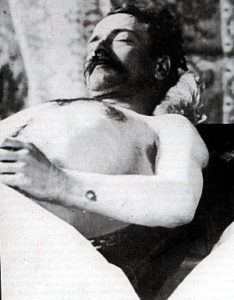 George Newcomb was born in Kansas in 1867. At a young age he went to Texas to become a cowboy. From there he drifted up to Oklahoma. He so frequently sang, “I’m a wild wolf from Bitter Creek, and it’s my night to howl,” that his friends started calling him Bitter Creek George Newcomb.
 Chuckwagon: Fart and Dart Beans
The following recipe for Fart and Dart Beans is not an actual 1800’s cattle drive recipe. However, it is in the spirit of the bean dishes the cowboys ate. Even better yet, it tastes great.
Fart and Dart Beans
 Mix together one 16 ounce can of the following: Pinto beans, pork & beans, red kidney beans, lima beans, white northern beans and butter beans.
1 lb cut up bacon 1 chopped onion
½ tsp minced garlic ½ tsp prepared mustard
½ cup vinegar 1 cup brown sugar
Fry the bacon until done, but not crisp. Pour beans, bacon, onion and garlic into large pan and mix. Simmer for 15 minutes a combination of the mustard, vinegar and brown sugar. Pour the liquid over the beans and bake at 350 degrees for 1 hour. Mix the beans a couple of times during the cooking process.
*Courtesy of Chronicle of the Old West newspaper, for more click HERE.
An Interview With Wild Bill Hickok
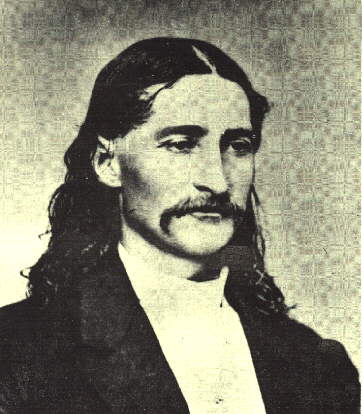 This is an interview by Henry M. Stanley, African explorer who uttered the famous line “Dr. Livingston, I presume?” He met James Hickok while working for the Weekly Missouri Democrat. At the time of his interview with Wild Bill Hickok he was a scout for the Seventh Calvary.
April 4, 1867, Weekly Missouri Democrat – James Butler Hickok, commonly called “Wild Bill” is one of the finest examples of that peculiar class now extant, known as Frontiersman, ranger, hunter and Indian scout. He is now thirty-eight years old and since he was thirteen the prairie has been his home. He stands six feet one inch in his moccasins and is as handsome a specimen of a man as could be found. Harper’s correspondent recently gave a sketch of the career of this remarkable man which excepting a slight exaggeration, was correct.
We were prepared, on hearing of “Wild Bill’s” presence in camp, to see a person who would prove to be a coarse, illiterate, quarrelsome, obtrusive, obstinate bully; in fact one of those ruffians to be found South and West, who delights in shedding blood. We confess to being greatly disappointed when, on being introduced to him, we looked on a person who was the very reverse of all that we had imagined. He was dressed in a black sacque coat, brown pants, fancy shirt, leather leggings and had on his head a beaver cap. Tall, straight, broad compact shoulders, Herculean chest, narrow waist, and well formed muscular limbs. A fine handsome face, free from any blemish, a light moustache, a thin pointed nose, bluish-gray eyes, with a calm, quiet almost benignant look, yet seemingly possessing some mysterious latent power, a magnificent forehead, hair parted from the center of his forehead and hanging down behind the ears in long silky curls. He is brave, there can be no doubt; that fact is impressed on you at once before he utters a single syllable. He is neither as coarse nor as illiterate as Harper’s Monthly portrays him.
The following verbatim dialogue took place between us: “I say Bill, or Mr. Hickok, how many white men have you killed to your certain knowledge?”
After a little deliberation, he replied, “I would be willing to take my oath on the Bible tomorrow that I have killed over a hundred a long ways off.”
“What made you kill all those men; did you kill them without cause or provocation?”
“No, by Heaven! I never killed one man without a good cause.”
“How old were you when you killed your first man, and for what cause?”
“I was twenty-eight years old when I killed the first white man, and if ever a man deserved killing he did. He was a gambler and counterfeiter, and I was in a hotel in Leavenworth City then, as seeing some loose characters around, I ordered a room, and as I had some money about me, I thought I would go to it. I had lain some thirty minutes on the bed when I heard some men at the door. I pulled out my revolver and Bowie knife and held them ready, but half concealed, pretending to be asleep. The door was opened and five men entered the room. They whispered together, ‘Let us kill the son of a b—h; I bet he has got money.’
“Gentlemen,” he said further, “that was a time, an awful time. I kept perfectly still until just as the knife touched my breast; I sprang aside and buried mine in his heart and then used my revolvers on the others, right and left. Only one was wounded besides the one killed; and then, gentlemen, I dashed through the room and rushed to the fort, procured a lot of soldiers, came to the hotel and captured the whole gang of them, fifteen in all. We searched the cellar and found eleven bodies buried there-men who had been murdered by those villains.”
Turning to us he asked, “Would you have not done the same? That was the first man I killed and I was never sorry for that yet.”
Elbows on the Table Series: Branded Outlaw Pt. 2
A funny interview gone wrong with western character Harvey Dodge and the talk show host Lawrence Carpetburner from the talk show Elbows on the Table. Harvey Dodge who was accused of murdering Lee Weston’s father comes face to face with the talk show host who interviewed Lee Weston on the very same show just months earlier.
This very funny interview which has gone horribly wrong is hilarious and is conducted with a character from the book Branded Outlaw by L. Ron Hubbard in the Golden Age Stories series. It’s not often you see interviews gone bad like it happened with Harvey Dodge. For more information click HERE.
Elbows on the Table Series: Branded Outlaw Pt. 1
In one of the interviews gone wrong in the Elbows on the Table series, Lee Weston detests being called a gunslinger due to the bad reputation gunslingers carry in the Old West. Lee Weston himself was a branded outlaw but, he asserts, not due to his own doing. He was framed and nearly lynched by an angry mob in the old western town of Pecos which he once called home.
Elbows on the Table is a different kind of talk show. This very funny interview which which has gone wrong is hilarious and is conducted with a character from the book Branded Outlaw by L. Ron Hubbard in the Golden Age Stories series. For more information on who Suicide Lee Weston was (he asserts he is not a gunslinger but a cowboy), click HERE.
The Masterson – Peacock Shootout

The Passing of the Old West Boots
Considering the popularity of Old West boots today, here is an interesting article from 1894.
Disuse of Foot Gear Once Popular East and West.
 November 7, 1894, Evening News, El Paso, Texas – The diminished use of boots is a matter of concern to the manufacturers of them and to the producers of heavy leather and heavy calfskins. Twenty years ago the calf boot industry was a leading one in New England. Whole towns were studded with factories, which produced calf boots exclusively. For a decade the sale has been gradually falling off, and today it is of hardly any importance.
A few manufacturers of shoes include boots as a specialty, but the demand is too light to amount to much. When calf boots were more in vogue, manufacturers consulted the partialities of the cowboys, to whom price was a secondary consideration. The legs were frequently corded with silk stitching. The star and crescent and other fanciful ornamentations were inlaid on the legs of the boots. There were high heels, and boots were striking specimens of mechanical art. The soles were inlaid with copper, zinc and brass nails.
The cowboys no longer pay $15 for a pair of boots. They want substance instead of show. But they were not the only wearers of calf boots. They were extensively worn. Many men prefer them today, though the number is growing less.
The old-fashioned stoga boots were formerly sold in large quantities. They are well nigh obsolete. There followed a demand for a lighter and more stylish article. A kip boot of finer texture was produced, about equal in appearance to the best calf boot, but this, too, has fallen somewhat into disuse, and the sales this season are scarcely over one-half the usual amount. Even the farmers are using heavy shoes instead of boots, and if it becomes a necessity to wear long legged boots they buy rubber.
Willard Christianson – The Mormon Kid
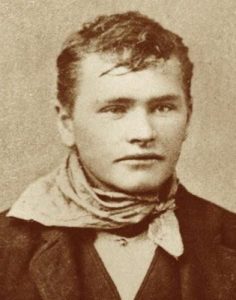 The family of Willard Christianson moved to Utah after they had converted to Mormonism. At the age of 14 Willard got in a fight, and thinking he had killed his adversary, ran away from home. As a young boy Willard fell in with bad company and started rustling cattle. While operating out of Utah’s Robbers Roost area he got the nickname of the Mormon Kid.
Chuckwagon: Cowboy Coffee Roast
 Cowboys loved their coffee. Here’s a recipe where coffee is actually used in cooking a cowboy coffee roast.
Cut slits in a 3 to 5 pound brisket. Insert garlic and onion into the slits. Pour one cup of vinegar over the meat, and work it into the slits. Marinate for 24 to 48 hours – refrigerated, of course.
Place in a Dutch oven. Pour 2 cups of strong coffee and 2 cups water over the meat. Simmer for 4 to 6 hours. If necessary, add water during the cooking.
*Courtesy of Chronicle of the Old West newspaper, for more click HERE.
Rufus Somerby – Wandering Military Man

Marion Hedgepeth and H.H. Holmes