Bloody Prize Fight in Dodge City
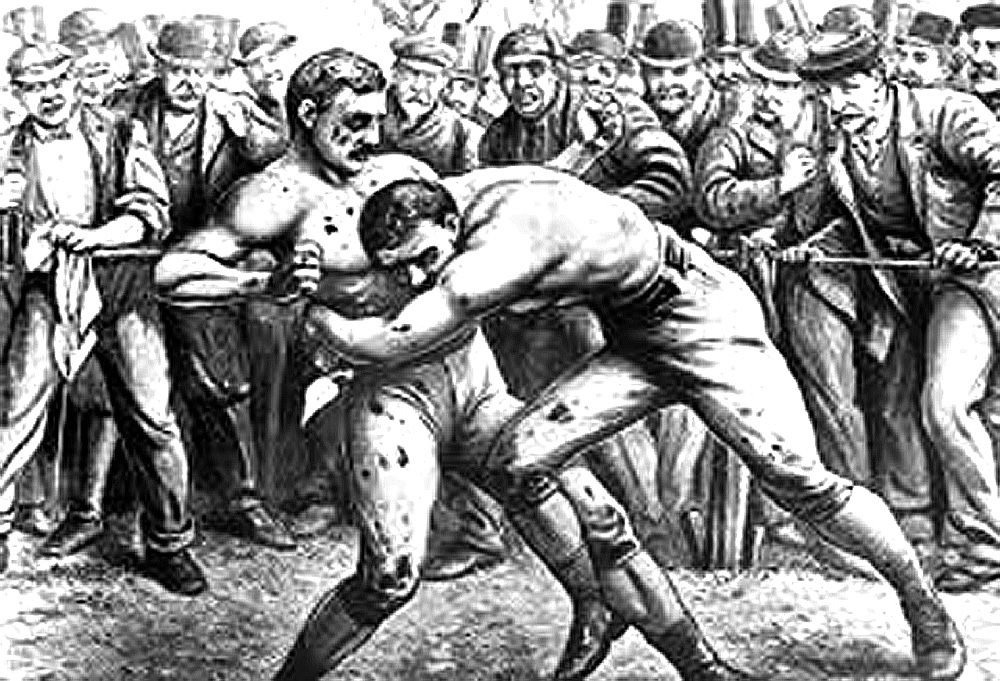 June 16, 1877, Times, Dodge City, Kansas – On last Tuesday morning the champion prize fight of Dodge City was indulged in by Messrs. Nelson Whitman and the noted Red Hanley, familiarly known as ‘the red bird from the South: An indefinite rumor had been circulated in sporting circles that a fight was to take place, but the time and place was known only to a select few. The sport took place in front of the Saratoga, at the silent hour of 4:30 a. m., when the city police were retiring after the dance hall revelry had subsided, and the belles who reign there were off duty. Promptly at the appointed time, the two candidates for championship were at the joint. Col. Norton acted as rounder up and whipper-in for both fighters, while Bobby Gill ably performed the arduous task of healing and handling and sponging off. Norton called “time,” and the ball opened with some fine hits from the shoulder.
Whitman was the favorite in the pools, but Red made a brilliant effort to win the champion belt. During the forty second round, Red Hanley implored Norton to take Nelson off for a little while till he could have time to put his right eye back where it belonged, set his jaw bone and have the ragged edge trimmed off his ears where they had been chewed the worst. This was against the rules of the ring, so Norton declined, encouraging him to bear it as well as he could and squeal when he got enough. About the sixty-first round, Red squealed unmistakably, and Whitman was declared winner. The only injuries sustained by the loser in this bloody prize fight were two ears chewed off, one eye busted and the other disabled, right cheek bone caved in, bridge of the nose broken, seven teeth knocked out, one jaw bone mashed, one side of the tongue chewed off, and several other unimportant fractures and bruises. Red retires from the ring in disgust.
Chuckwagon: Scotch Cookies
SCOTCH COOKIES
1 cup sugar ¼ cup molasses
1 beaten egg ¾ cup melted shortening
2 tsp ginger 1 tsp cinnamon
2 tsp baking soda 2 cups flour
Mix well; roll into balls. Roll balls in sugar and bake at 350 degrees for 8 to 10 minutes.
*Courtesy of Chronicle of the Old West newspaper, for more click HERE.

Old West Newspaper Battle

William Byers
In 1859 the Pikes Peak Gold Rush was a bust. The settlements of Cherry Creek, Montana City and Denver City were on the verge of becoming ghost towns when another gold vein was discovered, and people came running. This set the stage for the first Old West newspaper battle.

First Office of the Rocky Mountain News
A race was on. Bets were placed, and everyone cheered on their favorite editor. Finally, on Saturday evening, April 23, 1859, William Byers’ Rocky Mountain News hit the streets just twenty minutes before the first copy of John Merrick’s Cherry Creek Pioneer. In the news industry, a scoop of twenty minutes is like a lifetime. So, John Merrick sold out and left for the gold fields.
Old West Book Review: Valley of the Guns
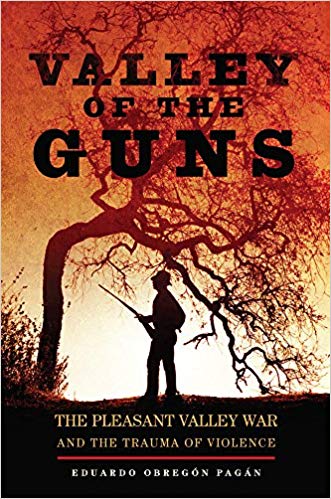 Valley Of The Guns, Eduarado Obregôn Pagan, University of Oklahoma Press, $29.95, Cloth. Maps, Illustrations, Photos, Notes, Bibliography, Index.
“Pleasant Valley” conjures up images of warm summer evenings, horses quietly munching hay in the corral, Mom and Dad laughing quietly on the porch while kids play with a favorite pet lamb. But don’t be fooled. Pleasant Valley was only a name.
The location is northern Arizona below the Mogollon Rim, made up of rough, mountainous country near Indian reservations and a long way to town. Men of derring-do pioneering spirit, determined to find success in a world of sprawling cattle and mining opportunities settled here. Some brought wives with them, while most came alone. They built sturdy one-room cabins compete with gun ports in the log walls. Roving Apaches, sometimes fleeing the nearby reservation skulked amid the tall trees while coveting white man’s supplies and horses.
The late 1880s saw these settlers always on the lookout for trouble, while determined to make a good life. Folks settling in the area soon made friendships and alliances with neighbors. A long way from law enforcement, they learned to band together to protect one another.
However, a series of misunderstandings, revenge and stubborn pride led to the violent deaths of eighteen men, four seriously wounded, and one man missing. The leading families involved were the Grahams and the Tewksburys. The Tewksburys were Arizona natives with an Indian mother and white father. The Grahams, originally from Iowa, like many young men of that era, decided to head “west” eventually meeting the Tewksburys in Pleasant Valley, Arizona.
The author of this book does a careful background search into the lives and origins of both these families and their friends. He delves into their history, what made them act and react to situations resulting in the Pleasant Valley War. Over the years many historians have suggested the conflict was between sheep men and cattlemen, but this is not exactly true. While the Grahams specialized in raising horses, the Tewksburys had both cattle and sheep, and at times shared grazing land with not only the Grahams, but others in the valley that had both cattle and sheep. Many families helped one another in their quest to protect themselves from both rustlers and Apaches, thus the exact cause of the feud is hard to pin down.
What is known is that a lot of men died. There was great fear in the community as even vigilantes and night riders took to the trails. One by one, men died violently, while friends and relatives got revenge. There was even the ghastly lynching of three young ranchers whose bodies were left dangling from a tree for many days as a warning to others who might consider stealing cows.
This book is easy to read, written in a style designed to inform as well as keep the reader turning pages. The author digs into the underlying causes of fear, revenge, guilt, anger and hatred. Blood feuds always result in senseless tragedy, and when they end, nobody seems able to remember what really started it all. The author explains how humans react naturally during moments of grave danger. We either fight, flee, or freeze. We don’t know what we will really do until actually confronted with the emergency that requires instant decision.
Fear, murder and revenge rode those mountain trails. The author of this book has done a creditable job of bringing the story of the Pleasant Valley War to life. He has weeded through all the controversy, explains what happened to all of the participants of the conflict, and leaves the reader with much to ponder after turning the last page. This is a good addition to your Old West library.
Editor’s Note: The reviewer, Phyllis Morreale-de la Garza is the author of numerous books about the Old West including Nine Days at Dragoon Springs, published by Silk Label Books, P.O. Box 399, Unionville, New York ,10988. www.silklabelbooks.com
History of Deadwood, South Dakota
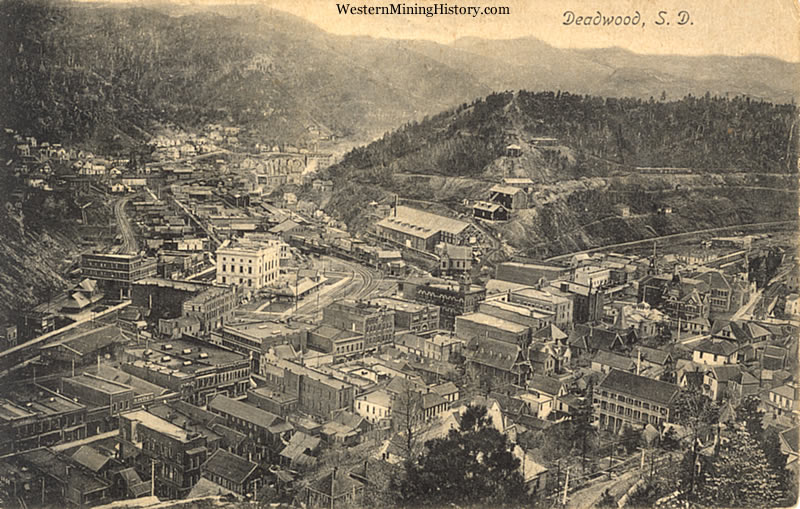 The history of Deadwood centers around discovery of gold in the southern Black Hills in 1874. This set off one of the great gold rushes in America, and in 1876, miners moved into the northern Black Hills. That’s where they came across a gulch full of dead trees and a creek full of gold and Deadwood was born. Practically overnight, the tiny gold camp boomed into a town that played by its own rules that attracted outlaws, gamblers and gunslingers along with the gold seekers. Wild Bill Hickok was one of those men who came looking for fortune. But just a few short weeks after arriving, he was gunned down while holding a poker hand of aces and eights. This hand has come to be known as the Dead Man’s Hand.
Calamity Jane also made a name for herself in these parts and is buried next to Hickok in Mount Moriah Cemetery. Other legends, like Potato Creek Johnny, Seth Bullock and Al Swearengen, created their legends and legacies in this tiny Black Hills town.
Deadwood has survived three major fires and numerous economic hardships, pushing it to the verge of becoming another Old West ghost town. But in 1989 limited-wage gambling was legalized and Deadwood was reborn.
Today, the town is booming once again. You’ll find modern-day casinos, resort hotels, full-service spas, big name concerts, and some of the best parties in the entire United States. You can walk in the footsteps of Deadwood’s legends and make history in Deadwood. They’ve been entertaining guests since 1876.
To get more information about Deadwood visit their web site: www.deadwood.com.
Old West Phrases
 At Cowboy to Cowboy we get intrigued with Old West phrases. Here are some of our favorite descriptive terms:
PRAIRIE TENOR – A coyote.
BARKIN’ AT A KNOT – Doing something useless.
WEARING THE BUSTLE WRONG – A pregnant woman.
ROUND BROWNS – Cow chips.
TEAR SQUEEZER – A sad story.
COLD AS A WAGON WHEEL – Dead
BEAR SIGN – Cowboy term for doughnuts. They were highly regarded.
SHAVE TAIL – A green, inexperienced person.
KICK UP A ROW – Create a disturbance.
THE WHOLE KIT AND CABOODLE – The entire thing.
BAZOO – Mouth as in “Shut your big bazoo.”
GONER – Lost, dead.
Kansas Trail Drives Come to an End
 It seems that Kansas had a love-hate relationship with Texas cattle and the cowboys that brought them up. The love part was the profits to be made providing supplies to the Kansas trail drives and a good time to trail-weary cowboys. Frontier struggling towns like Dodge City, Caldwell, Ellsworth, Hays, and Newton competed with Abilene to be the top “Cow Town” of Kansas.
But, as Kansas started getting less “frontier” and farming became more important, residents, anxious to attract businesses other than saloons and places of ill repute, started getting less enamored with the Texas cattle industry.
Although the Texas cattlemen tried to stay away from cultivated farmland, according to one cowboy “there was scarcely a day when we didn’t have a row with some settler.”
In addition to this, the Texas cattle carried a tick fever and hoof-and-mouth disease for which they were immune, but the Kansas cattle weren’t.
So, on this date back in 1885 the Kansas Legislature passed a bill that barred Texas cattle from the state between March and December 1.
This, along with the closing of open range with barbed wire fences, signaled an end to the cattle drives to Kansas.
William Brady and Billy the Kid’s Regulators
 The Lincoln County War was going full tilt. William Brady was the sheriff of Lincoln County. Brady was known to be in the pocket of the Murphy-Dolan faction… the bad guys as far as Billy the Kid was concerned. The next sequence of events unfold as Billy the Kid’s Regulators come to the forefront.
Chuckwagon: Old West Omelet

Here’s an 1883 receipt for making an old west omelet:
Break all eggs into one plate. Stir rather than beat them. For each three eggs add one teaspoon cold water. The cold water makes the omelet light and moist. Salt and pepper, and place finely chopped parsley on the eggs.
Put two ounces of sweet butter in pan. When the butter is very hot, pour in the eggs. The instant it is cooked on one side, turn it quickly and cook the other side. Double it over when you serve it, on a very hot plate.
*Courtesy of Chronicle of the Old West newspaper, for more click HERE.
Battle of Palo Alto
 On this date back in 1846, Zachary Taylor led American forces against an attacking Mexican Army in the Battle of Palo Alto.
Mexico had never recognized the independence of Texas, and when the U.S. annexed Texas, Mexico sent troops into the disputed Rio Grande River area.
President Polk ordered General Taylor into Texas to defend the border. It was viewed by Mexico as a hostile invasion and the Mexican Army attacked the American forces.
Taylor, however, was in no position to await formal declaration of a war that he was already fighting. In the weeks following the initial skirmish along the Rio Grande, Taylor engaged the Mexican army in two battles. On May 8, near Palo Alto, and the next day at Resaca de la Palma, Taylor led his 200 soldiers to victories against much larger Mexican forces. Poor training and inferior armaments undermined the Mexican army’s troop advantage. Mexican gunpowder, for example, was of such poor quality that artillery barrages often sent cannonballs bouncing lazily across the battlefield, and the American soldiers merely had to step out of the way to avoid them.
Although the Mexican forces were much larger in number, General Taylor was not only victorious in this battle; he won four additional battles and gained control over the three northeastern Mexican states.
Taylor emerged from the war a national hero. Americans admiringly referred to him as “Old Rough and Ready” and erroneously believed his military victories suggested he would be a good political leader. This eventually catapulted him into the Presidency. Unfortunately, he was a much better general than President. Elected president in 1848, he proved to be an unskilled politician who tended to see complex problems in overly simplistic ways. In July 1850, Taylor returned from a public ceremony and complained that he felt ill. He died several days later at age 65.
Dick Fellows – Bad Outlaw Horseman
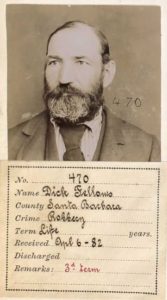 We see outlaws in the movies riding at breakneck speed to chase down a stagecoach, and then jump from the horse to the stagecoach to encounter the driver and guard. All outlaws weren’t that good of horsemen. One such person got out of San Quentin Prison on this date back in 1881. His name was Dick Fellows.
Raised in Kentucky, Dick Fellows…An alias…came to California, and falling on hard times decided to rob stagecoaches. He picked the correct stage. It was carrying $240,000. However, as he was getting ready to go after the stage, the stolen horse he was riding threw him, and he was knocked unconscious.
Not one to give up, Fellows stole another horse and held up the next stage. He was successful. After the stage left, he tried to lift the strong box on his horse. The horse startled and raced off.
With night coming on he started walking with the strong box. Next he fell over a high bluff, knocking himself unconscious a second time. He woke up with a broken leg and foot.
Although the strong box has $1800 in it, he never got a chance to spend it, before Wells Fargo Detectives caught up with him.
When he got out of San Quentin, I believe most people would take the hint and go straight. But not Fellows. He went back to robbing stages, only to be caught again and sentenced to life in Folsom Prison.
Fellows devoted part of his time there to teaching a course in moral philosophy to his fellow inmates. Pardoned in 1908 at the age of 62, he returned to his home in Kentucky and faded from the historical record. It is tempting to lampoon Fellows for his inept horsemanship and astonishingly bad luck, but as one biographer noted, “For daring, he is the equal of any outlaws with whom I ever had dealings.”
Description of Being Scalped
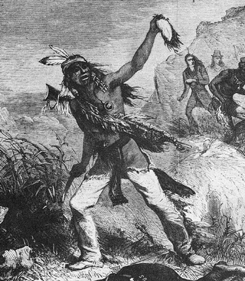 What follows is a December 20, 1883 article from the San Antonio Light newspaper. It’s a description of being scalped, from the actual words of a soldier who had been scalped:
Quote…“Imagine someone who hates you grabbing a handful of your hair and giving it a sudden jerk upward, and a not particularly sharp blade of a knife being run quickly in a circle around your scalp in a saw like motion. Also imagine what effect that a strong, quick jerk on your hair to release the scalp would have on your nervous and physical systems, and you will have some idea how it feels to be scalped.
“When that Indian sawed his knife around the top of my head, first a sense of cold numbness pervaded my whole body. A flash of pain that started at my feet and ran like an electric shock to my brain quickly followed this. When the Indian tore my scalp from my head it seemed as if it must have been connected with cords to every part of my body.”…Unquote
Following the attack, a friend of the scalped man killed the Indian who had done the scalping, but, according to the soldier, his scalp wasn’t returned.
After recovery he chose to muster out of the service…but his commanding officer called him into his office, and suggested that the soldier was making a mistake by leaving the army. “Think,” said his commanding officer, “how surprised and disgusted some red devil of an Indian might be if you should stay with us and happen to fall into his hands. When he went to raise your hair he would find that someone had been there before him.”
Incidentally, the man who was his commanding officer was General George Armstrong Custer whose command was wiped out shortly afterward at Little Bighorn.
Old West Book Review: You Are Respectfully Invited to Attend My Execution
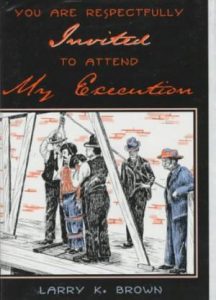 You Are Respectfully Invited to Attend My Execution, Larry K. Brown, High Plains Press, (1-800-552-7819), $11.95, Paperback.
Between 1871 and 1890, seven murderers were hanged in Wyoming Territory. Some others died (including one woman) in Wyoming at the hands of angry mobs, known as vigilantes. However, this book concentrates on the seven legal executions.
Author Larry K. Brown has sifted through court documents, family histories, newspaper articles, and historic journals. An astute observer of human nature, Brown’s research is aimed at presenting a chilling picture of each crime, both victim as well as perpetrator, the arrest, trial, incarceration and finally the last steps of the condemned as they mounted the scaffold.
There are no happy endings here for the victims or the killers. Murder is murder. The victim’s life ends suddenly and brutally, while the killer’s own days are then numbered whether they want to believe it or not. We, students of Old West history, are left trying to understand what leads a person to carry out such evil deeds while thinking they will escape the consequences.
Wyoming Territory from 1871 to 1890 was filled with adventurers, trappers, hunters, homesteaders, ex-military men packing iron, and sometimes shady individuals who experienced hard times and long waits between meals. While some looked for work, others looked for trouble and a fast dollar. The author explains in his introduction the purpose of the book, giving a brief history of capital punishment, its purpose and methods. Whether the reader agrees or disagrees with capital punishment, this fascinating little book gives insight into the Old Western laws and how people dealt with this problem in the building of the new nation.
Wyoming Territory had to find ways to enforce law and order to encourage new settlement. Highwaymen, cattle rustlers and horse thieves were unwelcome. Drifters were not encouraged to stay long. Seven men committed atrocities that led them to the gallows, and they paid with their own lives.
John Boyer shot and killed two men for raping his mother and sister. William “Tousant” Kensler shot a man while the two argued over a prostitute. John Leroy Donovan beat a barber to death while the man slept, then stole his life savings. George Cooke shot and killed his brother-in-law during a drunken argument. John Owens killed a man with an axe for the purpose of stealing his money. Benjamin Carter was a bully who beat up, then shot a young cowboy during a cattle drive. George Black shot an old hermit inside his cabin over a land dispute.
Once caught, some of these men admitted their deed, others denied it; all hoped for last-minute reprieves. Asking forgiveness, too late they craved comforting words from loved ones they had not considered when they turned to murder. Punishment in the Wyoming Territory was swift, the executions were carried out within a short time after sentencing. The author follows each man’s thoughts and actions all the way to their last meal and beyond.
This is not a book you should read before going to bed at night! It is less than 200 pages, but will cause readers to reflect upon choices we make, and the responsibility people must take for their own actions. The reader is left to ponder what really lurked inside the hearts and minds of these killers as they acted upon their baser instincts. For us, these stories should be lessons learned.
Editor’s Note: The reviewer, Phyllis Morreale-de la Garza is the author of numerous books about the Old West including the non-fiction book about the Arizona outlaw titled The Apache Kid, published by Westemlore Press, P.O. Box 35305, Tucson, Arizona 85740.
*Courtesy of Chronicle of the Old West newspaper, for more click HERE.
The Intelligence of the Horse
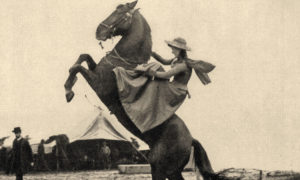 August 10, 1887, Arizona Daily Star, Tucson, Arizona Territory – It always seemed to me that there was a great deal of superstition, I may say, about the intelligence of the horse. Sauntering up to an express man at the corner of Monroe and Dearborn Streets the other day I said to him: “How much does a horse know?”
“A horse, sir?” he replied. “A horse knows as much as a man – just exactly. My horse there knows everything, just like a man.”
This is the way everybody talks who owns a horse or who tends horses, and it all seems to me to be nonsense.
I have seen horses walk around a post until they had wound up the bridle and then stand all day with their heads bound down to the post because they didn’t have sense enough to walk the other way and unwind the bridle. I have seen them get a foot over the bridle, when tied to a ring in the pavement, and then go into fits because they didn’t have sense enough to lift their feet over the bridle again. I have seen them prance around in a burning barn, with their tails and manes on fire, and burn to death, because they did not have sense enough to run out.
Anybody can steal a horse without any objection from the horse. A horse will stand and starve or freeze to death with nothing between him and a comfortable stall and a plenty of oats except and old door that he could kick down with one foot, or that could be opened by removing a pin with his teeth.
If this is a high degree of intelligence, even for a brute, then I am lacking in that article myself. Compared with the dog, the elephant, or even the parrot, the horse seems to me to be a perfect fool.
Wild Bill Hickok Married

Old West Book Review: My Ranch, Too
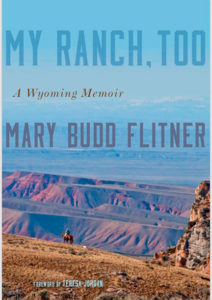 My Ranch, Too. A Wyoming Memoir, Mary Budd Flitner, University of Oklahoma Press, $24.95, Cloth. 2 maps, 23 Photos, 232 pages.
There are not many books that I read twice, but My Ranch, Too is one of them. If you have ever lived on a ranch, or handled horses, dogs, cattle or sheep, or even thought about it, you will smile at the author’s astute observations, and wonderful way of describing it all.
Mary Budd Flitner’s great grandfather Daniel Budd, settled in Wyoming Territory in 1878. He inherited a herd of cattle from his brother who died unexpectedly at a young age. Budd moved his family from Kansas to Wyoming, and thus began the story.
Today, great granddaughter Mary Budd Flitner owns and operates a large cattle ranch in Wyoming, known as the Diamond Tail Ranch. Her husband Stan is also a descendant of a Wyoming ranch family. The land, weather cattle, horses and sheep are part of their heritage. Mary’s wonderful stories are written chapter by chapter filled with original detail. Every experience imaginable having to do with Wyoming ranch life is described with clear and careful thought.
Readers will enjoy her subtle sense of humor in chapters like the horse race, and the disappearance of her children’s bum lambs. Things usually turn out for the best with happy endings, although Mary is fair and tough when circumstances require a firm hand. Her dealings with horses, cowboys, hired and amateur helpers, terrible cold winters and seasons of drought are part of her life. Raising four kids through thick and thin, high interest rates and livestock losses are dealt with head-on.
Mary Flitner’s great love for her land, her family and way of life comes through on every page. This is a family story about hard-working people who have managed to survive under harsh conditions, with plans to leave the land to the next generation.
Mary admits there are times when she’s anxious to drive to town for a few hours of “girl talk” with her lady friends. She has found a balance between life in blue jeans, driving pickup trucks, changing tires, delivering calves, mending fences, herding cattle, or getting bucked off a frisky colt. Thus she enjoys a brief respite with female friends who themselves understand ranch life.
Her stories are true, carefully written, easy to understand, sometimes filled with sentimental humor showing her ability to laugh at herself. She writes tenderly about the friends she has had over the years, those who worked hard and shared their personal tragedies. She has kept a journal in which she checks back over the good times as well as bad, including scary happenings like the time her husband was pinned under a fallen horse a long way from home. (No cell phones). Her kids were taught to ride and rope almost as soon as they could walk, and they grew up happy and strong amid their horses, cattle drives, dogs, and lambs.
This is a story of a woman’s place on a working ranch, where she handles being a wife, mother, bookkeeper, cook, adviser, and business partner besides fixing farm machinery, and using branding irons. Readers will feel the cold, the dust, the wind and snow through Mary’s admirable talent for describing details. Readers sense her true grit as she drives a truckload of cattle down an icy canyon road, or stoically prepares wash tubs filled with food for hungry roundup crews.
There is no whining here, no blaming others. Mary Flitner’s story gives readers much to think about. She’s a tough, honest, kindly person you’d be proud to ride with.
Editor’s Note: Reviewer Phyllis Morreale-de la Garza is the author of numerous books about the Old West, including the non-fiction Death For Dinner, The Benders of (Old) Kansas, published by Silk Label Books, P.O. Box 399, Unionville, New York 10988. www.silklabelbooks. com.
*Courtesy of Chronicle of the Old West newspaper, for more click HERE.
Jack Abernathy
 Jack Abernathy was born in Texas. At the age of six he and his older brother would sneak away from home to play piano and violin in the local saloon. Following a Christmas shootout in the saloon with several victims, his parents discovered what he was doing, thus ending his entertainment career.
 John Tunstall and Billy the Kid
 John Tunstall was an Englishman who came to America with some capital to invest. He wandered over to New Mexico where he met a lawyer named Alexander McSween. McSween suggested that there were good business opportunities in Lincoln County. What he probably didn’t mention was that there was a bit of a rivalry, over government beef contracts, going on between a J. J. Dolan and John Riley, owners of a general store called “The House,” and local cattle ranchers. Thus begins the story of John Tunstall and Billy the Kid.
Chuckwagon: Railroad Cake
 1 cup sugar
1 tablespoonful of butter beaten to a cream
3 eggs beaten to a froth
1 cup flour
3 tablespoonsful sweet milk
1 teaspoonful cream of tartar
1/2 teaspoonful soda
1/2 teaspoonful salt
Cream sugar and butter until light and fluffy. Add eggs, blending well. In a separate bowl, combine flour, salt and baking soda. Add to creamed mix slowly, alternating with lemon juice and buttermilk. When well blended, turn out into two 8-inch cake pans that have been well-greased and floured. Place in a preheated oven. Done when an inserted toothpick comes out dry.
(from an 1888 cookbook)
*Courtesy of Chronicle of the Old West newspaper, for more click HERE.
John Daly and the Vigilante Committee
 John Daly was born in New York. As a young man, he migrated to California. Leaving a string of dead men behind him, he then went to the gold mining town of Aurora, Nevada. The mining company and the town fathers were looking for someone to protect their interests from the criminal element. Since Daly carried himself well, and seemed to know how to handle a gun, they hired him as a deputy city marshal. No one ever thought they would one day need a vigilante committee.
Bloody Bill Anderson
 The Anderson family resided in Jefferson County, Missouri. Although they were farmers, the Anderson men had a tendency to augment their income with armed robbery. From these family roots sprung Bloody Bill Anderson.
Old West Book Review: They Called Him Buckskin Frank
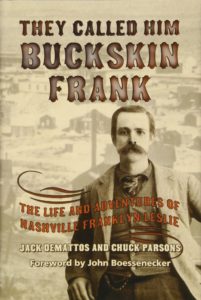 They Called Him Buckskin Frank, Jack Demattos an Chuck Parsons, University of North Texas Press, $29.95, Cloth, Photos, Notes, Bibliography, Index.
The name Buckskin Frank Leslie seems always to appear in the old Tombstone stories. Doc Holliday the Earps, Johnny Ringo and some others had some association with him, but he was always on the “fringe.” (No pun intended.) He was tagged with the name “Buckskin Frank” probably because he nearly always wore a buckskin jacket.
The reality was that he handled guns, sometimes rode with the sheriff, scouted for the Army during the Geronimo campaign, and owned saloons in Tombstone. He was notorious for having shot and killed his girlfriend but never really became a major figure in the Tombstone story we have seen in countless movies and television shows.
The authors of this book have sorted through the wild tales and incomplete history of Buckskin Frank, but information such as exactly where he was born, and parental history remain vague. He claimed to be college educated, and this may very well be true. A long letter he wrote for a San Francisco newspaper in 1900 detailing his participation in trailing Apaches is extremely well-written. This alone shows he was probably educated beyond the usual Tombstone cowboys of that time.
Buckskin Frank was short in statue, but handsome nonetheless, able to attract the ladies in droves. He had a long list of girlfriends, lovers and wives. He shot and killed the husband of one of his future wives, he left others in divorce court or simply vanished when convenient. One lady scheduled to be his wife was left quite dead as a result of the business end of his shootin’ iron after a drunken brawl at his ranch near Tombstone. Her grave marker in the Arizona desert says “Mollie Williams”, but her real name was Mollie Edwards. The result of her death sent Buckskin Frank to Yuma Territorial prison for eight years.
He was a model prisoner, put in charge of the prison pharmacy, and was released early due to his good behavior on November 17, 1896. He was met at the prison gates by a love-sick widow whom he married fifteen days later. After promising her a honeymoon trip to China, he dumped her in April. Apparently China was the farthest thing from his mind.
He spun some good yarns about himself, which got mixed up with reality thus making it difficult for biographers to sift through the information, real and otherwise.
For instance he claimed to have been a scout for General George Armstrong Custer, but no military records can be found giving proof of this. He did scout during the Geronimo Campaign in Arizona, having gone deep into Mexico hunting for runaway Apaches. He did kill several men in gunfights, and he was involved in the Spanish American War in Cuba.
The authors have trailed Buckskin Frank to San Francisco where he continued to move from one house to another, frequented billiard parlors and saloons, had mining interests South of the Border, and eventually in his old age disappeared all together. It is suggested he was the victim of foul play, complete with skeletal remains, outside Oakland, California.
This book is enchanting, putting some old fictionalized tales regarding Buckskin Frank to rest, but also pointing to some new and tantalizing information about the man. Buckskin Frank’s life was certainly filled with unusual adventures. Gambler,
Who really was Buckskin Frank Leslie? This book is a fascinating read.
Editor’s Note: The reviewer Phyllis Morreale-de la Garza is the author of numerous books about the Old West including Death For Dinner, The Benders of (Old) Kansas, published by Silk Label Books, P.O. Box 399, Unionville, New York 10988 www.siIklabelbooks.com
*Courtesy of Chronicle of the Old West newspaper, for more click HERE.
Crook’s Starvation March
 It was June of 1876. About 1,000 Sioux and Cheyenne attacked General George Crook and 1,400 soldiers in what was to be called the Battle of the Rosebud. Although the battle ended in a tie, the Indians fled, and Crook, licking his wounds, chose not to immediately follow them. Finally, after a month and a half, Crook took out after them toward the Black Hills. Thus began what is now called Crook’s Starvation March.
Chuckwagon: One Shot Pot
 One Shot Pot:
Early in the morning cut up stew meat
in small pieces (beef or venison),
onions, garlic, celery (celery salt will do fine).
Cook until tender which will take about two hours.
Then add a can of tomatoes, 1 can of corn,
1 can of green beans and 1 can peas.
If no canned goods available you can add one cup macaroni,
1 cup rice and several diced potatoes.
This is called Slum-gullion in some parts of the West.
*Courtesy of Chronicle of the Old West newspaper, for more click HERE.