Developing The Cherokee Language and Alphabet

Sequohah, born in 1760 in Tennessee, grew up among his mother’s people, the Cherokee. He became a metal craftsman, making beautiful silver jewelry. As a young man he joined the Cherokee volunteers who joined Andrew Jackson in the War of 1812. While with the American soldiers, he became intrigued with what he called “talking leaves,” or words on paper that somehow recorded human speech. Although Sequohah had no formal education, he somehow comprehended the basic nature of the symbolic representation of sounds.


Old West Book Review: Riding Lucifer’s Line
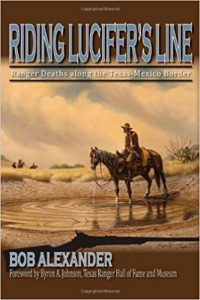 Retired lawman and veteran writer of more than a dozen non-fiction books about Old West history, Bob Alexander again writes a hard-hitting book. Riding Lucifer’s Line is a collection of 24 profiles about Texas Rangers who lost their lives on the Mexico-Texas border known as “Lucifer’s Line.” The chosen time period covers the last quarter of the Nineteenth Century through the first quarter of the Twentieth Century.
Carefully researched including newspaper accounts, personal letters, courtroom papers and official Texas Ranger documents, Alexander shows how the hard riding, straight-shooting Rangers rode with boldness into mortal danger. Their weapons of choice included Winchesters and the Colt’s .45 caliber six-shooters. They relied on horses for transportation, and faced every weather condition while crisscrossing the vast and untamed land. From choking dry desert and cactus-studded hills, to the swampy, mosquito infested marshes to the south, these men answered the call.
Alexander points out that Texas Rangers were sometimes hated and despised by the Hispanic population, even referred to as “devils”, by those who naturally resisted the new boundary after Texas split from Mexico. And while not all of the Rangers were angels on horseback, they dealt with the harsh realities of an unforgiving adversary good at ambush and body mutilation.
Sonny Smith was the youngest Ranger killed in the line of duty. At seventeen years he was shot down ambushed by a wounded desperado hiding in the weeds near a pond. John McBride and Conrad Mortimer were caught in a crossfire, trapped inside a shack by a Mexican lynch mob. Sam Frazier was killed by people he had threatened, and George R. “Red” Bingham was shot through the heart during a running gun battle with outlaws. Frank Sieker’s death was the result of a “terrible mistake” when Rangers mistook two Mexicans as horse thieves who were really leading horses of their own that had escaped, but due to language differences, the fight was on. Charles Fusselman was shot in the head during an ambush while chasing cattle thieves. Grover Scott Russell was ambushed inside a grocery store by the mother of the man he was trying to arrest. The lady used an axe.
The list of murdered Texas Rangers goes on and on, as readers find out what happened to whom, who the killers were and if they were brought to justice. These stories are real, and there are no happy endings when a young man in the prime of life is suddenly left dead riddled with bullet holes, or his skull crushed with an axe.
Two sections in the book provide photographs of many of these men and some others. A brief history of the Texas Rangers is explained in the book’s Foreword, and the Afterword gives yet another brief history lesson in what it took to be a Texas Ranger, details of their enlistment requirements and pay. Bob Alexander also explains how life on the Texas-Mexico border continues to this day to be a dangerous proposition. Horse and cattle rustling have now become mostly a war with drug cartels and human smugglers.
This book is a fast-paced, sentimental eye-opener into the lives of these twenty-four brave men who were determined to make Texas a safer place, but forfeited their own lives in the name of law and order. The struggle continues to this day.
Bob Alexander’s vast experience in law enforcement, border issues, and his love of Texas history once again come through in this latest book. Get your copy HERE.
Editor’s Note: The reviewer, Phyllis Morreale-de la Garza is the author of numerous books about the Old West including Silk and Sagebrush, Women of the Old West, published by Silk Label Books, P.O. Box 700, Unionville, New York 10988 www.silklabelbooks.com
*Courtesy of Chronicle of the Old West newspaper, for more click HERE.
Remember The Alamo
 In the early 1830’s what is now Texas was part of Mexico. Wanting to settle the vastness of the territory, Mexico invited Americans to come south. Before long the approximately 20,000 Texacans became tired of the regulations put on them by Mexico, and wanted things to be done the way they were in America. So, in 1833 a convention took place that adopted a constitution for an independent state. Sam Houston took the request to Mexico, and ended up spending two years in jail for his troubles. When Sam Houston got out, the revolution was at hand.
The first confrontation in the battle was at the Alamo. As we know, Santa Anna and his 5,000 troops were victorious. The second strike came in March of 1836 when again Mexican troops were victorious, and the Texican survivors were shot near Golead.
 Sam Houston and a rag-tag group of 900 men were all that was left of the Texican resistance. Santa Anna, with the smell of victory in his nostrils, starting burning everything in his path as he moved toward the final destruction of Houston and the revolution.
An overly confident Santa Anna with 1,400 men encamped in a poorly defended area near the San Jacinto River. Sam Houston, only a mile away, saw his opportunity. So, on April 21, 1836, during the Mexican’s afternoon siesta his much smaller band of Texas soldiers came down upon the Mexican regulars with screams of “remember the Alamo,” and “remember Golead”, and in just 18 minutes Sam Houston was victorious. In spite of Santa Anna’s past victories, and that it was only a few rag-tag rebels against a country, in about the time it takes for a coffee break, Mexico lost Texas.

Chuckwagon: Stuffing For A Turkey
From an 1888 cookbook
Mix thoroughly a quart of stale bread, very finely grated; the grated rind of a lemon; quarter of an ounce of minced parsley and thyme, one part thyme, two parts parsley; and pepper and salt to season. Add to these one unbeaten egg and half a cup of butter; mix all well together and moisten with hot water or milk. Other herbs than parsley or thyme may be used if preferred, and a little onion, finely minced, added if desired. The proportions given here may be increased when more is required.
*Courtesy of Chronicle of the Old West newspaper, for more click HERE.
The Crime of 1873

When this happened a financial panic started taking place. Obviously the bottom fell out of the silver market. A man who was a wealthy owner of a silver mine one day, found himself the owner of a worthless hole in the ground the next day. In addition… farmers or anyone who carried a heavy debt load felt this bill made for a tighter supply of money, and therefore harder to pay off their debt. Congress’ bill became known as the “Crime of ’73.”

With the United States going through widespread financial difficulties, it was mystically thought that going back to both silver and gold would solve all problems.
The leader of the fight to go back to silver again was Congressman Richard Bland, an ex-miner and farmer. He was so tireless in his efforts that he received the nickname “Silver Dick.”
Unfortunately, those who found it difficult to pay off their debt prior to the Bland-Allison Act found it just as difficult afterward.
Chuckwagon: Corn Dodgers
2 Cups yellow cornmeal
2 Tablespoons butter or margarine
1/2 Teaspoon salt
1 Tablespoon sugar
2 Cups milk
1 Teaspoon baking powder
Preheat Dutch oven to 400 degrees F.
Cook cornmeal in a saucepan with butter, salt, sugar and milk until the mixture comes to a boil. Turn off heat, cover, and let stand 5 minutes. Add baking powder. Spoon the mix onto the Dutch oven in heaping tablespoon-size balls, then bake for 10 to 15 minutes. They are done when slightly brown around the edges.
*Courtesy of Chronicle of the Old West newspaper, for more click HERE.
Old West Book Review: The Life and Legends of Calamity Jane
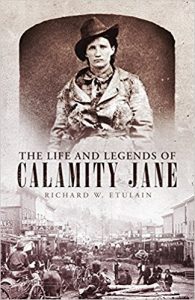 Martha Canary, better known as Calamity Jane, was a legend in her own time. Martha was born in Missouri in 1856, and had several younger siblings. Her father was a farmer and her mother a housewife who herself gained local notoriety as an eccentric with a volatile temper and a sharp tongue. When Martha was seven years old, the family left Missouri and headed “Out West,” first to Iowa and eventually to Montana. By the time Martha was eleven years old, both of her parents had died and she was alone in the world caring for the other children.
This book carefully delves into what is always challenging about the life of Martha Canary. Martha was illiterate; there is no known record of her writing or even a signature. As her life evolved, she became a tough character facing a tough world. Martha Canary traded face powder for gun powder, smoked cigars, drank whiskey, chewed tobacco, used rough language, drove mules and ox teams, quite possibly was involved in prostitution and during her drinking bouts was notorious for entertaining her bar buddies by howling like a coyote which resulted in her being thrown into jail more than once.
Martha’s reputation reached the ears and imagination of eastern writers who featured her character as the protagonist in a large collection of dime novels designed to entertain and shock eager readers anxious to learn about life in the Wild West.
Martha did travel in 1876 with General Crook’s expedition organized to fight the Sioux Indians. Known as the Big Horn and Yellowstone Expedition, the group consisted of nearly nine hundred officers, enlisted men, scouts and civilians. They headed up the Bozeman Trail with eighty supply wagons. Martha Canary was involved in this adventure, but her real role is difficult to pinpoint. She claimed later to have been a scout whose bravery dubbed her the nickname “Calamity Jane” when her derring-do saved one of the officers during an Indian attack. However, it is likely that she was merely a cook, or even a camp follower, since there is no official military record showing that she was hired as a scout.
It is true she was an eccentric woman who, long before it was socially acceptable, dressed like a man, drank, smoked, brawled, swore and fought her way in a rough and tumble frontier world. She did travel with a Wild West Show for a time, she did live in Deadwood, she did meet Wild Bill Hickok but it is highly unlikely there was a romance between them. Calamity was probably married at least once and gave birth to a daughter named Jessie. This poor child raised by an alcoholic mother and with no real father figure in her life, became a troubled person who in her old age was confused as to whether Calamity was her mother, grandmother or aunt.
This biography of Calamity Jane covers every facet of her life beginning with her ancestors to her death from alcoholism in Deadwood at age 47, in 1903. In her last years she sold a pamphlet filled with tall tales she dictated about her life. Readers were less interested in historical accuracy than entertainment. Since her death, numerous biographies, dozens of novels, hundreds of magazine articles and nearly twenty Hollywood movies have featured Calamity Jane.
From Doris Day to Angelica Huston, audiences have been treated to a gun-totin’ tobacco spittin’, buckskin clad gal who aimed to git her man with a gun. If you want to know anything about the life and legend of Calamity Jane, this is the book for you. The author has spent many years delving through books, articles, archival collections, old newspaper stories and family reminisces to set the record as straight as possible. But remember, once Hollywood gets hold of a character with a name like Calamity Jane, Billy the Kid, Wild Bill Hickok, Jesse James, Doc Holliday, Wyatt Earp or Johnny Ringo, there will never be an end to it. To get at the real story, get your copy HERE.
Editor’s Note: The reviewer, Phyllis Morreale-de ía Garza is the author of numerous books about the Old West, including the true crime Death For Dinner, The Benders of (Old) Kansas,, published by Silk Label Books, P.O. Box 700, Unionville, New York, 10988. www.silklabelbooks.com
*Courtesy of Chronicle of the Old West newspaper, for more click HERE.
Indian Fighter Jim Baker
As an illustration of the type of man Baker was, in 1841 Baker and about 20 other trappers encountered over 500 Cheyenne, Arapaho and Sioux at the Little Snake River, and although unbelievably outnumbered, they were able to hold off the Indians.
After successfully guiding an army detachment on a dramatic midwinter trek from Fort Bridger, Wyoming to New Mexico, and back again in order to get emergency provisions for Fort Bridger, in 1858, at the age of 40, he moved to what is now downtown Denver, Colorado. Although at the time, a settlement of a few shacks, over the next five years Denver grew to the point that Baker decided it was just too crowded, and he moved to a more remote area…Wyoming.

Gambler Charles Cora Lynched
In November of 1855 Charles and Bella went to a play at the American Theater. Their attendance outraged many of the attendees, including Marshall Richardson and his wife. Marshall Richardson asked them to leave. But Charles and Bella refused.
Over the next couple of days Charles and the Marshall exchanged insults, until one evening a drunken Marshall Richardson called Charles out. Shots were fired, and Marshall Richardson was dead.

Old West Book Review: Last of the Old-Time Outlaws
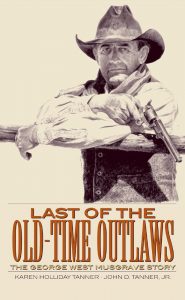 “He had a reputation as a cardsharp, cattle rustler, bandit, and killer,” and if George Musgrave had had a more romantic-sounding name, Hollywood might have cashed in on this amazing Old West character. In Last of the Old-Time Outlaws, you’ll get the true story.
George West Musgrave was born May 27, 1877 in Atascosa County, Texas. His family ran a thirty-five hundred acre cattle outfit, and baby George was surrounded by tough people earning a hard living. The boy grew up surrounded by work, horses and guns. The Musgrave family consisted of various characters involved in gambling, horse rustling, and cattle theft which resulted in arrests and jailhouse stints. George even had a grandfather who had a long history of dueling, fights with Comanche, feuds with neighbors and “an inclination toward larceny.”
Excuses can be made for these influences on George, however, he began his career as a cowboy who could ride, rope, shoot and show off. He was known for “putting on shooting displays with a number of revolvers.” Soon he became involved in rustling with a devil-may-care attitude. He seemed always ready with a string of wisecracks. His popularity among his pals and cohorts became legendary.
His adventures led him back and forth from Texas into Old Mexico, then to New Mexico and sometimes Arizona. He joined what was known as the High Five or Black Jack gang. They spent years holding up stores, rustling cows, stealing horses, robbing banks and even trains. Musgrave was one of the gang members who took part in the first bank robbery in Arizona Territory. They also held up stagecoaches, and eventually pulled off the largest heist in the history of the Santa Fe railroad.
Musgrave was arrested and tried for the shooting death of a former Texas Ranger. When he miraculously avoided conviction, he migrated to South America where he took up his same old ways, now getting involved on a large scale with some big ranchers and South American politicians.
George was tail, handsome, soft spoken and popular with the ladies, too. During a trip back to Wyoming, Musgrave met an adventurous young woman named Jeanette “Jano” Magor. Twelve years younger than George, Jano was known for her smarts and toughness. Smitten with one another, the pair eloped. Jano followed Musgrave back to South America where she joined his dubious lifestyle. One photo shows the beautiful brunette dressed like a gaucho complete with her own shootin’ iron. She eventually grew weary of her husband’s philandering, and returned to the U.S. for a divorce.
After this, Musgrave had a succession of South American wives who produced children, all eventually either leaving him or hating him for his cavalier treatment of marriage vows.
Whether Musgrave was cheating at cards, robbing a bank, or shooting alligators, he joked about it all. He died in South America at age 70 of natural causes.
The Tanners have written a compete and thoroughly researched book about a tough, strong-willed man who could not resist danger and deviltry. The authors have a keen eye for unusual facts combined with a subtle and wonderful sense of humor that results in bringing the character of George Musgrave back to life. Readers will enjoy this book. Get yours HERE.
Editor’s Note: The reviewer Phyllis Morreale-de la Garza is the author of numerous books about the Old West including Death For Dinner, the Benders of (Old) Kansas, published by Silk Label Books, P.O. Box 700, Unionville, New York 10988 (845) 726-3434. www. silklabelbooks.com.
*Courtesy of Chronicle of the Old West newspaper, for more click HERE.
Chuckwagon: Pickled Eggs
Because it was difficult to keep eggs fresh without refrigeration, pickled eggs were a delicacy while on the trail. Once a cowboy got into town, he was able to get pickled eggs at his favorite tavern to add a little solid food to offset the beer and whiskey.
1-cup tarragon vinegar. ½ tsp celery seed.
1-cup water. 1 clove garlic, minced.
2 Tbs sugar. 2 bay leaves.
½ tsp salt. 12 shelled, hard-boiled eggs.
Combine all ingredients in saucepan, except eggs. Simmer 30 minutes. Remove bay leaf. Cool. Pour over eggs in a crock or jar. Cover and refrigerate 2 to 3 days before eating.
*Courtesy of Chronicle of the Old West newspaper, for more click HERE.
Lone Survivor Of Little Big Horn
 Following George Custer’s defeat at the Little Big Horn the military was looking for a bright spot. That bright spot was the lone survivor on the battlefield, Comanche. Now, I said Comanche, not a Comanche. For Comanche was the name of Captain Myles Keogh’s horse. Let me explain.
In September of 1868, Captain Keogh was involved in the Sand Hills battle with Comanche Indians. Keogh rode his backup mount during the battle. The horse was shot with an arrow in the right hindquarter, but showed no signs of the injury, which wasn’t discovered until after the battle. Keogh immediately made his backup horse; his primarily mount, and named him “Comanche.”
Keogh rode Comanche until the Battle of the Little Big Horn where he was killed. Following the battle, Comanche was found casually drinking water from the Little Bighorn River. He had seven wounds.
The Indians had either killed or taken all the military horses, but not Comanche. The reason was that during the battle Keogh had dismounted, holding the reigns in one hand as he shot his pistol with the other. When Keogh was killed he maintained a hold on the reigns. And no Indian would take the horse when a dead man was holding it.

The Death of Lawman Ed Crawford
 Not much is known about Ed Crawford before he came to Ellsworth, Kansas. In 1873, he was serving off and on as an Ellsworth policeman. The sheriff was Chauncey Whitney. On August 15, brothers Ben and Billy Thompson were in town. Both were outlaws. But Billy was a crazy outlaw. Although Sheriff Whitney was a friend of the Thompsons, on this day Billy got mad at him and shot and killed him. Obviously, Billy hightailed it out of town.
 The incident, and Billy Thompson’s escape so infuriated the Mayor that he fired the entire police force. Since, at that time, Ed Crawford wasn’t on the force, the mayor hired him as a replacement. Because the Thompsons were Texans, and Texans were notorious for causing problems, there were hard feelings against any Texan in town. There was even talk about forming a vigilante group. One of the people supposedly on the vigilante’s list was a Cad Pierce.
Chuckwagon: Brown Gravy
The following is a farm recipe for gravy from the late 1880’s.
This gravy may be made in larger quantities, then kept in a stone jar and used as wanted.
Take two pounds of beef, and two small slices of lean bacon. Cut the meat into small pieces. Put into a stew-pan a piece of butter the size of an egg, and set over the fire. Cut two large onions in thin slices. Put them in the butter and fry a light brown, then add the meat. Season with whole peppers. Salt to taste. Add three cloves, and pour over one cupful of water. Let is boil fifteen or twenty minutes, stirring it occasionally.
Then add two quarts of water, and simmer very gently for two hours. Now strain, and when cold, remove the fat. To thicken this gravy, put in a stew pan a lump of butter a little larger than an egg, add two teaspoonfuls of flour, and stir until a light brown. When cold, add it to the strained gravy, and boil up quickly. Serve very hot with the meats.
*Courtesy of Chronicle of the Old West newspaper, for more click HERE.
Old West Book Review: Chronicling the West For Harper’s
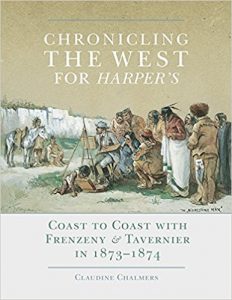 Chronicling the West For Harper’s. This fascinating book tells the story of two French artists, Paul Frenzeny and Jules Tavernier who were employed in 1873 by Harper’s Magazine to travel for one year across the great American frontier to chronicle immigrant migration. The men began in New York City and wound their way to San Francisco.
Paul Frenzeny was the son of a Hungarian nobleman. He had been a soldier in the French army, and eventually traveled to Mexico where he served as an artillery officer in the army of Maximilian. When Maximilian was defeated by the Juaristas, Frenzeny beat a hasty retreat back home to France by way of New York City. Here he became enamored with America and by using his considerable artistic talent and writing skills; he began working for Harper’s Magazine.
Jules Tavernier was the son of a British candy maker and grew up in France where he studied art with a Parisian master. After a stint in the military, he sailed for New York City were he immediately began building a reputation by producing expert artwork for important books and magazines, including Harper’s where he met Frenzeny.
When Harper’s cooked up the idea to publish realistic artwork showing immigrants crossing America, the magazine sent Frenzeny and Tavernier on a yearlong jaunt Out West. This book follows their trail from coast to coast as these two remarkable artists produced intricate drawings taken from their experiences as they traveled across the continent. Their sketches were transferred to wood cuts, and sent back to New York each week so readers could follow their adventures visually as well as in print. The result was a weekly flow of exceptional artwork combined with explanations of life on the frontier.
The men traveled by train, stagecoach and even horseback as they depicted life including glimpses of the manufacture of iron, and coal mining in Pennsylvania, plus train travel across Missouri, Kansas and Texas. There are log cabins, market days, sunsets, grazing cattle, homesteaders, woodcutters, Native Indians, prisoners en route to Ft. Smith, trader’s stores and even a vigilance committee preparing to hang outlaws for horse stealing.
Frenzeny and Tavernier worked relentlessly from place to place, following the immigrant trail, always looking for details surrounding everyday life. Their expert artistic talents picked up each and every nuance showing playful children, concerned mothers, thin over-worked animals, and dangers that lurked.
The book contains more than 130 marvelous illustrations along with the history lessons of author Claudine Chalmers whose keen eye directs readers’ attention to each important detail in the drawings. Chalmers has an uncanny way of observing what the artists must have seen as they watched argumentative washerwomen, snoozing pigs, defensive mother bears, dangerous river crossings, bustling cotton-gins, sugar-making in Texas, exciting deer hunts, market days and even abandoned towns after the railroads changed course. Coyotes digging through trash barrels and gnawing on dry bones in front of a dilapidated store tell the story. You’ll see prairie gnawing on dry bones in front of a dilapidated store tell the story. You’ll see prairie fires, buffalo slaughter, and Indian ceremonies. These wonderful illustrations include the Red Cloud Agency, work at a stone quarry, the emotions of a group of Mormon wives, and even the last of the Shoshone Indians begging at a railroad depot. The journey ends with scenes from San Francisco’s China Town.
This marvelous book combines history lessons from the 1870s era, along with exciting artwork you will marvel at time and again. It belongs as a special treasure in your Old West library. Get your copy HERE.
Editor’s Note: The reviewer Phyllis Morreale-de la Garza is the author of many books including Silk and Sagebrush; Women of the Old West, published by Silk Label Books, P. 0. Box 700, Unionville, New York 10988-0700 www.siIklabelbooks.com
*Courtesy of Chronicle of the Old West newspaper, for more click HERE.
Who Coined The Phrase “Hold Up?”

As a young man Bill Miner tried his hand at mining gold in California and later had a mail delivery service in San Diego. Not doing well at either, he started looking for some easy money. So… Bill robbed his first stage. Not being a success at this either, he was arrested and sentenced to 15 years in San Quentin. While in San Quentin Bill Miner “got religion” and was released after serving 10 years.

The Real Hugh Glass Of “The Revenant” Film

Back in 1823, explorer and fur trader Major Andrew Henry took a group of men to explore what is now northwestern South Dakota. One of the adventurers who went on the trip was a man named Hugh Glass. On May 8 Hugh went on a hunting trip and didn’t return. Some of the other men went to find him. On the way they came across a wounded grizzly bear. Shortly after dispatching it, they found the mangled body of Hugh Glass. Obviously, the grizzly and Hugh had tangled, and Hugh had gotten the worse of the battle.
Since Hugh was near death, Major Henry decided to push on. Being a bit compassionate, Major Henry offered to pay two men $40 if they would stay until Hugh died, and then bury him. The volunteers were John Fitzgerald and a 19 year old, future famous mountain man, named Jim Bridger.
Fitzgerald and Bridger waited only a few hours before deciding they had enough, and leaving him still alive, they appropriating Glass’ rifle and other equipment, and caught up with the rest of the group, stating that Glass was dead and buried.
Even in his bad state, Hugh Glass had heard the men talking and knew what had happened. With vengeance burning inside him, and surviving on berries and whatever else he could scrape up, he crawled 150 miles to Fort Kiowa.

Chuckwagon: Cooked Cabbage Salad
1 Pint or more of chopped cooked cabbage
Add:
1 Egg well beaten
¼ Cup vinegar
1 Tsp butter
Dash of salt and pepper
Sweeten to suit taste. Simmer a few minutes and add ½ cup of thick fresh cream. Serve immediately.
*Courtesy of Chronicle of the Old West newspaper, for more click HERE.
A Great Rhode Island Cowboy

Abel Head Pierce was born in Rhode Island on June 29, 1834. At the age of twenty he stowed away on a schooner and ended up in southern Texas. Abel took a job for a cattleman named Grimes. Starting out doing odd jobs, Abel worked his way up to trail boss, taking cattle to New Orleans.


Old West Book Review: The Sundance Kid
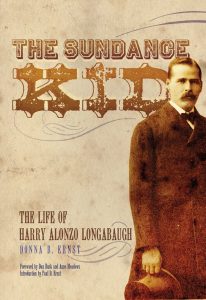 Old West outlaw history has many “kids”, and the Sundance Kid is among the most popular. He teamed up with Butch Cassidy, and the two robbed banks, blew up railroad cars, stole money, buried loot, rustled horses, broke jail and foiled lawmen all the way from the United States to South America.
Along the way many romanticized stories cropped up. Books, magazine articles, and even one popular movie had Butch and Sundance appearing in a variety of exciting situations. lt is true they belonged to The Wild Bunch, or Hole in the Wall Gang of robbers and rustlers in Old Wyoming. At one point in their career, they brazenly posed for a group photograph in a New York studio with members of their gang.
They rode hard, shot straight, plotted brazen holdups and get-aways, and even ran with a beautiful and mysterious woman known as Ethel (or Etta) Place. She traveled from New York to South America with them, was thought to be a Texas soiled dove, but disappeared from history before the men were hunted down and killed in Bolivia. All the possibilities surrounding Ethel’s life and what might have ultimately happened to her are explored here.
The author of this book is Donna Ernst, a member through marriage of the Longabaugh family, and she has spent many years delving into historical archives, family records, Pinkerton documents, letters and news accounts. Ernst has determined to set the story straight and takes the reader step by step from Harry Longabaugh’s childhood all the way to his death in Bolivia. She explains her sources of information and covers thoroughly Harry’s movements from childhood, to his work as an honest cowboy horse trainer, to his involvements in crime. She corrects some information about crimes he was blamed for, but other escapades she shows what part he played.
His crime spree began in the United States, and he spent some time in jail. Each time he was released he promised to go straight, but, but it always seemed too easy for him to drift back to a life of crime with his old pals. Eventually, when he was closely followed by American law enforcement authorities, he and Butch and Ethel departed for South America where they planned to become honest ranchers. However, the Pinkertons and other sheriffs were quick to figure out their whereabouts, and soon the trio was back on the run. They made friends in South America, but once they again began their outlaw ways, the locals naturally turned on them.
According to Ernst, down to their last two bullets, Butch and Sundance died of suicide in a shack surrounded by Bolivian police throwing Iead. Many writers show Burch and Sundance slipping back into the U.S. where they drifted in and out of their family’s lives. Several old men even claimed to be Butch or Sundance well into the 20th century. According to Ernst, one clever self-promoter may very well have been a Longabaugh relative, but certainly not Sundance himself.
The author makes a very strong case with good documentation that both Butch and Sundance died in Bolivia. This fascinating book takes the reader in a clear and concise writing style, along the outlaw trail of a man who might have been an upstanding, worthwhile citizen, but instead chose a life on the wild side.
This memorable book belongs in your Old West library. Get your copy HERE.
Publisher’s Note: The reviewer, Phyllis Morreale-de la Garza is the author of numerous books about the OId West including The Apache Kid, published by Westernlore Press, P0. Box 35305,Tucson, Arizona 85740.
*Courtesy of Chronicle of the Old West newspaper, for more click HERE.
First Photo Of A Crime In Progress


A Nobleman Smitten by The West

Windham Thomas Wyndham-Quin was born on February 12, 1841 as the fourth Earl of Dunraven. In 1874, at the age of 34 the Irish nobleman came to the United States to check on some land that he owned. Incidentally, that land was 60,000 acres where Estes Park, Colorado is located.

Chuckwagon: Black Pudding
Here’s an old ranch recipe courtesy of Winkie Crigler, founder and curator of The Little House Museum in Greer, Arizona
6 Eggs 1 Cup Sweet Milk
2 Cups Flour 1 Tsp Soda
1 Cup Sugar 1 Tsp Cinnamon
1 Cup Molasses
Mix well. Pour into 1-pound can and steam for 2 to 3 hours by placing in kettle of boiling water. Keep covered.
This is to be served with a vinegar sauce:
1 Cup Sugar 1 Tbsp Butter
1 Tbsp Flour 2 Tbsp Vinegar
½ Tsp Nutmeg
Put in enough boiling water for amount of sauce wanted. Add two slightly beaten eggs and cook stirring constantly to the desired consistency.
*Courtesy of Chronicle of the Old West newspaper, for more click HERE.
Book Review: Six-Shooters and Shifting Sands
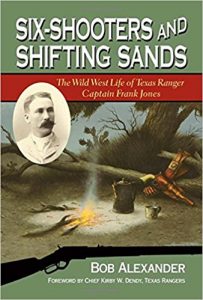 Author Bob Alexander had a long career in law enforcement. Combining this with his love of Texas, he now specializes in writing the biographies of various outlaws as well as lawmen, and here he takes aim at Captain Frank Jones of the Texas Rangers.
The book contains carefully researched information about the life and times of this brave man who was born in 1856 and died young, at age 37 in 1893. Jones’ remarkable career is filled with straight-shooting combined with faithful adherence to the laws of his State of Texas. These Rangers withstood unbelievable hardship as they helped create a safe environment for ranchers, settlers, townsfolk and adventurers alike. They dealt with never ending long days in the saddle, cold and heat, sudden political harangues and many uncertainties regarding their jobs and futures. Many of these men had no real personal lives, they were expected to be nearly superhuman in their promise to keep the peace.
Captain Frank Jones was born during tumultuous times in Texas during which Comanche swooped down on homesteaders, often kidnapping and murdering men, women and children. Comanche raiders combined with white rustlers, robbers, Mexican bandits and many miles between settlements and help was not a place for folks lacking grit. Frank’s mother Keziah Jones gave birth to her son on their lonely ranch while marauding Comanche terrorized the neighborhood.
Keziah’s photograph shows a severe, straight-laced and grim woman whose stare alone could stop most Comanche in their tracks. This photo and many others in the book show Frank’s family members, Ranger cronies, and important political figures he knew. With surnames like Hogg, Outhouse and Outlaw, this is better than what any fiction writer could possibly make up.
When Frank Jones joined the Frontier Battalion (later known as the Texas Rangers) he began chasing outlaws, and riding to the scenes of robberies, cattle rustling, fence cutting, murder, and every other depredation imaginable. No one could ask for a more exciting profession. Guns, horses, brawls, skulduggery. . . , it’s all here.
The book delves mostly into the career of Frank Jones, and touches only briefly upon his personal life. We find out he was married twice, his first wife was in fragile health and died soon after the couple’s second child was born. Frank had to put both children to live with relatives while he pursued his career. Sadly, the second child soon died. Several years later Frank married a divorced woman who had one son from her first marriage. Her ex was also a lawman, and a friend of Frank’s. She was pregnant with Frank’s son when Frank was killed during an ambush perpetrated by a gang of Mexican outlaws at a place called Pirate Island.
Frank Jones’ story ends with a tragic and fiery shoot-out between his group of Texas Rangers, and a Mexican gang well-hidden behind adobe walls. The Rangers rode right into a trap, and were cut down in a thunderous fusillade, leaving Captain Jones mortally wounded but still fighting back until his dying breath.
Today Frank Jones lies buried beneath his memorial monument in a cemetery near Ysleta, Texas. A sentimental photograph shows his old pals and comrades in arms circling his grave in remembrance. We see tough old Rangers in their twilight years respectfully resting their hands on the grave marker, their eyes shining with sadness, courage and respect. Some of these men were with Frank at Pirate’s Island the day he died.
Bob Alexander has once again written a valuable and memorable biography of an old-time Texas Ranger who deserves to be remembered. This book belongs in your Texas Ranger collection.
Author’s Note: The Reviewer, Phyllis Morreale-de la Garza is the author of many published books, including the novel Hell Horse Winter of the Apache Kid, published by Silk Label Books, P.O. Box 700, Unionville, New York 10988 (845-726-3434) www.silklabelbooks.com.
*Courtesy of Chronicle of the Old West newspaper, for more click HERE.