Ike Clanton
 N. H. Clanton, better known as “Old Man” Clanton, was the leader of a band of outlaws that at one time numbered as many as 300 men. They operated in southeast Arizona. They were known to rustle Mexican cattle and rob a bullion train now and then. In 1881 a group of the clan headed by the Old Man robbed a bullion train in Guadalupe Canyon, killing 19 Mexicans in the process. A few weeks later the Old Man and 5 gang members were in turn ambushed and killed by friends of the murdered Mexicans. With Old Man Clanton dead, one of his sons, Joseph Isaac Clanton, took over the business. “Ike” Clanton, as he was known around Tombstone, just didn’t have the grit. And although the gang was still known as “The Clantons”, the actual leader became Curly Bill Brocius.
 But Ike was still around. He was like that fly that keeps landing on your face when you’re trying to catch a nap. With a feud between the Clantons and the Earps developing, Ike Clanton seemed to always be talking tough, but stopping just short of an actual fight.
True to his nature, when it came time for the big shootout, Ike refused to fight… and even though Wyatt fired at him several times, Ike escaped with only a slight neck wound. Later Ike supposedly masterminded the ambushes of Virgil and Morgan Earp. After the Earp bunch left Tombstone Ike settled in northeast Arizona, where he continued his cattle rustling. But what Wyatt and Doc couldn’t do, a couple of novice deputies were able to accomplish, and on June 1, 1877 while being arrested, Ike Clanton finally pulled his gun and was shot dead.
|
Seth Bullock of Deadwood

In 1867, at the age of twenty, Seth Bullock left Canada to come down to the Montana Territory and do some gold mining. Four years later he was elected to the territory’s state senate. Next Seth took a horseback ride around the Yellowstone area, and sent back reports that helped influence its becoming our first National Park.


Book Review: Killer of Witches
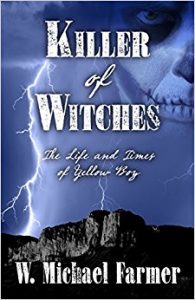 In Killer of Witches, the Spur Award winning author W. Michael Farmer delivers a carefully researched story of a Mescalero Apache’s adventures. Beginning in 1865, the boy, along with a small group consisting of his family and friends, “jump” the reservation at Bosque Redondo, New Mexico Territory where they have been unhappily confined.
Their well-planned escape in dead of night is rewarded when they join a larger group of Apache fugitives hiding in Mexico. The reader is swept along with the Apaches, particularly Yellow Boy, as he grows into a much-feared warrior. He rides, shoots, becomes expert with bow and arrow as well as guns and practices all the rituals and traditions of his People. Along the way he meets some famous Apaches such as Juh and Victorio.
The location of the story includes New Mexico Territory, Arizona Territory, and Sonora and Chihuahua, Mexico. The reader really feels the descriptions of a harrowing life on the bronco trail. Heat, cold, storms, water shortages, dangers from wild animals and possible ambush by American troops, Mexican soldiers or renegade killers along the border is constant.
Yellow Boy dreams of a girl he likes, but wisely chooses another more suited to his dangerous lifestyle. Juanita fights beside him and is a woman to be counted on. She’s strong and smart, and totally devoted to her man.
A cantankerous old white man named Rufus Pike takes Yellow Boy under his wing and teaches him passable English as well as the expert handling of guns. Yellow Boy is tough and determined yet a thoughtful young man who tries to understand the rituals of the Apache god, Ussen. Both Apache and Spanish words and phrases are found throughout the story including their meanings.
As the story progresses, Yellow Boy has a frightening dream during which he thinks he has been spoken to by Ussen. He is warned that a mysterious apparition too horrible to think about has attacked Yellow Boy’s family campground in the mountains. When Yellow Boy rides to the rescue he discovers that sure enough, a sort-of Comanchero cross between a Mexican and a Comanche giant has murdered many of Yellow Boy’s relatives including his beloved father.
Known as “The Witch”, this hideous individual has taken over a hacienda and surrounds himself with captive women, fellow marauders, scalp hunters, murderers and thieves. The Witch, covered with tattoos, bird feathers and paint, dresses in an odd getup found only in poor Yellow Boy’s wildest nightmares. Armed with a pet owl trained to kill humans, this Witch becomes the villain of all villains. Quite likely the guy has smoked a little too much peyote.
Yellow Boy, armed only with his aged grandfather, his favorite gun, and two boyhood pals, must settle the score. The reader knows he’s being put-on by a clever and imaginative author who keeps readers glued to their book far into the night.
Well…, not too far into the night. I suggest you finish the story in the morning in the light of day when The Witch’s horrible face, his murderous rages, his gang of cutthroats, his mistreatment of women, and his diabolical urges to torture and kill anybody defying his authority won’t seem so scary. Besides, we have to find out what happens.
Does Yellow Boy beat The Witch? Read the book. You won’t be disappointed. But be careful, this book is the first of a trilogy featuring Yellow Boy and his nemesis, so we suspect even after turning the last page, there is still a lot more hard riding to do. Get your copy HERE.
Editor’s Note: The reviewer Phyllis Morreale-de la Garza is the author of many books including Hell Horse Winter of the Apache Kid, published by Silk Label Books, P.O. Box 700, Unionville, New York 10988-0700. www.silklabelbooks.com
*Courtesy of Chronicle of the Old West newspaper, for more click HERE.
Johnson County War Build-Up
 Frank M. Canton was known as a lawman, operating as a range detective for the Wyoming Cattle Grower’s Association, and then twice as the sheriff of Johnson County, Wyoming. At the time of his defeat, the Johnson County War was building up. This was a battle between the big cattle ranchers and the small ranchers and farmers.
 With failing health, Frank Canton went to Texas where he supposedly had an audience with Jim Hogg, who was a friend as well as the Governor of Texas. Frank confessed to the Governor that his real name was Joe Horner. And that while in his mid 20’s, while living in Texas, he had been wanted for bank robbery, rustling and the shooting of two soldiers.
SALTED UNDERSHIRT
A SALTED UNDERSHIRT FOR THE GRIP
March 1, 1892, Daily Herald, El Paso, Texas – Five years ago I was suffering with a very severe throat trouble, so much so that I did not expect to live. An acquaintance told me that he could give me a remedy that would cure it and , as I had tried all of the doctors in my town without receiving any benefit, I decided to try the remedy suggested. I tried it, was permanently cured of my cough, and besides I discovered that I was not subject to colds.
I was conductor, running in the states of Virginia, North Carolina, South Carolina, Georgia, Florida, Tennessee and Alabama. I was of course subjected to very hot cars in winter, and of necessity had constantly to get out in the cold at all hours of the night. In all that time I have never had a cold or the grip.
You will be astonished at the remedy. It is simply to wear a salted undershirt. Take a summer undershirt and soak it in brine made with, a half pint of ordinary salt to about a quarter of water, and put out to dry. Wear this shirt next to the body. It is not unpleasant to wear and will, I am sure, keep off grip and bad colds, and, I firmly believe, consumption. If I were to live to be eighty years old, I have so much faith in the salted shirts that I would never cease to wear them. My reason for preferring the thin gauze shirt is because the salt makes a heavy shirt too stiff and hard. Wear the heavy shirt over the salted shirt.
NOTE: This article written in 1892. It was the latest in medical news back then, but not necessarily now.
Teton Jackson – Killer

Harvey Gleason was over six feet tall. He had a shabby beard, ruddy face with flaming red hair and black eyes. By his mid 40s, he had supposedly killed several soldiers and deputy marshals.
But, people didn’t know him as Harvey Gleason, everyone knew him as Teton Jackson. He got his name from his favorite area, the Teton Mountains. For a living Teton Jackson stole horses… Not one or two at a time, but hundreds. For about eight years, Teton and his men stole horses during the summer and hid out among the Teton Mountains during the winter.

Book Review: Wyatt in Wichita
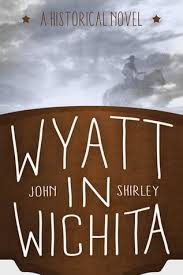 In the novel Wyatt in Wichita, readers of Western fiction will enjoy a look into the early life and times of Wyatt Earp. The author begins the story with the death of Wyatt’s wife Urilla, who died in Lamar, Missouri in 1870. At this time, Wyatt was 22 years old. Following this traumatic event, Wyatt travels to various towns throughout Kansas, and even up to Deadwood in the Dakotas while deciding what to do with his life. Heartbroken, confused, short of cash and blaming himself for the dearth of his wife, he runs into a variety of people both good and bad, who shape his future.
The problem with writing fiction using famous characters for the leading role is that the author must appeal to readers who have usually made up their minds well in advance of picking up a book. So much has been written about all the Earps, good, bad, and otherwise, it is hard to find anybody who does not have some preconceived ideas of what Wyatt Earp was really like. Was he a hero, or a self-serving cad?
The challenge for author Shirley, himself obviously a Wyatt Earp fan, was to keep readers turning pages even if they did not always agree with the author’s assessment of certain situations. Shirley is an experienced and clever writer who is able to keep the story moving forward by his good descriptions of life in the Old West, plus, he includes glimpses of other famous Western characters such as teenage Billy the Kid whom Wyatt tries to steer in constructive directions. Billy tags along with Wyatt throughout most of the book, and we see glimpses of his character as the young man struggles between right and wrong. He tries listening to Wyatt, but we can see a dark side to Billy that we know will eventually erupt in Lincoln County, New Mexico.
Meanwhile, to keep the reader guessing, Shirley has Wyatt involved in solving the murder of a beautiful young woman found strangled in his sister-in-law’s brothel. Bessie Earp, a madam in Wichita, is married to Wyatt’s older brother, James.
The story includes good descriptions of towns bustling with saloons, card games, buffalo hunters, peace officers and others who lived in these frontier settlements. Wyatt plays cards, gets into personal disagreements, and makes friends with the likes of Bat Masterson. Even Wild Bill Hickok and Calamity Jane put in brief appearances.
Trying to earn a living, Wyatt does wood cutting, law enforcement, riding shotgun for Wells Fargo, and even does a bit of gold prospecting. He stays in touch with his brothers and meets the difficult Mattie Blaylock who will eventually follow him to Tombstone, Arizona. While Mattie fawns over Wyatt now, she will eventually become a thorn in his side. However, this book does not get into the Tombstone part of Wyatt’s life. This story ends with him still in Kansas, trying to figure out where he will go next. Perhaps another Wyatt Earp story by this author will be forthcoming as a sequel, but don’t look here for the shootout at the O.K. Corral.
If you enjoy Western fiction filled with guns, card games, bad guys, peace officers and fast rides, you will like Wyatt in Wichita. Author Shirley has among his many credits co-screen writing the motion picture, The Crow, as well as having written television films for FOX and Paramount. Wyatt in Wichita is entertaining and fun in the tradition of historical western fiction. Shirley is an experienced storyteller who knows how to spin a good yarn. Grab your copy HERE.
Publisher’s Note: The reviewer, Phyllis Morreale-de la Garza is the author of numerous books about the Old West including The Apache Kid, published by Westernlore Press, P.O. Box 35305, Tucson, Arizona 85740
*Courtesy of Chronicle of the Old West newspaper, for more click HERE.
Dodge City’s Most Famous Gunfight

Levi Richardson was a buffalo hunter who, because of the lack of buffalo, had become a freighter. He was a well-liked, hard working individual who was known for his proficiency with a pistol and rifle… As well as a quick temper.
Book Review: First Territory
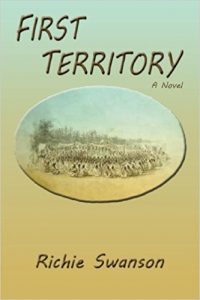 This novel tells of a young white man’s experience during the 1855-1856 Yakima War in the Pacific Northwest. The protagonist is Andrew Eaton, who works as a translator between American politicians, the U.S military commanders, and the Indians, thus he is traveling with important people and getting in on all that is happening.
Andrew has learned the Indian language from his friendship with a beautiful Indian girl named Lalooh who ultimately does some translating too, since she has learned passable English from Andrew. However, throughout the story she stays with her family and as the story unfolds, she and Andrew only catch glimpses of one another.
Some background leading to this story, while only touched upon here, is the true debacle of Marcus and Narcissa Whitman who, ten years earlier before this story begins, had been brutally massacred along with twelve other white persons at their Mission in the Waiilatpu in what is now Oregon. Marcus was an American pioneer, doctor, and missionary among the Indians. Narcissa was one of the first white women to cross the continent. Their deaths occurred November 29, 1847. It is believed the Indians Marcus was trying to convert to Christianity became suspicious and enraged when a number of Indian children died in a measles epidemic and the Indians thought the Whitmans had poisoned them. Not until several white children died did the Indians understand the situation, but by then it was too late.
Now, ten years after the Whitmans’ deaths, there is continued feuding between the U.S. government, the various Indian tribes and white religious groups. Young Andrew finds himself caught in the desperate struggle between all these people as the Indian Wars in the Northwest finally grind to a close. Indian reservations are being established while leaders of the various tribes struggle between themselves as well as the new white government. Many misunderstandings, deep personal hatreds, loss of life and old traditional ways all come to a tumultuous clash by the end of the story.
Meanwhile, Andrew is in love with Lalooh and probably she has feelings for him too, but the situation is far too desperate and emotionally-charged for these two young people to resolve their differences and live happily ever after. Lalooh is faithful to her own people, even though she is roughly treated by an Indian who takes her for his wife. Andrew must watch and record while translating, and becomes embroiled in all the brutality on both sides. Andrew travels with his own people, while always on the lookout for Lalooh. His hared for the white governor becomes deeply entrenched in his feelings as he is caught between his job as translator and what is happening to the Indians.
Author Richie Swanson spent nearly thirty years beginning in 1977 exploring Indian reservations in the Northwest and researching the People’s long traditions. He writes with carefully crafted original detail, painting word pictures that sometimes cause the reader to flinch. Swanson’s writing is bold and unforgiving, some battle scenes are painfully revealing. The surprise, the sudden and fearful attacks and their aftermath remind us of all our years of human tragedy, war after war. Swanson’s writing goes deeper than an easy to read novel, he teaches truth along with entertainment. He really drives home what a gutsy, well-schooled novelist can do when endeavoring to rise above the average story-teller. Get your copy HERE.
Editor’s Note: The reviewer Phyllis Morreale-de la Garza is the author of numerous published books about the Old West, including the novel Widow’s Peak, published by Silk Label Books, P.O. Box 700, Unionville, New York 10988. Www.silklabelbooks.com
Poker Alice
 Born in England, Alice Ivers was educated in a female seminary. She came to the United States and eventually settled down in Colorado where she married Frank Duffield, a mining engineer.
She returned to Colorado and worked for Bob Ford, the person who shot Jessie James… That is, until Ed Kelly killed him.

Book Review: Thunder Canyon
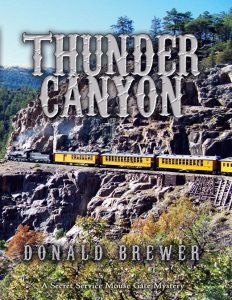 The novel Thunder Canyon is informative as well as fun reading for teenagers and adults alike. It is a fantasy/historical fiction about three modern teenage cousins who are magically transported back to the 1900 rip-roaring gold mining town of Cripple Creek, Colorado. The kids are both delighted and awed by the boardwalks, gambling saloons, Chinese workers, miners, gamblers, horses, wagons, no indoor plumbing, and the hustle and bustle. The contrast showing modern kids in a historical setting is amusing as well as filled with surprise. Occasional expressions like “awesome,” and “Hey, dude,” keep the reader chuckling as the kids are put to work spying on various members of a dangerous outlaw gang.
The real protagonist in the story is the grown up Eddie Donnally from New York, a Secret Service operative on the trail of a gang of counterfeiters who have set up shop in Cripple Creek. The gang consists of an angry woman bent on revenge, and her three brothers who are her accomplices. Unbeknown to Eddie, he has had a run-in with this family several years earlier in New York during which time their leader was sent to prison. Now, after moving to Colorado, the remaining gang members plan to kill Eddie when they discover their old nemesis is hot on their trail again.
The kids work as sleuths, passing information about what they have seen and who they have followed, while Eddie works the gambling saloons looking for signs of counterfeit money and who the culprits might be.
As readers turn the pages, we find sharp photos of 1890s rail cars, color photos of gold pieces known as Eagles, Double Eagles, and Half Eagles. There are pictures and descriptions of telegraph keys, burro descendants of those who worked in the Cripple Creek mines, arrest cards and photos of several real female counterfeiters apprehended in the old days by the Treasure Department, counterfeit coin-making equipment, Gold Mine Stock Certificates and counterfeit coin detectors from the 1890s.
The story includes train rides between Cripple Creek and the nearby town of Victor, a bit of romance between Eddie and an attractive town lady who runs a haven for stranded persons, and a helpful connection with the Chinese community. The story ends in a big shootout inside the gang’s mine hideout, right in keeping with a good old fashioned Western story.
The Appendix gives a detailed description of the game of faro including photos and information about dealers, players, and cheating (which sometimes ended in gunplay).
The author of this book is Donald Brewer, a 26-year veteran with the United States Secret Service. He was the Special Agent-In-Charge of the Counterfeit Division in Washington, D.C., and at one time worked undercover as case agent in the Atlanta Field Office. Later, in Miami, he spent eleven years closing down counterfeit manufacturing operations when Miami was known as the counterfeit capital of the world.
While retired now, Brewer’s obvious love for his job comes through in this story which is the second book in the “Mouse Gate Series” of adventures about catching counterfeiters. When not giving speeches and presentations regarding counterfeit U.S. currency, he is busy writing a third book for this series. Brewer has appeared on both the Discovery Channel and Learning Channel in an effort to educate the public on the issues of newly designed U.S. currency.
Thunder Canyon is not only an informative book for adults, but perhaps a step toward encouraging teenagers to read about life in the Old Wild West. Get your copy and get in on the fun HERE.
*Courtesy of Chronicle of the Old West newspaper, for more click HERE.
Rattlesnake Dick

As a teenager, Charlie Lazure came out west to the New Mexico Territory where he got into a shooting fracas. It’s not known what happened to the other guy, but Charlie was shot in the leg, which resulted in his having a limp for the rest of his life.
While out on bond, Charley again stole a couple of horses. And again, he was arrested and brought back to Silver City. This time the complainant showed up, and no one posted bond. As a result, Long Neck Charley spent two years at the Santa Fe Territorial Penitentiary.
 On May 4, 1887, Charley Lazure was released from prison. Not wanting to have anything to do with prison again, he dropped out of sight.Then again, maybe that’s how he picked up the nickname, Rattlesnake Dick. Charley Lazure mayhave just slithered under a rock somewhere.
The Oxbow Stage Route


Black Faced Charlie & The Dalton Gang


McCarty Crime Family

The McCartys were from Utah, and for a while, brothers Tom, Bill & George ran with the Wild Bunch. When Tom McCarty got married, he not only gained a wife, he also gained a member of the gang, brother-in-law Matt Warner.
The Reno Gang
 A short-lived, but very active gang of the 1860s was the Reno gang. They were the first gang to rob a train. They also engaged in crimes of all kinds, including counterfeiting.
Seeing the writing on the wall, five members of the gang, including Frank Reno escaped to Canada.

But, the Pinkertons also crossed over the border, and arrested them. After an extradition battle that even included the involvement of President Andrew Johnson, these members of the gang were returned to the States and secured in the New Albany jail.
But it did no good. On the evening of December 11, a group of men wearing scarlet masks rushed the jail, wounded the sheriff,
and secured the keys. One at a time, the Indiana Vigilantes hanged the jailed members of the Reno gang.
Cattle Industry Going Wild


Colorow and His People
 This story is about an Indian chief who used intimidation and psychological warfare, more than warfare to keep the whites out of his land.
Colorow was a 300-pound surly leader of a band of Northern Ute. His weight was the result of his love for biscuits covered in syrup, which he regularly got by intimidating settler housewives in the Denver area.
But Colorow wasn’t always that size. As a boy he was a Comanche captured by the Ute. However, because of his skills in battle and his leadership qualities, he was made a chief. Although Colorow never really declared war with the whites, he was a persistent thorn in their sides. In 1876 the Ute owned 32 million acres in western Colorado, and Colorow and his people made sure they kept it by threatening and intimidating any miners or settlers who entered the area.
In 1878 a new Indian agent arrived in town. Agent Nathan Meeker’s objective was to transform the Ute into farmers. At the same time Colorado elected a governor on the platform that “the Utes must go.” It was only a matter of time before the sparks lit the gunpowder. And it happened when Meeker, fearing an uprising…because he cut the Ute’s rations to a bare starvation point…called in troops. Colorow ambushed the troops, killing 13, and wounding 43. At the same time another group attacked Meeker’s family, and killed all of them. A truce was arranged. And the Ute who killed the Meekers were punished, but Colorow’s attack was considered an engagement of war.
Again in 1887 a skirmish broke out. As with the one before, it was needless. This one ended when both sides ran out of ammunition.
Finally, on December 11, 1888, Colorow died. It has been estimated that Colorow’s persistent psychological intimidation of any white entering the Ute lands probably delayed the settling of the central Rocky Mountains by at least a decade.
Seth Bullock
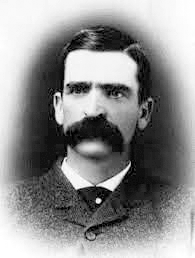 In the Old West there were men who seemed to be everywhere and do everything. Today you’re going to be introduced to one of those men. His name is Seth Bullock.
In 1867, at the age of twenty, Seth Bullock left Canada to come down to the Montana Territory and do some gold mining. Four years later he was elected to the territory’s state senate. Next Seth took a horseback ride around the Yellowstone area, and sent back reports that helped influence its becoming our first National Park.
Then he became a county sheriff and proceeded to face down a lynch mob, as well as legally hang the first man in the Montana Territory.
Deciding to move on to new territory, he went to Deadwood in 1876. With no law, and no official process of selecting a sheriff, by popular demand, he became the town’s first lawman.
Also being a good businessman, he served as the president of a mining company and a bank.
As a lawman, while trailing an outlaw named Crazy Steve, he ran into a posse led by a deputy U. S. Marshall from the Dakota Badlands who had just caught Crazy Steve. The U. S. Marshall and Seth became lifelong friends. Incidentally, the marshal’s name was Theodore Roosevelt.
Although Seth became a captain in Roosevelt’s Rough Riders, he was never sent to Spain.
After Roosevelt became the President, he sent for Seth, and told Seth that he was needed in Washington. Seth responded that, “There’s just one job that would get me to live in this town, and you’re filling it just fine.” Seth settled for the job of a U.S. Marshal.
Seth served with distinction until his death on September 23, 1919. Roosevelt had called Seth Bullock the ideal American. But he wanted only one word on his tombstone…Pioneer.
Elizabeth Ann Clifton
 Do you think you’ve had a rough life? I can assure you that when we get through with the story of Elizabeth Ann Clifton; you’ll feel your life is a piece of cake.
Born in 1825, Elizabeth Ann Clifton had no schooling and suffered with bouts of epilepticy. At the age of sixteen, she married Alexander Carter. They became ranchers outside of Dallas. Elizabeth managed the ranch, and ran a boarding house. Her husband and his father ran a freight company. In 1857, both her husband and his father were mysteriously killed.
A little over a year later Elizabeth married a Lieutenant Sprague. He disappeared eighteen months later. Elizabeth continued with the boarding house and ranch, becoming one of the most prosperous people in the area. At the age of 36, Elizabeth married a third time…one of her ranch’s cowboys. They were married a year and a half when he was murdered.
Surviving three husbands was tough enough to bear. But the worse was yet to come. In 1864, when she was 39, her ranch was attacked by Comanche, during which Elizabeth’s daughter and daughter’s son were both killed. Elizabeth, her thirteen-year-old son and two surviving granddaughters were taken captive.
Elizabeth was sold to the Kiowa. One of her granddaughters froze to death during the winter of 1864. The other spent nine months as a captive. The Comanche tattooed her arms and forehead before releasing her.
After spending twelve months in captivity, Elizabeth was rescued. And on August 27, 1866, at the age of 41, she headed home. Elizabeth reunited with her granddaughter. Three years later, she married again, and lived quietly until her death at the age of 57.
Truly, it took strong women to survive in the Old West.
Red Cloud
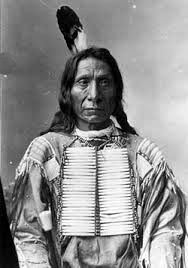 As you will see this week, one of the few times Red Cloud made a miscalculation in his fight with the whites was on August 2, 1867.
In July of 1867 civilian contractor J. R. Porter arrived at Fort Kearny in Nebraska with supplies. He planned on starting a logging operation. Among the supplies were 700 new breech-loading Springfield rifles and 100,000 rounds of ammunition. Until now the military had used muzzle-loading rifles. A Springfield used a manufactured cartridge, making it several times faster to shoot than a muzzle-loader.
Porter built his logging camp about six miles from the fort. To carry the logs he took the box beds off about 14 wagons, putting the four-foot high wagon boxes in a circular corral for protection.
At dawn of August 2, 1867 Red Cloud, with almost 1,000 braves, was poised for an attack against the 32 men inside the circle of wagon boxes. Even the women and children of the tribe, had come to observe the event.
At 9:00 500 warriors on horseback made the first charge. They circled the wagons expecting the spaced firing of a muzzle-loader. Instead it was the constant volley of the Springfield. The warriors retreated. Dead and wounded Indians and horses were everywhere. The next wave was 700 warriors on foot wearing nothing but war paint. The Indians got so close and the Springfields were so powerful that one shot often passed through two or three warriors.
For three hours the battle waged on. Then the sound of a howitzer was heard in the distance. A relief column was on its way. Red Cloud and his tribe retreated into the hills.
Miraculously, only 7 of the soldiers and loggers were killed. However, Red Cloud lost over 200 braves.
Buffalo Bill Cody
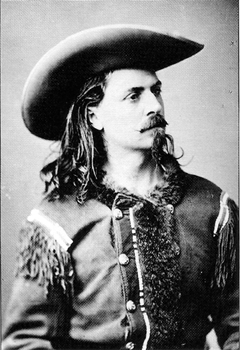 One of the Old West’s most famous personalities quite possibly received his fame because someone else refused it.
On July 24, 1869 Ned Buntline was looking for fresh material. Now Buntline was a prolific writer of fictionalized books about the Old West called “dime novels.” At $20,000 a year Buntline was by far the highest paid writer of his time…exceeding the income of such famous authors as Whitman, Twain and Melville.
Buntline came to Fort Larned, Kansas looking for a prospective subject…Major Frank North. When he found North and made his proposition, North explained that real men didn’t brag about themselves. “But,” he said, “If you want a man to fill that bill, he’s over there under a wagon.” Buntline went over to the wagon and saw to a young scout sleeping off a hangover.
The writer and the 23-year-old scout ended up spending 10 days together, drinking and swapping stories. Before the end of the year Ned Buntline had written and published “Buffalo Bill, King of the Border Men, The Wildest and Truest Story I Ever Wrote.”
The book was made into a stage production in New York. Incidentally, the New York press called it the adventures of “Bison William.” Buffalo Bill came to see the show, and was intrigued with performing on the stage…After all it was a less dangerous than fighting Indians.
So, they rewrote the show and named it “The Scouts of the Plains.” The opening night was in Chicago. Even though there were no professional actors on the stage, and no lines were delivered as written, the audience applauded it enthusiastically.
They went on to St. Louis and eventually New York where Buffalo Bill and Buntline had a falling out. Buntline then hired Wild Bill Hickok, who, incidentally maintained that Buntline’s original novel “King of the Border Men” actually contained his exploits, not Buffalo Bills.
Dodge City
 As the railroad headed west, towns grew up along side it. One of the more famous Western towns was named Buffalo City. However, that wasn’t the name under which it became famous.
It was the middle of July 1872 when the Atchison, Topeka and Santa Fe Railroad reached a peddler’s camp by the name of Buffalo City, Kansas, located about five miles from the military reservation of Fort Dodge. Almost overnight tent saloons and gambling dens sprang up. Within a matter of weeks it was a town of false-fronted buildings. And shortly afterward the Buffalo City town signs were taken down and replaced with signs reading, Dodge City, after the name of one of the town fathers, Colonel Richard I. Dodge.
Because it was against the law to sell liquor in unorganized regions of Kansas, the Dodge City residents petitioned to organize the county of Ford. Interestingly, the petition contained the names of as many transients and railroad people as residents. Even though it was challenged, the state legislature, out of expediency, approved Ford County
Dodge City started out as a hangout for buffalo hunters. Then when the cattle drives and cowboys started coming north, with twenty saloons, numerous dance halls and houses of ill repute, Dodge City became known as the “Queen of the Cow Towns.”
Over the next few years the likes of Wyatt Earp, Doc Holliday, Bat Masterson and Belle Starr took residence there. But, they only stayed there temporarily, because fame had other places to go and other events in which to participate.
Dodge City only had about 3,000 residents at the height of the population. By 1885, a little over 15 years after it became a town, the railhead had moved on to other towns. The Chisholm Trail was being plowed under by wheat farmers, and the law was maintaining order, so Dodge City settled down and became civilized.
Warren Earp
 As we shall see this week, it’s tough being a little brother…Especially if your older brothers are famous, and you’re still living at home with mom and dad.
Imagine you’re the youngest of five brothers living at home with your parents in Colton, California, while your older brothers James, Morgan, Virgil and Wyatt are having fun in a wild town named Tombstone. That was exactly Warren Earp’s situation.
But, in 1880, at the age of 25, he got a chance to go to Tombstone. Virgil was a lawman at the time, and Warren got to guard prisoners and join in posses. Unfortunately, in July of 1881 Warren got shot in a ruckus with some Mexicans, and went back to Colton to recuperate. And, wouldn’t you know it, while he was still at mom and dad’s, he missed out on the O. K. Corral shootout.
Warren returned to Tombstone after brother Virgil was shot, and was there when Morgan was killed. Warren finally saw action as he accompanied Wyatt seeking revenge against the cowboys. Bitter, disillusioned, and deep in the bottle, he returned to Colton.
With Warren regularly getting into trouble, his father got fed up with him and sent him packing. Warren ended up in Willcox, Arizona where he did a little cowboying and a lot of drinking. On July 6, 1900, Warren got crossways with a John Boyet. Some say it was because of a woman, others say it was a carry-over from the Tombstone days. In a confrontation, Warren kept pushing Boyet, until Boyet finally pulled his gun and killed him. This was a case of bringing a knife to a gunfight. For, it was discovered that Warren didn’t have a gun. But he did have a knife.
It seems that, to his dying day, Warren was trying to live up to the reputation of his brothers Wyatt and Virgil by being able to buffalo a man, and disarm him