Old West Book Review: The Boys Of Company K
 This book is a very carefully researched, well-written documentary about the men who volunteered to “go west” during the Civil War to fight Indians on the northern plains. They marched on foot (horses were scarce due to the war back east) to Wyoming where they built forts, protected telegraph lines, lived in remote outposts where they were sometimes deprived of proper shelter, food and clothing.
The Eleventh Ohio Volunteer Cavalry, Company K is fascinating reading for anyone interested in the Plains Indians and their last days in relation to America’s Westward expansion. Important skirmishes, battles and fights are chronicled here sometimes by the men themselves who wrote letters home to family members, or to their local newspapers.
The soldiers suffered greatly, sometimes putting up with commanding officers who did not always have their welfare in mind. Food and supply shortages hindered camp life as did some horses who were little more than rugged Indian ponies bolting and bucking, offering more danger during emergencies than the Indians did.
Some letters included stories about Jim Bridger, a mountain man known for spinning wild yarns that entertained the troops.
The book is divided into sections beginning with “The Long Road to Laramie,” then comes “Life at the Fort”, which tells about such things as teamsters quarters, sutlers store, horse corrals and graveyard. Information covers daily drills, horse grooming, inspection and maneuvers, pulling guard duty or cutting wood. Laundresses on “Soapsuds Row” charged one dollar per month which was taken immediately out of soldiers pay. Terrible weather conditions included blizzards and sub-zero temperatures. More than one soldier froze to death when caught overnight on the plains. The term “firewater” came from the buyer tossing a splash of whiskey into a fire to see if it flared up. If not, that meant the whiskey had been watered down.
By July 1862 Indian attacks along the Oregon Trail forced the migration of travelers to stop for a while to allow time for soldiers to ride to the rescue. The government was worried that Indians could stop communication between East and West. Stage holdups, cut telegraph lines, and attacks on freighters kept the soldiers riding day and night.
For three years the men battled hot dry summers, cold winters, hail storms, sudden drops in temperature, unrelenting thunder storms, lice, poor rations, barren living quarters and always Indians. Readers get a glimpse of a soldier’s life on the lonely prairie where death could come at any moment.
The book tells of some chiefs who came to the fort with their followers seeking peace, food and a chance to voice their opinions concerning white people who had invaded their land and driven away buffalo and deer previously found in abundance.
The boys were glad when the 1866 they were told they were finally going home to Ohio. This time they rode their horses on the trip. Some friends were left in graveyards, killed by Indians, disease, and even suicide.
This book covers an important chapter in our Old West history that has been overshadowed by the eastern fighting during the Civil War time period. This chronicle is a must read for anybody interested in the Plains Indians Wars during the 1860s. You can grab it HERE.
Editor’s Note: The reviewer Phyllis Morreale-de La Garza is the author of numerous books about the Old West including Hell Horse Winter of the Apache Kid published by Silk Label Books, P.O. Box 700, Unionville, New York 10988 (845) 726-3434. Www.silklabelbooks.com
*Courtesy of Chronicle of the Old West newspaper, for more click HERE.
Sierra Mountains Telegraph Line

In the process of doing this, they had to cross over the rugged Sierra Mountains. Less than ten years later the Central Pacific Railroad would spend about 20 million dollars crossing those same mountains. The ground was granite. The winds were strong, and the snow deep.
Old West TV – Apache Kid
Dakota Livesay tells the riveting story of the Apache Kid, who was a White Mountain Apache scout and later a notorious renegade active in the borderlands of the U.S. states of Arizona and New Mexico in the late 19th and possibly the early 20th centuries.
Tombstone, Az. Sheriff John Behan
 John Behan was the sheriff of Cochise County, the county that contained Tombstone, at the time Wyatt Earp was there. He was a friend of the cowboys, the political power at the time. We know of him as a foe of Wyatt. And, the result of movies about the O. K. Corral shootout, we know him as a corrupt lawman. But, just who was John Behan?
When Tombstone was founded Behan moved there. Then in 1881 Tombstone was made the county seat of the newly formed Cochise County, and Behan was appointed the county sheriff. The conflict between Behan and Wyatt Earp was probably more the result of two men displaying their testosterone than a conflict between good and bad.
After being voted out of office, Behan became the superintendent of the Territorial State Prison at Yuma, Arizona, the most severe federal prison in the southwest. Later Behan served as a U. S. agent along the Mexican border fighting smuggling. He joined the military during the Mexican-American War. And continuing his service to his country, served as a “secret agent” for the United States in China during the Boxer Rebellion. In 1901, he was living in Willard’s Hotel at 1400 Pennsylvania Avenue in Washington D.C.. The census gave his occupation as “Promoter”.
Old West TV – Bucky O’Neill
On this episode of Chronicle of the Old West TV Dakota Livesay tells us about Old West journalist and Rough Rider Bucky O’Neill. Bucky was portrayed in the film Rough Riders by Sam Elliot.
Chuckwagon: Sourdough Cornbread
This recipe comes from the Hashknife Outfit of Winslow, Arizona.
1 cup starter.
Enough cornmeal to make a beatable batter.
1 ½ cups milk
2 tablespoons sugar
2 eggs beaten
¼ cup warm melted butter, or fat
½ teaspoon salt
½ teaspoon soda
Mix starter, cornmeal, milk, eggs and stir thoroughly in large bowl. Stir in melted butter, salt and soda. Pour into a 10 inch greased frying pan or Dutch oven, and bake for 25 to 30 minutes.
*Courtesy of Chronicle of the Old West newspaper, for more click HERE.
Old West Book Review: Lost Mines and Buried Treasures
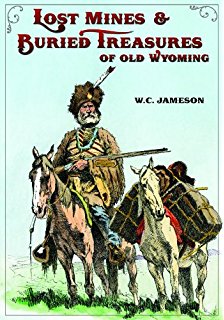
Lost Mines and Buried Treasures. This dandy little book is fun to read, easy to understand, and is chock full of ideas about hunting for lost treasure in Wyoming.
The author, W.C. Jameson has long been interested in searching for hidden loot, and when still a boy, helped cart gold bars out of the Guadalupe Mountains in Old Mexico. Thus gold fever hit him hard. Now Jameson writes books, conducts writer’s workshops, plays a guitar and sings his Western songs all across the United States. I myself met Jameson in El Paso, Texas some years ago when he was the president of Western Writers of America. Cordial, witty, and easy to like, wearing a beard and long Wyatt Earp coat, he helped aspiring writers find publication. He was even instrumental in having the SPUR awards televised that year at the Camino Real on the Mexican border.
Inside this latest book readers will find 16 stories about lost treasure and how it came to be. Some have to do with stagecoach robberies, holdups and bank shoot-outs that went wrong. Others tell of gold nuggets glistening under the water of cold mountain streams.
Sometimes robbers hid the loot, only to be gunned down by local posses before they could tell the location of buried strong boxes. Other individuals panned gold from creeks only to be murdered by Indians. Some men found the gold all right, but were unable to carry it out of the hills and when they returned later with help, they became disoriented and never could pinpoint the location of the stash.
The idea of sinking a shovel into the earth, hitting a strongbox, and pulling up a million dollar bonanza is a fantasy to many of us, but some brave souls really do strike out with maps and shovels to try their luck. Here you will find the Lost Cabin Gold Mine where rich men lost their lives to marauding Indians and the Snake River Pothole Gold where glistening nuggets lured men to their deaths. The Birdseye Stage Station Gold heist resulted in $30,000 in gold coins buried somewhere near the robbery site. But who can find it now?
Indian raids, lost jade deposits, shoot-outs and the usual double-cross when gold is involved fill these pages. Jameson makes the stories sound believable since he gives directions and information gleaned from original sources. My particular favorite is the buried treasure of Nate Champion, whom I have always considered one of the heroes of the Johnson County Range War. Nate Champion single-handedly held off a passel of hired Texas gunmen. Alone inside his cabin, Champion kept a diary of what happened throughout that long day so those who found his body would know what happened there. According to the Jameson account, Nate had a stash of gold buried outside the cabin his killers never found.
There is the story of Big Nose George Parrot who was not only the ugliest man alive, but a killer and gun-slinging outlaw reported to have buried $150,000 in stolen loot. Of course George died with his lips sealed and his neck stretched by vigilantes. The desecration of his body parts by the local doctor gets even worse as Parrot’s tanned hide became a pair of shoes, and the top of his skull an ashtray. To this day folks still hunt in vain for poor Parrot’s buried treasure.
I suspect the sale of this book will provide more loot than might be found buried beside a burned-out cabin, but readers will have a grand time exploring these tales and who knows? You might be the lucky one.
Jameson’s stories are always fun. Sometimes his topics are controversial, like who is really buried in Billy the Kid’s grave. You will have a good time reading his stories, but remember Jameson might just be pulling your leg. You can join in on the fun and grab this book HERE.
Editor’s Note: The Reviewer, Phyllis Morreale-de la Garza is the author of many published books about the Old West. Her most recent is a novel titled Hell Horse Winter of the Apache Kid published by Silk Label Books, P.O. Box 700, Unionville, New York 10988 Www. silklabelbooks.com.
*Courtesy of Chronicle of the Old West newspaper, for more click HERE.
Henry Brown, The Criminal Marshal
 Henry Newton Brown was born in Missouri in 1857. Migrating west, he did some buffalo hunting. At the age of nineteen he ended up in Lincoln County, New Mexico during the time of the Lincoln County War. Brown became a member of the Regulators, the quasi-legal group led by Billy the Kid. After being involved in a couple of the shootouts, he was indicted for murder. Before warrants could be served, Brown took off to Texas.
Henry Brown didn’t smoke, drink or gamble. He frequently dressed in a suit, and he could handle a gun…the perfect candidate for a lawman. So, he was appointed deputy sheriff of Oldham County. Shortly afterward he went up to Caldwell, Kansas where he became deputy marshal. And when the city marshal resigned, Brown stepped into that position. Brown did so well that the citizens of Caldwell gave him a handsomely engraved Winchester rifle.
On April 30, 1884, after his third appointment as marshal, Henry Brown and his assistant, Ben Wheeler took a few days off to go up to Medicine Lodge, Kansas. The purpose of their trip wasn’t to get in a few days of rest, but to rob the Medicine Lodge bank. In the process Brown killed the bank president and Wheeler killed the cashier.
The men were captured and locked away in jail. However, that night a mob stormed the jail with ropes in hand. Henry Brown tried to escape. But before he could get far, a shotgun blast ended the whole affair. The people of the Old West could accept their lawmen having a criminal background, but not committing crimes while wearing a badge.
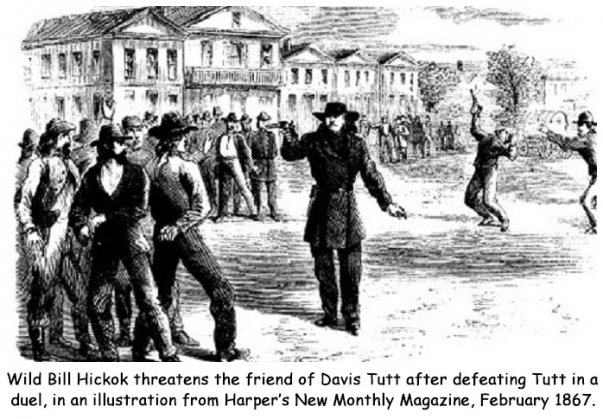
Wild Bill Hickok Kills Dave Tutt
Now enters the wild card. A Susanna Moore came to town. Wild Bill had supposedly known her during before this. So Wild Bill started sparking her along with Dave Tutt’s sister. Susanna was not a woman to share her man, so she started flirting with Dave Tutt.
The whole affair came to a climax on July 20, 1865. Wild Bill Hickok was playing poker when Dave Tutt came up to him and grabbed his pocket watch that was lying on the table. Dave said it was payment for what Wild Bill owed him. Wild Bill allowed Dave to take the watch, but let it be known not to wear the watch in public.
Chuckwagon: Old West “Refrigeration”
In the 1800’s people in the West didn’t have a refrigerator or freezer to keep their meat fresh, so they used other means. Below are summer guidelines for storing meat. Incidentally, we don’t recommend your trying these methods today. They are not that dependable.
Cover the meat with sour milk or buttermilk and store in a cellar.
In areas where the nights are cool, hang the meat in the open from a tree so any breeze can pass around it. Make sure the meat is brought inside at dawn. During the day wrap the meat in a tarp and store in a shady place. Make sure the blow flies don’t deposit eggs on the meat.
Keep the meat away from rain and damp nights. Any meat that gets wet must be cooked or jerked immediately.
*Courtesy of Chronicle of the Old West newspaper, for more click HERE.
The Transcontinental Railroad Challenge
 In 1850 over 9,000 miles of track covered the Northeastern portions of the United States. By 1860 there were 30,000 miles, more than the rest of the world combined, and the tracks were extending to the Midwest.
As early as the 1840’s Congress began thinking about the possibility of constructing a transcontinental railroad. And then in 1848, with the discovery of gold in California, it became even more important.
Two companies got the contract. The California based Central Pacific started eastward, and the eastern based Union Pacific began in Omaha, Nebraska, moving west. In February of 1863 the great race began. For six years the two railroad giants headed toward each other. And on May 10, 1869 they met at Promontory, Utah.

Old West TV: Maurice Barrymore
On this episode of Chronicle of the Old West TV Dakota Livesay gives us a great Old West story that tells us how Drew Barrymore got her name!
King Fisher and Ben Thompson Killed Together

Old West TV: The Bandit Queen Pearl Hart
On this edition of Chronicle of the Old West TV Dakota Livesay tells the story of the “Bandit Queen” Pearl Hart.
The Terror of Tiburcio Vasquez

Old West Book Review: The Many Loves of Buffalo Bill
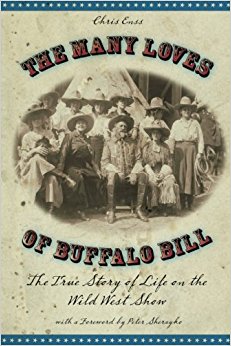 The Many Loves of Buffalo Bill. This book is a short introduction to the personal life of “Buffalo Bill” Cody who was born William F. Cody, in 1846 in Scott County, Iowa. He had a brother and three sisters who adored him, plus a worried mother who wanted the best for her son. William’s father died when the boy was ten years old, and William became the “little man” of the family at an early age. During his early years he worked as a freighter, buffalo hunter, army scout, Indian fighter, and daredevil rider for the Pony Express.
Tall and handsome, William cut a dashing figure with his long blonde hair and buckskin jackets. He deftly handled wagons and horses, and was a crack shot. From the very beginning of his working days, he was determined to take care of his mother and sisters, and accepted many dangerous jobs if the pay was good.
When still in his early twenties, he noticed Margaret Louisa Frederici’s good looks and superb horsemanship. Louisa was the daughter of a hard working farm family, who had been educated by Catholic nuns in a convent in St. Louis. The girl won the heart of William Cody, but a rocky personal road was ahead for both people. They married on March 6, 1866. Louisa had fallen madly in love with the dashing William Cody, but she eventually learned to despise him because of his philandering. She wanted William to find a steady job close to home, but that was not to his liking.
Always a good provider, off Cody went into one adventure after another while his wife kept the home fires burning. The couple had several children; two died at an early age. Staying at home, making many of her husband’s elaborate costumes, Louisa raised the children, took care of their ranch in Nebraska and stashed money William sent to her in properties she put into her own name.
“Buffalo Bill” had a dream about putting together a “Wild West” show, and that is exactly what he did. Year after year, he traveled to cities throughout the United States and even Europe. He employed hundreds of cowboys, cowgirls, sharpshooters, trick riders, stagecoach drivers, wild Indians and herds of horses and buffalo to fill his acts.
While William traveled constantly, he naturally attracted the attention of numerous women who fell for the dashing showman. Some women became romantically involved with him, while others, such as Annie Oakley, found the relationship strictly business. Nevertheless, Louisa harbored a burning jealously of her husband. This did not improve when she made a surprise visit to a hotel where he stayed while on tour, and discovered “Mr. And Mrs. William Cody” were registered there. Louisa’s threats reverberated for many years thereafter.
As news filtered back to Louisa about William’s affairs, including one of long standing with a beautiful blonde actress named Katherine Clemmons, the wife burned with resentment. It was later told by servants that Louisa tried to poison William on more than one occasion by serving him a tea concoction that made him violently ill.
Cody eventually applied for a divorce, but Louisa fought the legal action and the judge ruled in her favor. There was not enough evidence to prove attempted murder. In time the two reconciled, and remained together until death did they part.
Buffalo Bill Cody passed away due to heart failure January 10, 1817 and was buried in Colorado on Lookout Mountain. Thus ended the career of probably the most famous wild west showman of all time. He met presidents as well as kings and queens, Indian chiefs and lady sharpshooters. He had millions of adoring fans. A more flamboyant character is hard to imagine.
This little book is a first step toward uncovering the personal life of Buffalo Bill Cody. It is fast-paced and fun to read. You can join the fun by grabbing this book HERE.
Editor’s Note: Reviewer, Phyllis Morreale-de la Garza is the author of numerous books about the Old West including The Apache Kid, published by Westemlore Press, P. 0. Box 35305, Tucson, Arizona 85740
*Courtesy of Chronicle of the Old West newspaper, for more click HERE.
Remember Goliad and the Alamo!

Freed Slaves Head West

Chuckwagon: Cowboy Slang
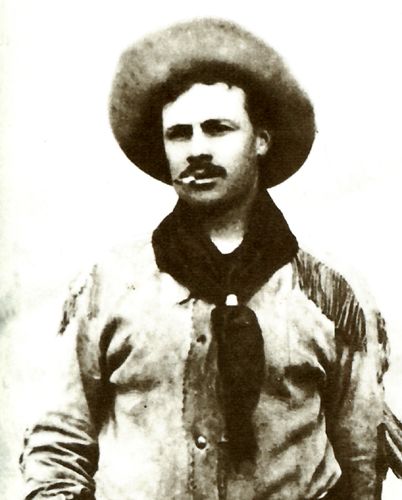 Cowboys are noted for developing their own vocabulary, known as Cowboy Slang. Sometimes it was because they couldn’t pronounce the word correctly as used in the language of origin. They were famous for perverting Spanish words. Cowboys also named items because the item reminded them of something else. However they came about, cowboys had a vocabulary that was colorful and their own. Below are some cowboy slang words used in reference to chuck, or for the non-cowboy, food, while they were on the trail.
-
- Calf Slobbers – Meringue on a pie.
- Fried Chicken – Bacon rolled in flour and fried.
- Chuck Wagon Chicken – Fried bacon.
- Charlie Taylor – A substitute for butter. A combination of molasses and bacon grease.
- “Man at the Pot!” – Term yelled at a person pouring himself a cup of coffee. A cowboy’s way of saying, “Pour me a cup too.”
- Spotted Pup – Cooking raisins in rice.
- Stacked to a fill – Compliment to the chief following a great meal.
- Dry Camp – A camp that has no water available.
- Prairie or Mountain Oysters – Calf’s testicles.
*Courtesy of Chronicle of the Old West newspaper, for more click HERE.
Old West TV: Samuel Maverick
Have you ever wondered about the origin of the term “Maverick”? Cattle and the Old West are the discussion of this particular story of Chronicle of the Old West with Dakota Livesay.
Old West Book Review: The Lady Was A Gambler
 The stories in this book are about thirteen women gamblers who lived by their wits. Some were the product of hard times; others chose their profession simply because they liked adventure. The book is fun to read, the chapters are short with stories told right to the point. A bibliography appears at the back of the book offering information about each lady if the reader is inclined to do additional research. Unfortunately the bibliography regarding Calamity Jane omits the best biography written about her to date titled Calamity Jane, by James D. McLaird, published by the University of Oklahoma Press, 2005, and was reviewed in this column a while back.
In any case, this book, written for light entertainment, does a good job in picking out a variety of interesting women, albeit some better known than others.
Kitty LeRoy was a bigamist, cardsharp, and knife-wielding saloonkeeper who dressed like a gypsy. She hailed from Dallas, Texas eventually making her way north to Deadwood Gulch, South Dakota where she ran a saloon, cheated at cards, and married multiple times without bothering with divorces. Her last jealous husband shot her to death at the Lone Star Saloon before taking his own life.
Belle Ryan Cora was one of the most glamorous women gamblers, whose father was also a minister.
Abandoned by her first husband, the distraught Belle fled to New Orleans. Here she worked as a prostitute, and met a handsome gambler. The pair moved on to the California goldfields, settling in San Francisco where they ran a profitable brothel and gambling den. When her lover was hanged by vigilantes, Belle died of a broken heart after giving most of her money to local charities.
Alice Ivers was known as Poker Alice, and worked the saloons in Deadwood, South Dakota. An attractive blonde, she was an expert at five-card draw, faro, and blackjack. After her husband was killed in a mine accident, she began earning her living exclusively at the gambling tables. Alice traveled throughout many western states, where she gambled, drank whiskey, smoked cigars and swore mightily whenever she lost a hand. A friend of Wild Bill Hickok, she was nearby the night he was killed. In her old age, she dressed like a man and sold bootleg whiskey. Alice was reported to be worth millions in her youth, but died a pauper in 1930 after a short illness.
Gertrudis Maria Barcelo was a sultry vamp living in Santa Fe, New Mexico. Born in Sonora, Mexico in 1800, her wealthy parents lavished their beautiful daughter with every gift including a good education. To the dismay of her parents, Gertrudis married a gambler, and the pair headed north to Santa Fe where she spent her dowry on an elaborate gambling house and bordello known as The Palace. Meanwhile, “Madam Barcelo” invested her money in mines, hotels and freight lines. She worked as an American spy, supporting the U.S. in its interest to remain separate from Mexico. Her affair with the governor of New Mexico led to the breakup of her marriage, but she remained a gambler to the end, becoming the richest woman in Santa Fe. When she died in 1852, her elaborate funeral was complete with music, cowboys, horses, speeches by church and city officials, barbecues, and merrymaking that was long remembered.
Women gamblers Belle Siddons, Lottie Deno, Belle Starr, Eleanora Dumont, Jenny Rowe, Minnie Smith and others are found in this entertaining book. These true stories remind us that women were rough, tough and headstrong in the Old Days, and would have laughed at political labels such as “Women’s Lib” because even in the 1800s, nothing could stop a woman who really wanted to blaze her own trail. You can go all in and grab this book HERE.
Editor’s Note: The Reviewer, Phyllis Morreale-de la Garza is the author of many published books, including Silk and Sagebrush: Women of the Old West, published by Silk Label Books, P.O. Box 700, Unionville, New York 10988 (845-726-3434) www.silklabelbooks.com
*Courtesy of Chronicle of the Old West newspaper, for more click HERE.
Dave Rudabaugh and Billy the Kid
 Dave Rudabaugh was born in Missouri in 1841. Early in life he moved to Kansas. At the age of 18, Dave started a gang that rounded up and sold other people’s cattle. By the age of 29 he and his gang moved on to robbing payroll trains and railroad construction camps.
Get a Free Old West CD With a Photo
 Richard Smith sent Chronicle of the Old West this picture. The note that accompanied the picture said, “I started my printed newspaper last month, I enjoyed the articles. I shot this photo today. Thought you might enjoy it.”
We do enjoy it. Richard also said we could use the picture as we wish. And we will be using it.
This got us thinking. There are probably other people who are creative with a camera who would like to take pictures that include Chronicle of the Old West as a central element.
We’ll be sending Richard one of our story CD’s as a thank you.
Anyone else who sends us a picture we can use will also get a story CD as a thank you.
So, go out there; take a picture with Chronicle of the Old West as a central element; and send it via email to Dakota@RavenHeart.com.
We’re looking forward to hearing from you.
*For More on the Chronicle of the Old West newspaper, click HERE.
Old West TV: The Arizona Rangers
On this episode of Chronicle of the Old West TV Dakota Livesay gives us a brief history on what the Arizona Rangers were all about!