Chuckwagon: Sourdough Biscuits
Sourdough biscuits were a delicacy whether on the trail or at the ranch. Once a cook got a good sourdough starter he cherished it like a baby. On the trail he would store it in a dark, cool place in his chuck wagon. Here is one cooks recipe for a sourdough starter.
2 cups of lukewarm potato water.
2 cups flour.
1 tablespoon sugar.
Make potato water by cutting up 2 medium-sized potatoes into cubes, and boil in cups of water until tender. Remove the potatoes and measure out two cups of the remaining liquid. (The potatoes can be used for the evening meal.) Mix the potato water, flour and sugar into a smooth paste. Set the mixture in a warm place until it doubles its original size.
*Courtesy of Chronicle of the Old West newspaper, for more click HERE.
George Custer’s Favorite Scout
 William Averill Comstock was a military scout who could, “easily read all the signs Indians left for the information of other Indians, could interpret their smoke columns used in telegraphing, and after a party had passed, could tell with remarkable accuracy from its trail how many were in the party.”

Indians and the Dawes Severalty Act of 1887
 By the late 1880’s most Indians were living on reservations. The reservations were under tribal ownership, with a communal style of control and use. Since it was the custom of white people to desire individual ownership of land and since many people felt that land ownership promoted industriousness, it was decided that the tribal ownership concept should be changed.
Old West TV: Texas John Slaughter
Texas John Slaughter was cheated out of his win by Barney Gallagher. To retrieve his money, Slaughter went all the way to New Mexico, where he found him on Chisum’s ranch and shot him down. Dakota Livesay gives us an explanation of this and also how Tombstone was won!
Old West Book Review: Riding For The Brand
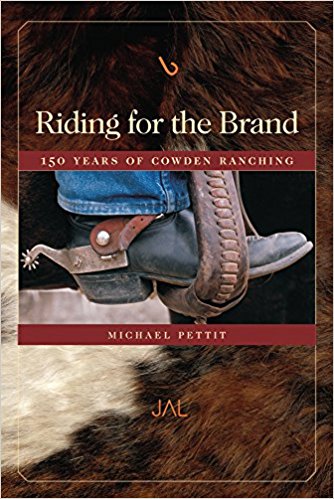 Riding For The Brand. Author, rancher, researcher and historian, Michael Pettit is a Cowden family descendant who chronicles his sentimental journey about trailing his family history in this book. His ancestors began migrating toward Texas in the 1850s, seeking land and opportunities in a country where few white settlers had gone before them. From place to place, the Cowdens found fertile valleys and water thinking this was their final stop. However, drought and vagaries of Comanche wars plus uncertain boundary lines caused them to move yet again. Over the years they migrating all the way across Texas and eventually into New Mexico where some family members remain today on their 50,000 acre ranch near Santa Rosa, in the western part of the state.
Pettit follows his family trail using personal letters, oral accounts, plus newspaper stories and legal documents found in libraries and courthouses. He visited lonely graveyards, always seeking the names of relatives who passed this way. They were born, lived, fought the elements, while standing up to every conceivable difficulty that made ranching pioneers tough. Cowdens lost family members from old age, childhood plagues and ranch accidents, but still they persevered.
Life for the Cowden women going back to the old days was never easy. Early graves are scattered across Texas, showing how many of these women died young. We can only imagine the hard work and drudgery on these ranches combined with moving to new locations and setting up households yet again inside hardscrabble shacks and raising large families many miles from friends and neighbors, town and supplies, or doctors and medical attention. These ranch women put in long, hard days and learned self-sufficiency.
While discovering facts about his family, Pettit finds a wealth of information about the land, weather conditions, Indian culture, economic woes, the oil business, cattle raising and cowboy life. He delves into old time cattle drives, and the stories of cowboys who worked for the ranchers. The book explains how early ranchers eventually organized Cattle Raisers Associations to protect themselves from rustlers and other woes. Brand inspectors were hired, while new brands and symbols were registered. Ranchers shared information regarding disease, vaccinations, predators, and opportunities in the cattle market.
Meanwhile, Pettit spends time on his relative’s ranch in New Mexico, telling the history of the outfit while helping with modern day ranch work. The horses, the branding, the care of livestock and life inside the bunkhouse telling tall tales for entertainment makes reading a combination of Old West history entwined with present-day life on a large working cattle ranch.
Pettit’s storytelling is straightforward, honest, and always with an eye for accuracy. He keeps a diary which in itself is filled with important data as he makes the rounds each day. He knows his family, understands the people and tries to explain how life on these ranches is never easy. As the book evolves, it becomes apparent that modern-day Cowdens have continued their ancestral way of life. Perhaps they now have telephones, pickup trucks and other modern conveniences, but this rugged existence is never easy and certainly not for the frivolous or faint of heart. However, the Cowdens wouldn’t have it any other way.
Riding for the Brand is warmly written and gives readers a wonderful insight into modern day ranching as well as an appreciation for the old Texas cattle ranching days. Saddle up and get this book HERE.
Editor’s Note: The reviewer, Phyllis Morreale-de la Garza is the author of numerous books about the Old West including Silk and Sagebrush, Women of the Old West, published by Silk Label Books, P.O. Box 700, Unionville, New York 10988 www.silklabelbooks.com
*Courtesy of Chronicle of the Old West newspaper, for more click HERE.
The Shoes (Made) of Flat Nose George
 George Manuse went under a number of aliases. They included “George Parrott,” “Flat Nose George” and “George Curry.” There are even those who confuse him with Harvey Logan, because Harvey used a couple of similar aliases.
 Like kids and Christmas, the citizens of Rawlings just couldn’t wait, and on the night of March 22, 1881, George Manuse, was escorted out of jail and hanged from a telegraph pole.
Old West TV: Women Jurors
In honor of Women’s Day we get a lesson on what women were doing back in the 1800’s as jurors according to Dakota Livesay and his Chronicle of the Old West.
Chuckwagon: Sweet Potato Pie
Boil sweet potatoes until well done. Peel and slice them very thin. Line a deep pie pan with good plain pastry, and arrange the sliced potatoes in layers, dotting with butter and sprinkling sugar, cinnamon, and nutmeg over each layer, using at least ½ cup sugar. Pour over 3 tablespoonfuls whiskey, about ½ cup water, cover with pastry and bake. Serve warm.
*Courtesy of Chronicle of the Old West newspaper, for more click HERE.
Texas Joins The United States

The Controversial George Armstrong Custer
 George Armstrong Custer seemed to always live on the edge. Even while at West Point, where, incidentally, he graduated at the bottom of his class, Custer was almost expelled because of demerits for actions like food fights in the cafeteria.
However, one of the low points in his career took place on November 25, 1867 when he was court-martialed. Supposedly, Custer’s officers fell into two categories…those who were related to him, and those who hated him. As for the enlisted men, they fell into one category…those who feared him.
Custer was found guilty on eight counts. They included being absent without leave from his command. He had left his post to visit his wife, Libby. He had also taken along troopers as escort during this trip. Another count was shooting deserters without trial. Incidentally, when Custer left to visit his wife, he was considered a deserter himself.

Libby Custer
The testimony of Captain Frederick Benteen, an officer with Custer at Little Big Horn, was particularly damning. Other charges included abandoning two men, failing to recover two bodies, and cruelty to three wounded troopers. The average officer being found guilty on any of these counts would have meant the end of his career. But George Custer wasn’t average. His sentence was, “to be suspended from rank and command for one year, and to forfeit his pay proper for the same time.”
At the end of the year Custer’s friend and advocate, General Phil Sheridan, called him back to active duty. Custer felt he had to do something spectacular to redeem himself. And he did on November 27, 1868, when Custer and 800 men attacked the peaceful camp of Black Kettle that was flying the American Flag and a white truce flag.
Old West Book Review: Myth, Memory and Massacre The Pearl River Capture of Cynthia Ann Parker
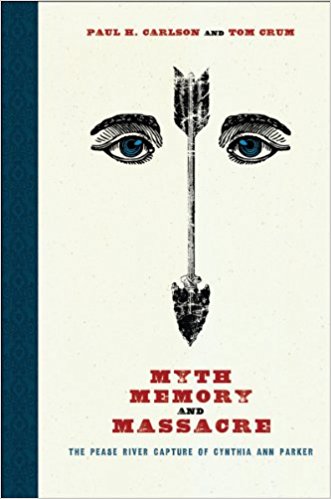
Students of Texas history are familiar with the story of Cynthia Ann Parker, the nine-year-old white girl taken captive by Comanches, May 19, 1836. For the next 24 years, Cynthia Ann lived with her Comanche captors, bore at least four children and somehow survived the rigors of life among the Indians until her rescue in 1860 by a troop of Texas Rangers in a fight known as “The Battle of Pease River.”
By now Cynthia Ann had been assimilated into the tribe, had forgotten most if not all of the English language, resisted parting with her Comanche children, and had become a hardened, sun-burned woman with huge work-worn hands, chopped hair and haunted eyes.
Ripped from her family at age 9, having witnessed the brutal murders of her parents and friends, faced with abuse and humiliation in a Comanche camp, Cynthia Ann Parker became the most famous of the white captives in Texas. There were many hundreds of other white girls and women taken captive by marauding Comanches, too. Most were raped, tortured and killed. Others traded back to their families were covered with scars and facial mutilation. But what made Cynthia Ann different is that one of her children grew up to become Quanah Parker, famous in his own right as a chief and important negotiator between Indians and Whites.
After her rescue, Cynthia Ann never did adjust completely to return to White society. She died of a broken heart in 1870 and is buried at Fort Sill, Oklahoma between two of her Comanche children.
If you are interested in the complete history of the life and times of Cynthia Ann Parker, you must look elsewhere because there are many books available on the subject. This book, Myth, Memory and Massacre delves mainly into events regarding the accidental rescue of Cynthia Ann by the Rangers at Pease River. When the Rangers attacked a Comanche hunting party, they had no idea Cynthia Ann Parker was living with this clan. The Rangers nearly killed her as she ran away clutching her baby, but one of the men realized she had blue eyes and correctly guessed she was a White captive. It took a while to figure out who she was.
From here the authors begin their discussion of who, why, where and how. They carefully dissect events beginning with the initial raid upon the camp, pointing out this was a hunting camp filled with women and children who had been butchering and preparing buffalo meat for winter. Most of the Indians killed were women and children. The surprise rescue of the white woman is what caused such a sensation throughout Texas since nobody thought Cynthia Ann could still be alive. The publicity gave some individuals riding with the Rangers the opportunity for self importance and political gain. Their actions, motives and self-promotion are exposed with regard to their showing the battle of Pease River had been a great victory with many more Indians killed, and at least one war chief taken out of action, which was probably not true.
The authors have done a great deal of careful research and tedious fact- finding. Their conclusions are meant to clear up, in their opinion, many falsehoods regarding the rescue of Cynthia Ann that after many years of telling and re-telling has become folklore. The authors aim to show how the rescue of Cynthia Ann Parker was eventually used for political advantage, and finally how the analyzation of these events historically have been misleading. For those interested in “the rest of the story” concerning Cynthia Ann Parker, this book might help close the final chapter. You can tell for yourself and grab this amazing book HERE.
Editor’s Note: The reviewer, Phyllis Morreale-de la Garza is the author of numerous books about the Old West including Hell Horse Winter of the Apache Kid, Silk Label Books, P.O. Box 700, Unionville, New York 10988 vvww.silklapelbooks.
*Courtesy of Chronicle of the Old West newspaper, for more click HERE.
Old West TV: Dakota Livesay on Haunted Saloon
A while back Dakota was a guest on Haunted Saloon TV, where he was interview at the OK Corral shoot out site by Terry “Ike” Clanton. Clanton is a fourth generation cousin of the legendary Joseph “Ike” Clanton of OK Corral gunfight fame.
Searching for the Lost Dutchman’s Mine
 When Jacob Waltz died on October 25, 1891, he became either the world’s greatest prankster or the world’s greatest secret keeper. Although during his life his last name was spelled a number of different ways, we simply know him as “The Dutchman”… the man who discovered the “Lost Dutchman’s Mine” in the Superstition Mountains, just outside of Phoenix, Arizona.
Chuckwagon: Red Flannel Hash
A great way to use left over corned beef is to add a few new ingredients and create Red Flannel Hash. Who knows who came up with the beets, but it really is colorful, and sticks to the ribs.
1 ½ Cups chopped corned beef
1 ½ Cups chopped cooked beets
1 Medium onion, chopped
4 Cups chopped cooked potatoes
Chop ingredients separately, then mix together. Heat all ingredients in a well- greased skillet, slowly, loosen around the edges, and shake to prevent scorching. After a nice crust forms on bottom, turn out on a warmed plate and serve. If it seems a little dry add a little beef broth. Try with a couple poached eggs, for a hearty meal.
*Courtesy of Chronicle of the Old West newspaper, for more click HERE.
They Had Three Shootouts!
 One of his deputies was a man named Jim Miller. Miller is considered by some historians to be the deadliest gunman of the Old West. He was a dapper little man who was quiet and never cussed. Yet he usually operated as a hired gun killing nameless men who were buried in unmarked graves.
It seems that while a deputy under Frazer, Miller shot a Mexican prisoner. Supposedly the prisoner had information about Miller stealing a couple of mules. Sheriff Frazer fired Miller. Later Miller was appointed the city marshal of Pecos, Texas. A feud between Frazer and Miller went on for about two years when on April 12, 1894 the two men engaged in a shootout. In the process Frazer shot Miller in the arm, and unloaded his pistol in Miller’s chest. Miraculously, Miller survived.
 Two years later the two men met a third time. This time Jim Miller got off the first shot… a shotgun blast to Bud Frazer’s face. I guess Miller was concerned that Frazer might have started wearing a breastplate.
One of his deputies was a man named Jim Miller. Miller is considered by some historians to be the deadliest gunman of the Old West. He was a dapper little man who was quiet and never cussed. Yet he usually operated as a hired gun killing nameless men who were buried in unmarked graves.
It seems that while a deputy under Frazer, Miller shot a Mexican prisoner. Supposedly the prisoner had information about Miller stealing a couple of mules. Sheriff Frazer fired Miller. Later Miller was appointed the city marshal of Pecos, Texas. A feud between Frazer and Miller went on for about two years when on April 12, 1894 the two men engaged in a shootout. In the process Frazer shot Miller in the arm, and unloaded his pistol in Miller’s chest. Miraculously, Miller survived.
Old West TV: How Show Low, AZ Got It’s Name
For many years Show Low, Arizona has been home base for Chronicle of the Old West, Dog Jake Western Store and Cowboy To Cowboy. On this episode of Chronicle of the Old West TV Dakota Livesay explains how Show Low got it’s name.
Old West Book Review: Cowboys
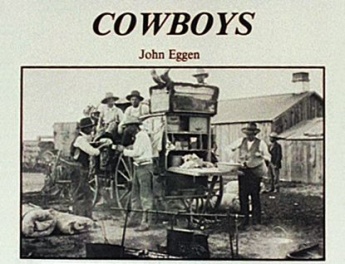 Beginning with the cover photo, western buffs will be mightily entertained by this unusual book made up mostly of beautiful, large, clear photographs. On the cover readers see the chuck wagon cook pouring flour from a bucket into a washtub, one cowboy sitting inside a storage box on top of the chuck wagon, while another pours what looks like “white lightning” from a jug into somebody’s tin cup. Here you have the makings of a fine outdoor dinner. Bed rolls on the ground and smoke rising from the fire under enormous Dutch ovens tell it all.
The book begins by telling the story of the original photographer Frank M. Sherman, who, along with his three cowboy brothers before 1900 rode the old-time trails driving cattle throughout Colorado and beyond. Frank eventually became a photographer, and by 1903 he owned a photo studio in Colorado Springs, Colorado. He wanted to expand his post card collection, so re-joined his brothers on a cattle drive at that time. During the drive he unexpectedly got information that President Theodore Roosevelt was traveling by train through Colorado, and the cowboys invited him to stop and enjoy a “cowboy chuck wagon breakfast” with them. Thus the president appears in this book laughing with the crew. His silk high-hat and elegant suit makes a comical contrast with the battered cowboy garb assembled around him. Everybody looks like they are having a great time.
In 1906 Frank re-located to Oregon where he opened a photo shop, and also became a prominent small fruit grower. He married, had a family, but was tragically killed in a shooting accident at his farm in 1921. His widow abandoned the property, including Frank’s collection of glass negatives
These precious negatives languished in the basement of the house until 1966 when a new lady owner of the property discovered the box and just before hauling it all to the city garbage dump, contacted the local photographer John Eggen. She asked if he would like to have the plates since she did not know anything about them and had no interest in it. Mr. Eggen accepted the offer, and when examining the contents of this mysterious box he found three hundred 5 X 7 glass plates, a treasure chest record of real old-time cowboys working on the open range.
Mr. Eggen compiled a book which was published in 1992. Having grown up on a ranch in western South Dakota, Mr. Eggen appreciated these wonderful photos and carefully preserved them here for us to see.
Page after page, readers will find the guns, the spurs, the chaps, the steely-eyed expressions on the faces of real working cowboys. The chuck wagons and all the gear, bucking horses, cattle branding, ranch buildings and corrals, throwing a bronc to trim its hooves, roping steers, and the desolate plains are here. Cowboys chop wood, haul “buffalo chips”, harness horses, run cows through the dipping pens, and doctor sick calves. Readers see the dust and the smoke and the brand inspection. Some of these men grinned for the cameraman, but most were a no-nonsense crowd doing a hard job.
Who said the Old West was merely a fantasy? Surely that remark came from somebody who lived in Hollywood. This book shows what true grit is all about.
Cowboys by John Eggen belongs in your Old West library. You can get it HERE.
Editor’s Note: The Reviewer, Phyllis Morreale-de la Garza is the author of many published books, including the novel Widow’s Peak, published by Silk Label Books, P.O. Box 700, Unionville, New York 10988 (845-726-3434) www.silklabelbooks.com
*Courtesy of Chronicle of the Old West newspaper, for more click HERE.
Wild West Renaissance Man
 Granville Stuart was born with his brothers in West Virginia, and at a young age, he started migrating west. After reaching Montana, Granville and his brother, James discovered gold there, and they spread the news, the result of their writing their brother back east. Unfortunately, the Stuarts didn’t get rich from their discovery. Granville Stuart was born with his brothers in West Virginia, and at a young age, he started migrating west. After reaching Montana, Granville and his brother, James discovered gold there, and they spread the news, the result of their writing their brother back east. Unfortunately, the Stuarts didn’t get rich from their discovery.In 1863, Granville rode with the vigilantes that wiped out the “The Innocents”, a gang led by Henry Plummer, who also happened to be the town marshal.
Being interested in cattle, and seeing the lush grasslands in Montana, Granville helped start the cattle industry there. By 1883, things were not going well for the cattlemen. Because of rustling, cattle attrition was considerable. So Granville, using his earlier experience, help organize the Montana Vigilantes, who were known as “The Stranglers”, the result of their frequent use of the rope… And supposedly as many as 70 men ended up with hemp around their necks.
The harsh winter of 1886 all but wiped out Montana’s cattle, and Granville left the cattle industry behind for…an appointment as Minster to Uruguay and Paraguay. For five years, he lived in South America, only to return to Montana to become the Butte, Montana… librarian.
Granville Stuart has been described as an intellectual, a fine writer and a wise man with an engaging sense of humor. Although he had no formal training, Granville was an excellent artist. He wrote and illustrated three books. One was a geographical description of Montana. Another was a narration of the discovery and early settlement of Montana.
Granville was commissioned by the state of Montana to write a history of the state. But unfortunately, he died on October 2, 1918 before he could finish it.
I think you can agree that Granville Stuart was truly a renaissance man.
|
The Monroe Doctrine and Manifest Destiny

President James Monroe
Two speeches, each delivered on December 2, that happened to be 22 years apart, resulted in affecting the development of the west more than any other single action during the 1800’s.
On December 2, 1823, during his seventh speech before Congress, President James Monroe introduced the concept that, for reasons of national security, all European influence should be removed from the areas immediately surrounding the United States. So, the United States started peacefully acquiring territories owned by European countries. This policy came to be known as the Monroe Doctrine.
On December 2, 1845, 22 years later, President James Polk made his first address to Congress. During that speech he reasserted the Monroe Doctrine. But President Polk went one step beyond, by stating his willingness to use force, if necessary, in removing European influence from areas determined for the expansion of the United States. President Polk felt that the expansion of the United States was its “manifest destiny.”

President James Polk
President Polk wanted the United States to annex Texas, acquire California and gain total control of the Oregon territory. Standing in the way of our doing this were just the countries of Mexico, Great Britain and France.
Fortunately, Great Britain peacefully surrendered its claim on the Oregon territory south of the 49th parallel. With the annexation of the Republic of Texas into the United States, Mexico declared war. As the United States entered into the war, President Polk was afraid that Great Britain and France would come in on the side of Mexico. But that never happened.
In 1846, with the defeat of Mexico and the Treaty of Guadalupe Hadalgo, the vision of President Polk’s speech of December 2, 1845 was realized. The final pieces of the puzzle had fallen into place. The United States now controlled the areas that one day would become the Pacific Northwest, Texas, California, Arizona, New Mexico, Nevada and Utah.
Old West TV: Luke Short
Dakota Livesay tells us the story of the notorious Luke Short. He may have been at the famous OK Corral shoot out if it were not for some other life changing circumstances!
Chuckwagon: Jerky Gravy
Jerky, ground or chopped fine Little fat or grease
Flour Salt & pepper
Milk
Fry the jerky until done. Remove meat from grease, and add flour. Add milk, and salt & pepper. Cook gravy. Add meat to gravy.
The amount of each ingredient depends on how much gravy you want.
*Courtesy of Chronicle of the Old West newspaper, for more click HERE.
Tough Texas Town Is Killed
 December 24, 1884 began like any other day in the small town of Helena, Texas. Helena was known as the toughest town on earth… and the town was filled with cowboys waiting for the spring cattle drives going north, Civil War veterans, highwaymen and gunmen.
Meanwhile, at one of the bars, a drunken cowboy shot off his pistol, a normal occurrence at the bars in Helena… But this bullet accidentally killed a 23-year-old Emmett Butler. Now, typically an accidental killing was given little notice. But Emmett Butler was the son of William G. Butler, the wealthiest rancher in the area.
Upon hearing of his son’s death, William Butler came to town demanding his son’s killer be turned over to him…And when the town refused, he left vowing to, “Kill the town that killed my son.”
Around Helena, little was thought of his remarks. No one, no matter how wealthy, could kill a town as prosperous as Helena, Texas. Besides, it was the county seat.
A year after Emmett Butler’s death, the San Antonio Railroad was laying track through the area. William Butler offered the railroad free right of way and $35,000 on one condition… And that was that the railroad would build its tracks seven miles southwest of Helena, Texas.
The railroad agreed, and after the track was laid, the new town of Karnes City, Texas sprang up next to the railroad tracks… and Helena businesses started moving to Karnes City.
The final blow came nine years later, almost to the day, after the death of Emmett Butler… when on December 21, 1893, the citizens of the county voted to move the county seat to Karnes City.
And Helena, Texas, true to the promise of William Butler… died.
Old West TV: Al Sieber
Cowboy To Cowboy is adding a new feature to our website, starting today we will be adding Dakota Livesay’s various television shows, appearances and documentaries to CowboyToCowboy.com. All pertain to the Wild West, and feature both the most fascinating characters of the Old West and his take on the events they participated in. We start the series off with renowned Indian scout Al Sieber:
Dakota Livesay tells us the story of an Arizonan that was tough through and through! Al Sieber was a scout, lawman and many other things all rolled into one.
Old West Book Review: Agnes Lake Hickok
 The amazing story of Agnes Lake Hickok, the wife of Wild Bill Hickok, appears for the first time in this wonderfully written and carefully researched volume. Beginning with the early life of the girl born in Germany in 1826, the book tells how Agnes Messmann immigrated to the United States after a long ocean voyage. Some family members died during the harrowing trip, but the rest eventually arrived at a German-speaking community north of Cincinnati, Ohio where they farmed.
At age twelve, Agnes witnessed her first circus. After a sixteen-mile trip to town by wagon, the family was entertained by an elephant, an animal act featuring lions and leopards, trick dogs, an Indian rubber man, clowns and dancing horses. Apparently this event impressed young Agnes so much that by her 19th birthday she declared her independence and eloped with a circus man named William Lake she met when another circus came to her hometown.
Against her family’s wishes, Agnes took up the grueling, albeit exciting life of a circus performer. For nearly forty years the couple criss-crossed the eastern and southern United States working for a variety of circuses. Lake himself had done equestrian acts, plus tricks and stunts with dogs and other animals, but he was primarily known for his clown act. The Lakes even crossed the Atlantic to perform one season in Germany. Back in America, Agnes was famous for her equestrienne “high school” routines riding highly trained horses, as well as her daring feat as a slack-wire walker. Later, she worked as an animal trainer with lions and tigers. Her daughter became famous as an expert circus equestrienne, too. Agnes raised several children, and experienced the tragic deaths of two infants. She understood the hard days of constant travel by wagon and later by train. The shocking death of her husband at the hand of a murderer, tossed her into the position of running the circus by herself for several seasons.
In Abilene, Kansas, Agnes now widowed, met the dashing bachelor and town marshal known as Wild Bill Hickok. Various versions of this encounter include the two people being instantly attracted to one another. However, it was five years later when they met again, and married on March 5, 1876. Their union has always been a curiosity since Hickok was an avowed bachelor, and Agnes was much older than him. Shortly after their marriage, Hickok ventured to the Black Hills to make arrangements for the couple to settle on a ranch when he was murdered in August of 1876 in a Deadwood barroom while playing cards.
This is where popular history and Agnes Lake Hickok part company. When he was killed, Wild Bill was already a legend in the west. Since he had been acquainted with Calamity Jane, novelists and newspaper writers were quick to team those two up romantically. In reality, it is highly unlikely that Wild Bill and Calamity had any serious personal relationship. Calamity Jane was a rollicking drunkard who made up enormous lies about herself, and Wild Bill was never known to consort with lewd women. However, dime novels, plays, and eventually Hollywood movies found wonderful grist for their mill, thus Agnes was forgotten in connection with the life of Wild Bill.
Be that as it may, Wild Bill and Calamity rest in peace a few yards away from each other as a tourist attraction in a Deadwood cemetery. Agnes died of old age in 1907, and rests in the family plot in Cincinnati, Ohio beside her first husband.
Agnes is seldom mentioned in connection with Wild Bill, but she had tremendous strength and fortitude and was one of the most admired circus performers of her day. Bill and Agnes Lake’s Hippo-Olympiad and Mammoth Circus was one of the largest traveling tent shows in the United States. It boasted of 240 men and horses and over the years entertained millions of people across the country. Known as the “Circus Queen,” with or without Wild Bill, Agnes Lake Hickok is a legend in her own right. You can find out more by grabbing this book HERE.
Editor’s Note: The reviewer, Phyllis Morreale-de la Garza is the author of numerous books including the novel Silk and Sagebrush; Women of the Old West,, published by Silk Label Books, P.O. Box 700, Unionville, New York 10988-0700
*Courtesy of Chronicle of the Old West newspaper, for more click HERE.