The Sutro Tunnel at the Comstock Lode

On October 19, 1869, Prussian-born mining engineer, Adolph Sutro, began work on one of the most ambitious projects of the day: a four-mile-long tunnel through the solid rock at the Comstock Lode mining area. One of the richest silver deposits in the world, the Comstock Lode was discovered in 1859. But as miners sank shafts deeper into the rock, they began to encounter large amounts of water that had to be pumped to the surface at great expense. The Sutro Tunnel at the Comstock Lode would solve that problem.
Adolph Sutro’s idea was to tunnel through the rock of the neighboring Mt. Davidson and straight into the heart of the Comstock mine. Mine water would thus drain through the tunnel without need for expensive pumps, and the mining companies would also be able to use the tunnel to move men and ore in and out of the mine, greatly reducing transportation costs.
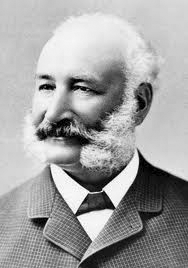
Adolph Sutro
Although everyone agreed that Sutro’s tunnel would be a boon to the Comstock, progress slowed down by resistance from some of the major mining interests who feared that Sutro would use his tunnel to take control of the entire lode. Only after securing European capital was Sutro able to complete the $5-million project in 1878.
It was every bit as successful as Sutro though it would be. Unfortunately, by 1878, the richer sections of the Comstock Lode had been tapped out. However, Sutro was able to sell the tunnel at a fantastic profit. He moved to San Francisco where he became one of the city’s largest landowners as well as the city’s mayor from 1894 to 1896.
Wild Bill Longely
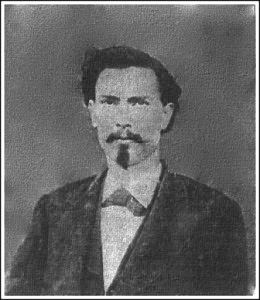 William Preston Longley was born on October 16, 1815. We don’t know his as William Preston, but as “Wild Bill”, a sadistic and murderous Old West gunman. Although little is know about him as a young man, it’s generally accepted that before he was 20 years old, Wild Bill Longley had already killed several men. He was short-tempered and he frequently killed simply because he believed he had somehow been slighted or insulted. He had a particularly strong dislike of blacks. Legend has it that Longley was once hanged along with a horse thief; but shots fired back by the departing posse cut his rope, and he was saved.
After killing a minister, Wild Bill fled Texas. But he was captured and returned to Lee County, Texas, where he was tried and found guilty of murder. Sentenced to hang, during his final days Longley became a Catholic, wrote long letters about his life, and claimed that he had actually only killed eight men. On the day of his execution, October 28, 1878, he climbed the steps to the gallows with a cigar in his mouth and told the gathered crowd that his punishment was just and God had forgiven him.
A noose was put around his neck, and he was hanged. Unfortunately, the rope slipped so that Longley’s knees hit the ground. After the hangman pulled the rope taut once more, Wild Bill slowly choked to death. It took 11 minutes before he was pronounced dead.
The Oklahoma Land Rush

On September 16, 1893, the largest land run in history begins with more than 100,000 people pouring into the Cherokee Strip of Oklahoma to claim their homesteads. With a single shot from a pistol the mad dash began, and land-hungry pioneers on horseback and in carriages raced forward to stake their claims to the best acres. The Oklahoma Land Rush was on.
 Ironically, not many years before that same land had once been considered worthless desert. Early explorers of Oklahoma believed that the territory was too arid and treeless for white settlement, but several suggested it might be the perfect place to resettle Indians, whose rich and fertile lands in the southeast were increasingly coveted by Americans.
By the late nineteenth century, farmers had developed new methods that suddenly made this land valuable. The giant Cherokee Strip rush was only the largest of a series of massive “land runs” that began in the 1890s, with thousands of immigrants stampeding into Oklahoma Territory and establishing towns like Norman and Oklahoma City almost overnight.
The removal of Native Americans to Indian Territory started after the election of Andrew Jackson to the presidency in 1828. He believed that Indian Removal from the Southeast was needed to extinguish Native American land claims and enable development by European Americans in Georgia, Alabama, and Mississippi, which still had numerous Native Americans occupying their territories. President Jackson signed the Indian Removal Act on May 28, 1830.
Tom Mix is Killed in a Freak Car Accident
On October 11, 1 940, the famous cowboy actor Tom Mix is killed in a freak car accident near his ranch in Florence, Arizona. He was driving his single-seat roadster with luggage on the rear shelf of the car. Tom was traveling along a straight desert road, when he unknowingly came to a bridge spanning a shallow gully that was out. When his car went down into the gully a heavy suitcase flew off the rear shelf of his car and crushed him.
Tom Mix had been one of the biggest silent movies stars in Hollywood during the 1920’s, appearing in more than 300 westerns and making as much as $10,000 a week. Unlike most of the actors appearing in westerns, Mix had actually worked as a cowboy, and had been a Texas Ranger.
In 1906, Mix joined a Wild West show, and four years later he started acting in motion pictures. He helped define the classic image of the western movie cowboy as a rough riding, quick-shooting defender of right and justice, an image that would be copied by hundreds of other actors who followed him.
With the coming of talking pictures, Mix’s movie career stalled. When he died in 1940 at the age of 60, he had lost most of his wealth and was largely forgotten.
Today a black iron silhouette of a riderless bronco marks the site of Mix’s death on the highway about 17 miles south of Florence, Arizona.
Dalton Gang Robbery of Two Coffeyville, Kansas Banks
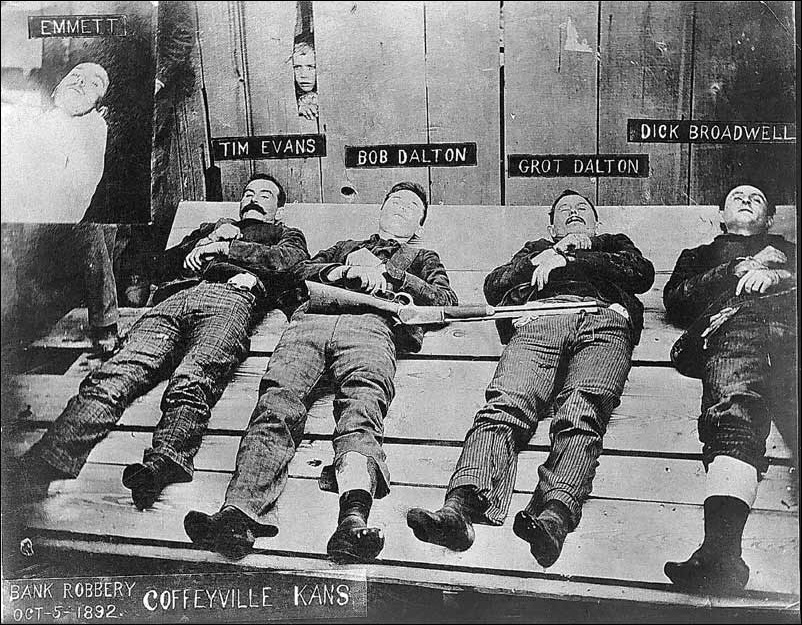
On October 5, 1892, the famous Dalton Gang robbery of two Coffeyville, Kansas banks at the same time. They wanted to do something no other outlaw gang had done. Instead, they were nearly all killed by quick-acting townspeople.
The gang rode into Coffeyville and tied their horses to a fence in an alley near the two banks and split up. Bob and Emmett Dalton headed for the First National, while Grat Dalton led Dick Broadwell and Bill Powers into the Condon Bank.
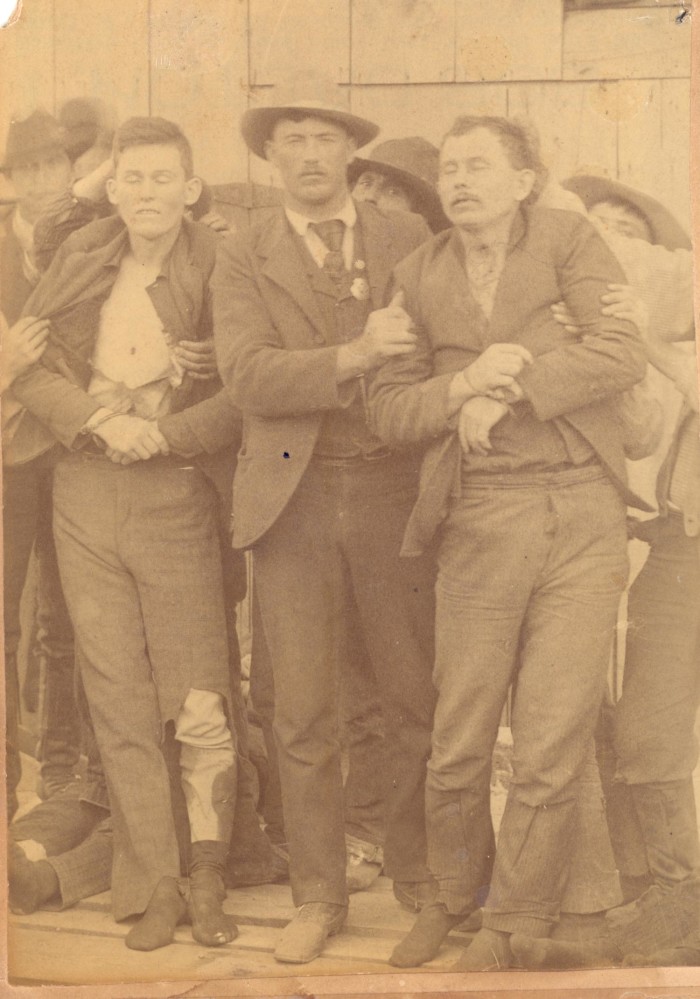 Unfortunately for the Daltons, they were recognized and the word quietly spread that the town banks were being robbed. The townspeople ran for their guns and surrounded the two banks. When the Dalton brothers walked out of the bank, a hail of bullets forced them back into the building. Regrouping, they tried to flee out the back door of the bank, but the townspeople were waiting for them there as well.
Meanwhile, in the Condon Bank a cashier had managed to delay Grat Dalton, Powers, and Broadwell with the claim that the vault was on a time lock and couldn’t be opened. That gave the townspeople enough time, and suddenly a bullet smashed through the bank window and hit Broadwell in the arm. The three men bolted out the door and fled down a back alley. But they were immediately shot and killed, this time by a local livery stable owner and a barber.
When the gun battle was over, the people of Coffeyville had destroyed the Dalton Gang, killing every member except for Emmett Dalton. But their victory was not without a price…The Dalton’s killed four of the townspeople.
Wild Bill Hickok’s First Job as Sheriff
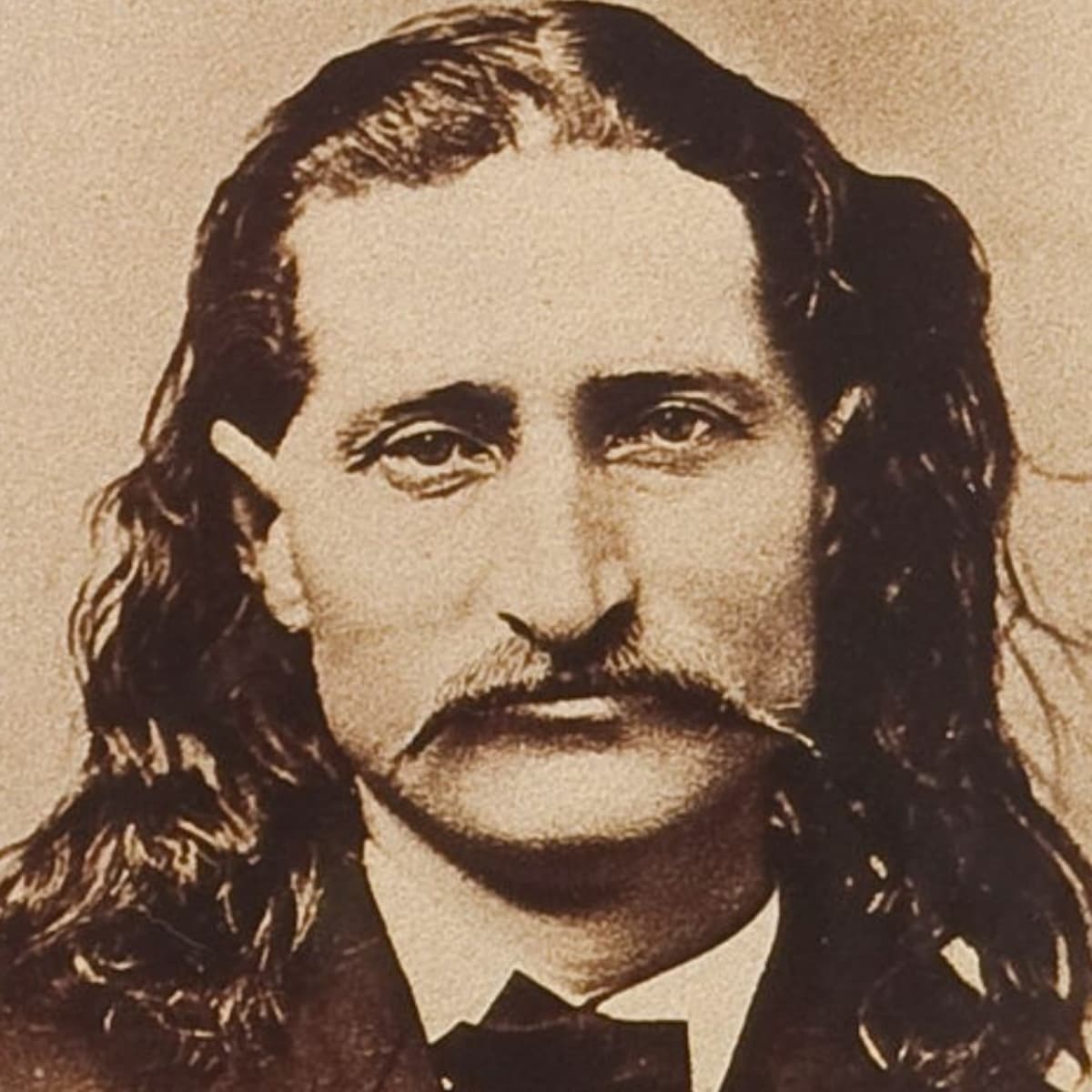 How did Wild Bill Hickok’s first job as sheriff go for him? Well, on September 27 back in 1869, Ellis County Sheriff Wild Bill Hickok and his deputy responded to a disturbance by a local ruffian named Samuel Strawhun and several of his drunken buddies at John Bitter’s Beer Saloon in Hays City, Kansas. Hickok ordered the men to stop, Strawhun turned to attack him, and Hickok shot and killed him.
This was typical of Wild Bill’s approach to a confrontation. As one cowboy said, Hickok would stand “with his back to the wall, looking at everything and everybody under his eyebrows–just like a mad old bull.”
But some Hays City citizens wondered if their new cure wasn’t worse than the disease.
In September 1869, his first month as sheriff, Hickok killed two men. The first was Bill Mulvey, who was galloping through town on a rampage, drunk, shooting out mirrors and whisky bottles behind bars. Citizens warned Mulvey to behave, because Hickok was sheriff. Mulvey angrily declared that he had come to town to kill Hickok. When he saw Hickok, he leveled his cocked rifle at him. Hickok waved his hand past Mulvey at some supposed onlookers and yelled, “Don’t shoot him in the back; he is drunk.” Mulvey wheeled his horse around to face those who might shoot him from behind, and before he realized he had been fooled, Hickok shot him through the temple.
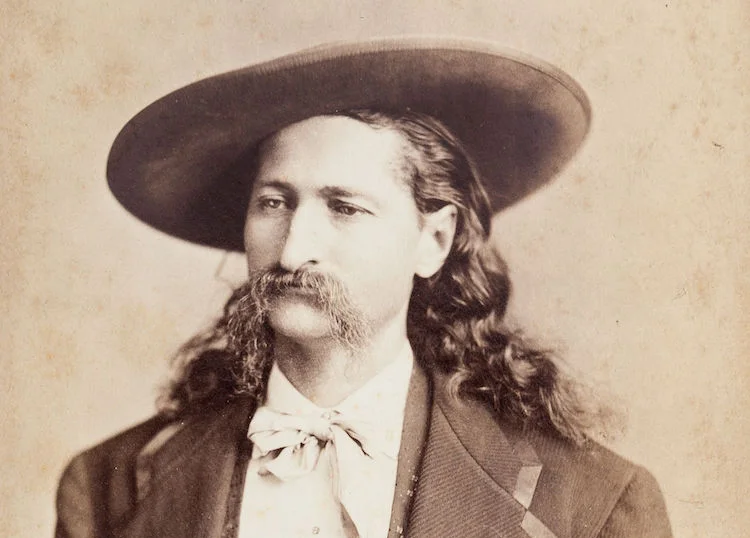
The second man killed by Hickok was the aforementioned Samuel Strawhun, a cowboy, who was causing a disturbance in a saloon at 1:00 am on September 27, when Hickok and Lanihan went to the scene. Strawhun “made remarks against Hickok”, and Hickok killed him with a shot through the head. Hickok said he had “tried to restore order”. At the coroner’s inquest into Strawhun’s death, despite “very contradictory” evidence from witnesses, the jury found the shooting justifiable.
On July 17, 1870, Hickok was attacked by two troopers from the 7th U.S. Cavalry, Jeremiah Lonergan and John Kyle (sometimes spelled Kile), in a saloon. Lonergan pinned Hickok to the ground, and Kyle put his gun to Hickok’s ear. When Kyle’s weapon misfired, Hickok shot Lonergan, wounding him in the knee, and shot Kyle twice, killing him. Hickok again lost his re-election bid to his deputy.
During the regular November election later that year, the people expressed their displeasure, and Hickok lost to his deputy, 144-89. Though Wild Bill Hickok would later go on to hold other law enforcement positions in the West, his first attempt at being a sheriff had lasted only three months.
Hopalong Cassidy Films Live on Forever
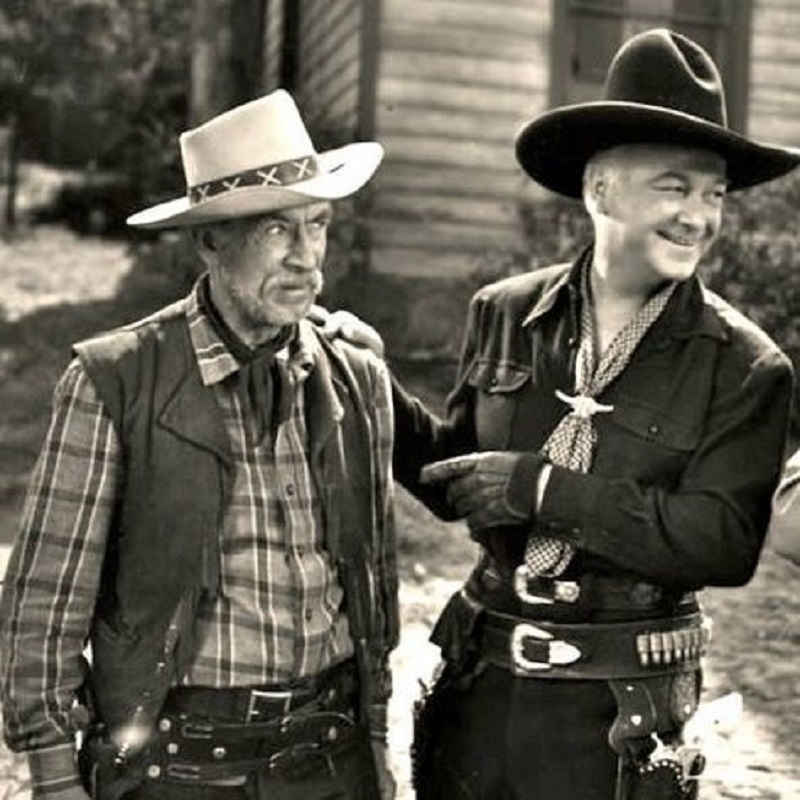
California Carlson and Hopalong Cassidy
After almost 40 years of riding across American TV and movie screens, the cowboy actor William Boyd, best known for his role in Hopalong Cassidy films as Hopalong Cassidy, died on September 12, 1972 at the age of 77.
His greatest achievement was to be the first cowboy actor to make the transition from movies to television. After World War II Americans began buying television sets in large numbers for the first time, and soon I Love Lucy and The Honeymooners were standard evening fare for millions of families. But despite their proven popularity in movie theaters, westerns were slow to come to TV. Many network TV producers scorned westerns as lowbrow “horse operas” unfit for their middle- and upper-class audiences…As if I Love Lucy and The Honeymooners was highbrow.
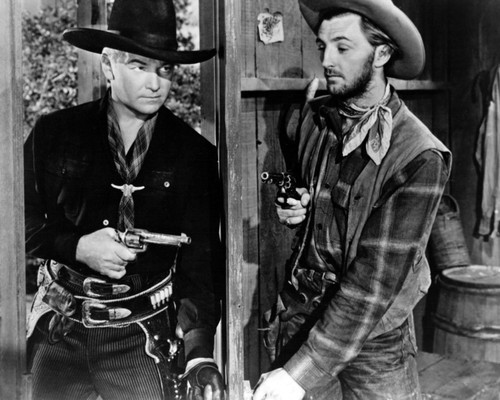
Hopalong Cassidy and Robert Mitchum
During the 1930’s, William Boyd made more than 50 successful “B-Westerns” starring as Hopalong Cassidy. After the war, Boyd recognized an opportunity to take Hopalong into the new world of television, and he began to market his old “B” westerns to TV broadcasters in Los Angeles and New York City. A whole new generation of children thrilled to “Hoppy’s” daring adventures, and they soon began to ask for more.
Rethinking their initial disdain for the genre, producers at NBC contracted with Boyd in 1948 to produce a new series of half-hour westerns for television. Soon other TV westerns followed. In 1959, seven of the top-10 shows on national television were westerns. The golden era of the TV western would finally come to an end in 1975 when the long-running Gunsmoke left the air, three years after Boyd died.
John Wesley Hardin Kills Sheriff
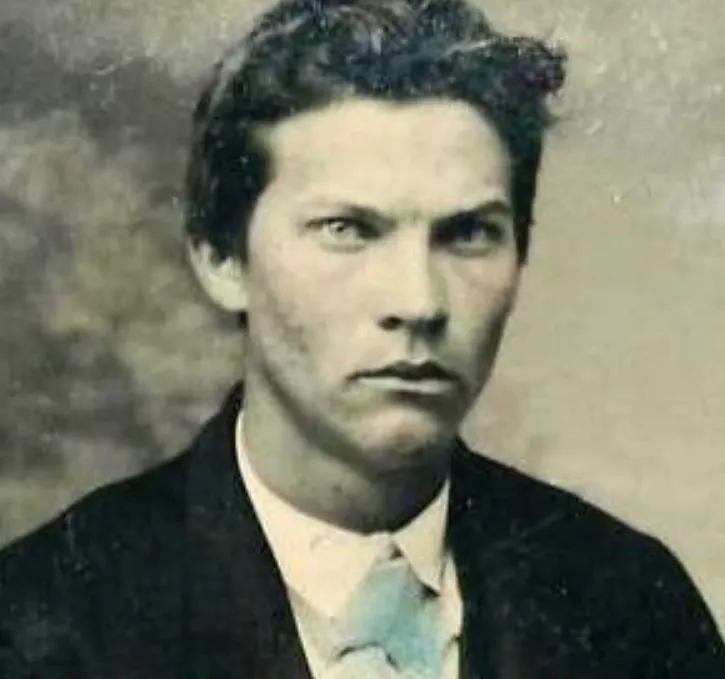 August 23, 1877 climaxed probably the most dramatic manhunt in the Old West. Although John Wesley Hardin had killed a number of men, on May 26, 1874 Hardin kills Sheriff Charles Webb in Texas and killing a lawman couldn’t be overlooked. Hardin was told that Webb wanted to kill him and capture his friend Jim Taylor. The encounter between Hardin and Webb was brief – a few words between the two men, an exchange of bullets, then Webb fell dead near the door of the Jack Wright Saloon. Hardin was wounded but escaped. For three years Hardin was able to elude the Texas Rangers by using an alias and keeping a low profile. He also moved to Florida.
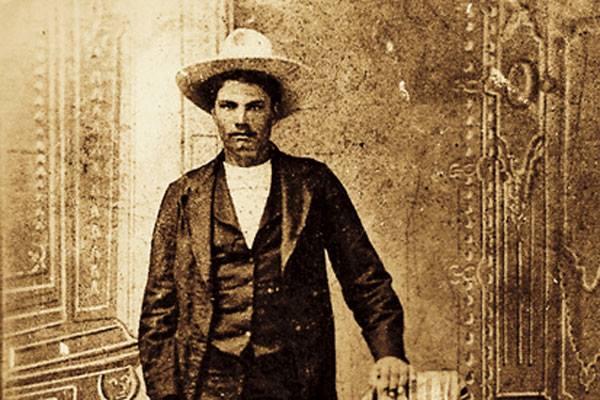 But, the Rangers discovered where he was, and even though they had no authority in Florida, sent John Armstrong after him. Acting on a tip, Armstrong spotted Hardin in the smoking car of a train stopped at the Pensacola station. Local deputies were stationed at both ends of the car, and the men burst in with guns drawn. Hardin reached for the gun holstered under his jacket. The pistol caught in Hardin’s fancy suspenders, this allowed Armstrong time to club Hardin with his long-barreled .45 pistol instead of having to shoot him.
They spirited Hardin back to Texas on the next train. Hardin was tried and found guilty of killing Sheriff Webb and sentenced him to life in the Texas state prison at Huntsville. He served 15 years before the governor pardoned him.
Phoebe Ann Moses, aka Annie Oakley
This month we’ll be celebrating the birthday of Phoebe Ann Moses … If you don’t know who she is by the picture, it’s “Little Sure Shot,” Annie Oakley. Annie began trapping before age 7, and shooting and hunting by age 8, to support her siblings and her widowed mother. She sold hunted game to locals in Greenville, such as shopkeepers Charles and G. Anthony Katzenberger, who shipped it to hotels in Cincinnati and other cities. From the time she shot a squirrel for the family’s stew pot at the age of eight, she knew she had a special talent.
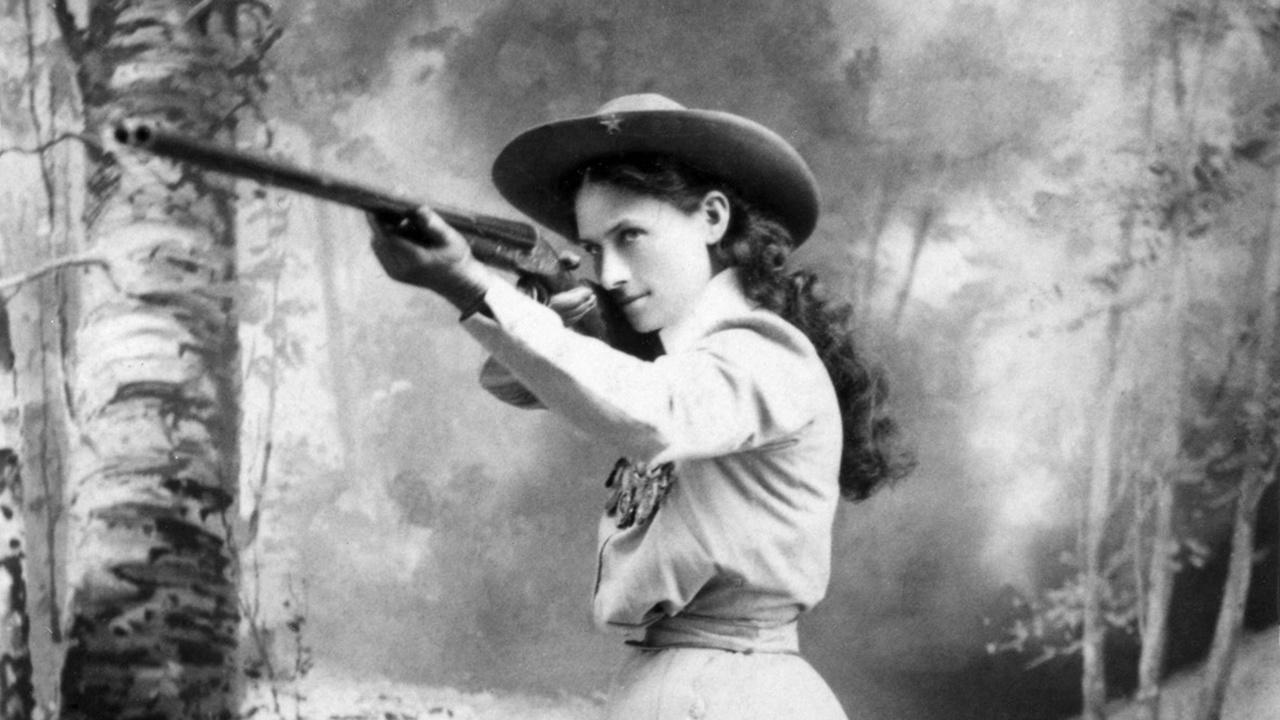
We all know about her talent, but what most people don’t know about is the love she and her husband had for each other, Frank Butler. Frank Butler was also a sharpshooter with his own traveling show. On Thanksgiving in 1876 they had a match, and Phoebe Ann Moses beat Frank. By June of the next year they were married in Oakley, Ohio. Phoebe Ann changed her name to “Annie Oakley”, and, as they say, the rest is history.
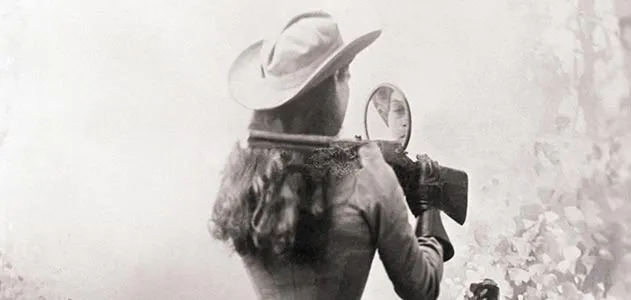 Even though over the years, Annie Oakley’s popularity far outdistanced her husband’s, Frank’s love for Annie grew even more. And they were always together. After injuries from a train accident and later an auto accident she retired, and Annie and Frank moved to Greenville, Ohio. Annie Oakley died in 1926 at the age of 66. Frank Butler was so devastated that he stopped eating and died 18 days later.
Kevin Costner Epic “Horizon: An American Saga”
The Western film genre has been eulogized since at least the early 1950s, but while it may occasionally falter in popularity, it’s never truly gone away. And this summer, Kevin Costner returns it to its proper place in the American cinematic firmament with his four-part Kevin Costner epic “Horizon: An American Saga”. Costner not only stars in the film, but he also returns to the director’s chair for the first time since 2003’s “Open Range” and co-wrote the script with Jon Baird.
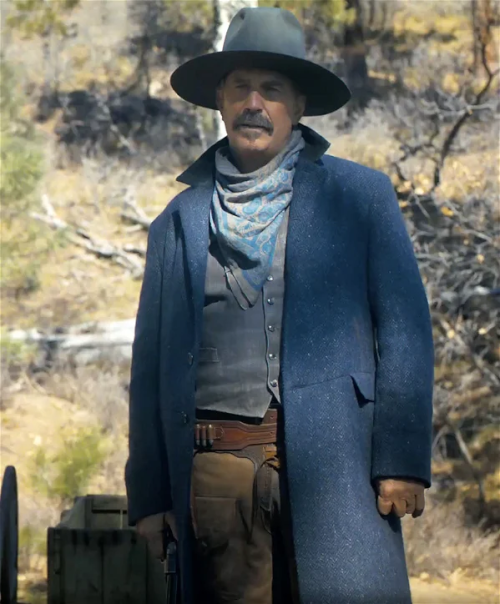 The film co-stars an ensemble cast consisting of Sienna Miller, Sam Worthington, Giovanni Ribisi, Jena Malone, Abbey Lee, Michael Rooker, Danny Huston, Luke Wilson, Isabelle Fuhrman, Jeff Fahey, Will Patton, Tatanka Means, Owen Crow Shoe, Ella Hunt, Jamie Campbell Bower and Thomas Haden Church.
Described as a two-part event, the film is scheduled to premiere at the 77th Cannes Film Festival on May 19, 2024, with Chapters 1 and 2 scheduled to be theatrically released in the United States on June 28, 2024 and August 16, 2024, respectively, by Warner Bros. Pictures.
Kevin Costner first commissioned Horizon as a single film in 1988, and later approached Walt Disney Pictures with the project after the release of his 2003 film Open Range. It was announced in January 2022 that Costner was set to direct and produce the film, a passion project for him, in addition to starring. It began casting in February. In April, Warner Bros. Pictures and New Line Cinema joined the production to distribute. In a June interview, Costner stated he plans to make four movies out of the premise, and was looking to cast over 170 speaking roles.
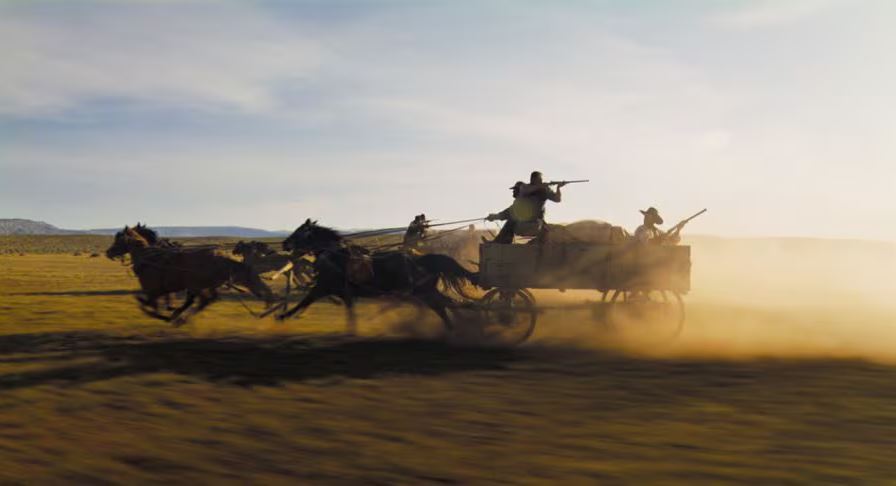
In August, Sienna Miller, Sam Worthington, Jamie Campbell Bower, Luke Wilson, Thomas Haden Church, Jena Malone, Alejandro Edda, Tatanka Means and Michael Rooker were cast in the film. Isabelle Fuhrman, Ella Hunt, Jeff Fahey and Tom Payne would be amongst numerous casting announcements made throughout September. In October, Will Patton, Owen Crow Shoe and Danny Huston were added to the cast.
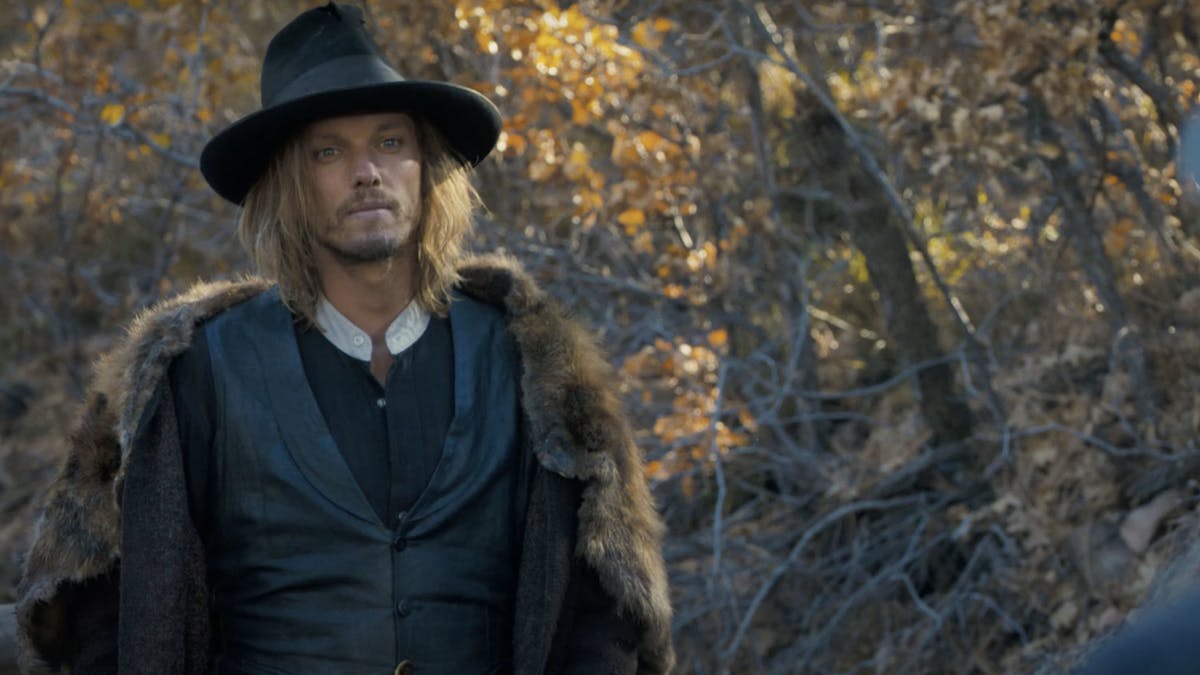
Filming of at least the first installment began on August 29, 2022 in southern Utah, concluding in November. Filming of the second installment began by May 2023, before concluding in the summer of that year.
Old West Vigilantes
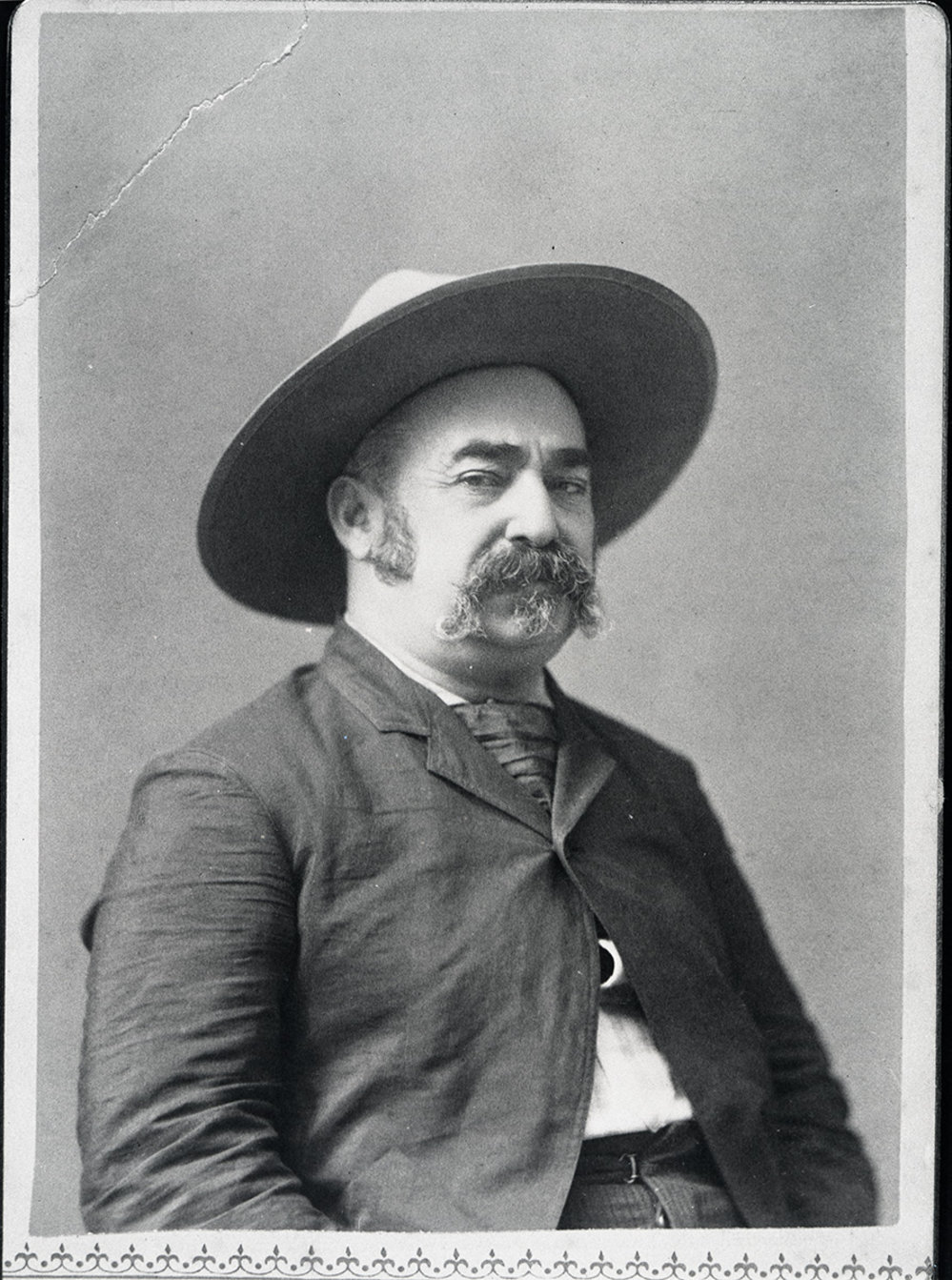 One of the aspects of the Wild West that has always intrigued me was the Old West vigilantes. I can understand the frustration with how many times crime was running rampant, with towns popping up ahead of the town’s infrastructure…which included the law.
And even in more developed towns, the law was handicapped because of the number of lawmen, the territory they had to cover, the technology and even that sometimes the lawmen were also the outlaws.
Probably the most amazing aspect of the vigilantes is that they were usually known by everyone…sometimes pictures were taken…yet I’m not aware of any vigilante being tried for his actions.
Why am I talking about this at this time? This is the birthday of one of the most famous Old West vigilantes, John X. Beidler or just “X” as he was known by everyone.
 He was a leader of the Montana vigilantes. Unlike most vigilantes, who tried to remain unknown, X relished the notoriety. He was the principal hangman for at least five of the vigilante’s victims, and he survived several narrow escapes in his relentless pursuit of dangerous men.
After Montana was rid of “The Innocents”…the name of the outlaw gang…the vigilantes disbanded. As an old man X fell on hard times and lived off the charity of people who remembered his service as a vigilante.
When he died in Helena, Montana, in 1890, his death certificate listed his occupation as “Public Benefactor.”
The James Gang’s Northfield Raid
 The movies show frontier town folk as being meek and easily intimated. But this was not so. These were people who were tough enough to brave the trip to the frontier, as well as being tough enough to endure frontier life. And after 1865 many were ex-soldiers. A good example of the toughness of the frontier people is the James Gang’s Northfield Raid that took back in 1876 on September 7.
The James-Youngers were the “cock of the walk.” They were robbing everything in sight. And even though the famous Pinkerton Detective Agency was after them, the Pinkertons were stymied at every turn. So, the gang decided to go to Northfield, Minnesota and rob a bank there.
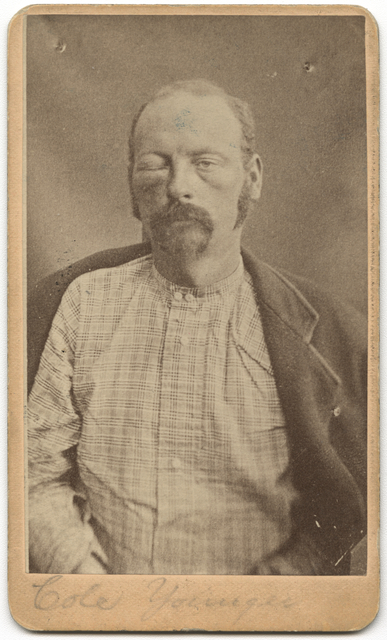
At the First National Bank, they demanded the money from the vault and Joseph Lee Heywood, the bank clerk on duty, was killed when he refused to open the safe. When the townspeople were alerted they attacked the robbers, defending their town and their savings. In the melee that followed, Nicholas Gustavson, a Swedish town resident, was killed, as were gang members Clell Miller and William Stiles.
The pursuit of the gang went on for weeks and covered 400 miles. The Youngers were eventually captured at Madelia, Minnesota, in another gun battle, in which gang member Charlie Pitts was killed. The three Younger brothers were tried in Faribault, found guilty of murder, and sentenced to life in the state prison at Stillwater.
The citizens of Northfield surrounded the bank and shot the robbers as they tried to escape. The result was that, with the exception of Jesse and Frank James, the gang was either shot up in Northfield or was captured by a posse some two weeks later.
It seems there was another gang known as the Daltons who had a similar problem in Coffeeville, Kansas.
Killers of the Flower Moon Trailer Released
The Killers of the Flower Moon trailer has debuted today. Based on the 2017 non-fiction book Killers of the Flower Moon: The Osage Murders and the Birth of the FBI by American journalist David Grann, Killers of the Flower Moon will be Scorsese’s first outing since 2019’s Oscar-nominated The Irishman debuted on Netflix. Enjoy the Killers of the Flower Moon trailer here:
Initially scheduled to enter production in 2018, Killers was one of the many film projects hobbled by the pandemic, and didn’t get off the ground properly until February 2021. Its ballooning $200 million budget apparently makes it the most expensive film ever shot in Oklahoma – judging by the epic scale of the trailer, it’s not hard to see why.
Starring DiCaprio alongside Lily Gladstone, Brendan Fraser, Jesse Plemons and Scorsese stalwart Robert De Niro, the plot centres on a series of murders taking place in Osage County and Washington County in the early 1920s, after large oil deposits were discovered underneath land owned by the Osage people.
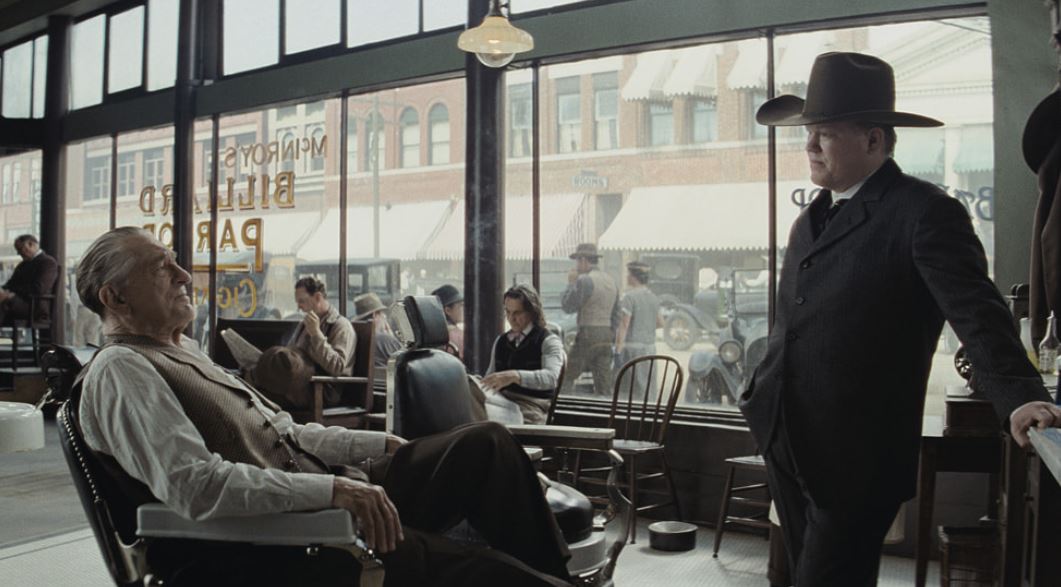
According to a Deadline feature on the making of the film, Scorsese and his two leads agreed early in pre-production that they did not want to “serve up a white-savior Western” that focused on the heroic deeds of FBI agent Tom White –the character DiCaprio was initially slated to play. DiCaprio reportedly suggested shifting the focus of the film to one of the suspects, Burkhart, and he wound up with the role, while Jesse Plemmons came on to olay White. De Niro plays William Hale, the uncle of Burkhart, and a key figure in the film’s central conspiracy.
“I’d read the book a few years earlier and the Tom White character was more prominent,” De Niro told Deadline. “That was right for the book, but Marty and Leo’s idea to focus on the relationship between Bill and Ernest made sense to me. They wanted to focus more on that dynamic instead of Tom White coming in and saving the day.”
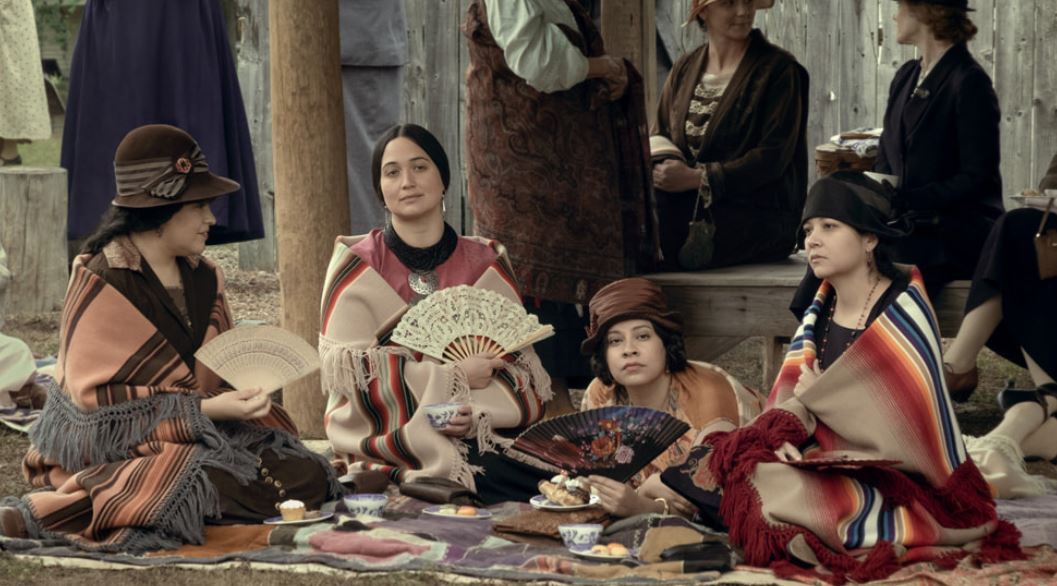
Killers of the Flower Moon has its world premiere coming up at the Cannes Film Festival on Saturday 20th May, and will release worldwide in cinemas on October 6, before streaming globally on AppleTV+.
Terror on the Prairie – American Western Film
Terror on the Prairie is a 2022 American Western film directed by Michael Polish and written by Josiah Nelson. Produced by The Daily Wire, and Bonfire Legend, and distributed by The Daily Wire and Voltage Pictures. The film follows a family of pioneers as they defend themselves from a vicious gang of outlaws hell-bent on revenge on the Montana plains. The film features the cast of Gina Carano as Hattie McAllister, Donald Cerrone as Jeb McAllister, and Nick Searcy starring as The Captain, with Rhys Jackson Becker, Gabriel-Kane Day Lewis, Tyler Fischer, Heath Freeman, Samaire Armstrong, and Matthias Hues all featured in supporting roles.
 Several years after the end of the Civil War Jeb and Hattie McAllister struggle to raise their adolescent son Will and infant daughter in the wilds of Montana. Hattie expresses her desire to return to her families own land against Jeb’s wishes to be self reliant and to be capable of raising their family on the own. After Jeb leaves to go to the town to look for work, four strangers arrive and ask Hattie for some food and water—although, once she sees they have collected scalps and are killers, she kicks them out. However, the outlaws do not go far. Instead, a stand-off emerges after repeated attempts to break into the McAllister cabin are foiled by Hattie and Will.
 Film Threat’s Alan Ng gave the film a score of 8.5 out of 10, stating that “If you like your westerns gritty, violent, and viscerally brutal, you’re in for a fun popcorn night at home.” Ng also spoke positively of Carano and Searcy’s performances. Wade Major of CineGods, awarding three out of four stars, described Terror on the Prairie as “below the surface, it’s a grueling — and often gruesome — meditation on the lingering self-inflicted wounds left by the American Civil War in far-flung locales like frontier Montana and beyond.” Major spoke highly of Searcy and Day Lewis’s performances, though of Nelson’s screenplay had stated that it “largely hews to formula, but it’s a competent effort with well-drawn, if archetypal, characters and strong, credible dialogue.” Christian Toto wrote, in his review for Hollywood in Toto, “Terror on the Prairie lags a bit in the middle thanks to a protracted stand-off. Perhaps a bigger budget would let the production insert flashbacks or other scenes to enhance the story. Otherwise, the film charges forward, letting us marvel at how Hattie improvises on her children’s behalf.”
“Dead For A Dollar” – New Walter Hill Western
The title of the new Walter Hill Western “Dead for a Dollar” makes it sound like a spaghetti Western, and the picture opens with stunning vistas and a wistfully valorous neo-Morricone score that gives you the impression — maybe the hope — that it will be. It ends on a very different note: a series of titles explaining, with precise dates and details, what happened to each of the main characters, as if the film were based on a true story. Veteran bounty hunter Max Borlund heads deep into Mexican territory to find and return Rachel Kidd, the wife of a wealthy businessman. After learning she actually fled from the abusive marriage, Max faces a choice: finish the job he’s been hired to do, or stand aside while ruthless mercenary outlaws and his longtime rival close in on a town that’s been his temporary sanctuary.

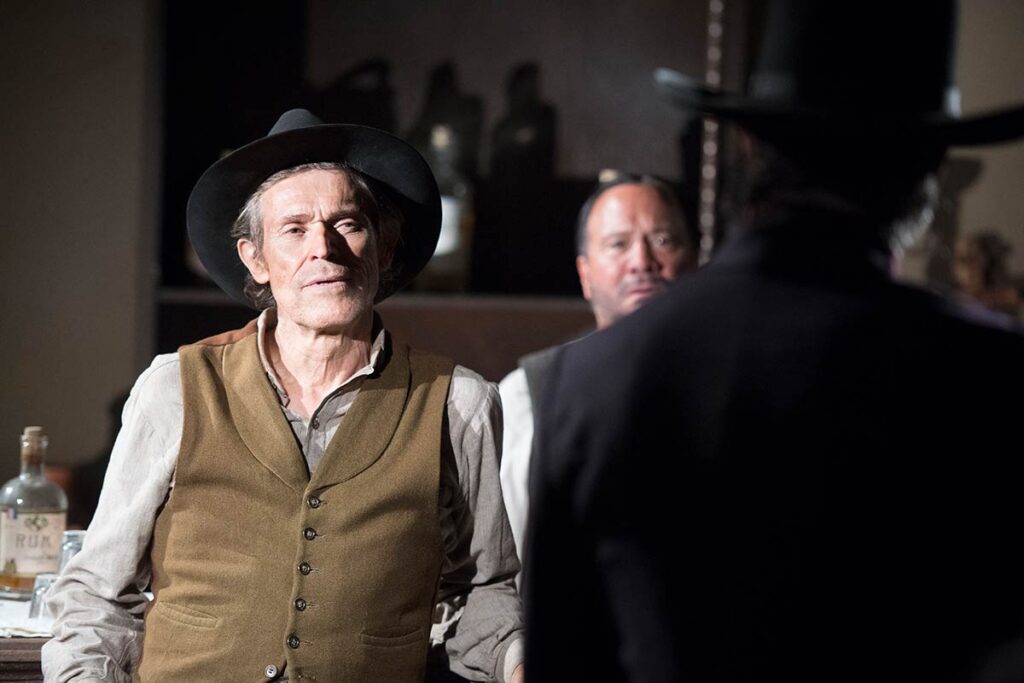
Hill, who is now 80 but still directs with his lean-and-mean vigor and classical rawhide stoicism (the movie is dedicated to Budd Boetticher, the legendary low-budget Western director of the ’50s), builds “Dead for a Dollar” around a vintage confrontation between two men: Max Borlund, a bounty hunter played by Christoph Waltz with a worldly twinkle that basically allows him to parade himself as an impish assassin, and Joe Cribbens, a gambler and outlaw played by Willem Dafoe as the most live-and-let-live of sociopaths. These two live, in deed or spirit, outside the law. They’ve known each other a long time and collide in the opening scene, when Joe is being released from prison. But then they go their separate ways. The film turns its attention to Max on his latest mission-for-hire, which involves several characters you would never have seen in a Budd Boetticher movie of the ’50s, or even a Walter Hill Western of the ’70s or ’80s.
Benjamin Singleton and the “Colored Exodus”
 It was early 1877. The Civil War had been over for more than ten years. But blacks still didn’t have the freedom they had hoped for. Tenant farming had replaced the plantation system. Because of the price of rented land, and supplies, the black farmer seldom broke even at the end of the year. So, they started looking for somewhere else that would give them true opportunity. Prior to the Civil War, by the vote of the residents, Kansas had changed from a slave to a free state. Although blacks had moved to Kansas on an individual basis, the first serious attempt to establish a black colony was on March 5, 1877 when Benjamin Singleton led a group from Tennessee to Baxter Springs located in the southeast corner of the state. Cherokee County Colony, Singleton Colony, Hill City, and Nicodemus Town followed. Most failed because of poor leadership, the transient nature of the emigrants, and having only marginal land available for settling.
It’s estimated that between fifteen and twenty thousand blacks migrated to Kansas in just a two-month period. Realizing the loss of cheap labor, southern landowners tried to stop the migration with intimidation and attacks against those involved in the “Colored Exodus.”
The biggest obstacle for blacks was that they had little or no money when they started their trek to Kansas. Many had only the possessions they could carry on their backs. However, they were assisted with relief efforts along the route from churches and private citizens.
By 1879 word got back to the south that the Kansas immigrants were facing tremendous problems in establishing a new life, and almost as fast as it started, the Kansas immigration dropped off to a trickle, and stopped.
Chuckwagon: Cowboy Beans
Cowboy Beans
Ingredients:
2 cups dried red beans
2 cups dried pinto beans
1 large yellow onion, chopped
3 tablespoons garlic, chopped
3 green chile peppers, grilled and diced
3 vine-ripened tomatoes, grilled, seeded and chopped
1 tablespoon vegetable oil
7 quarts water or vegetable stock
1 smoked ham hock
1 teaspoon toasted coriander seed
1 bay leaf
2 whole dried red chile peppers
Salt and pepper, to taste
Soak beans overnight in water to cover, changing water once; drain.
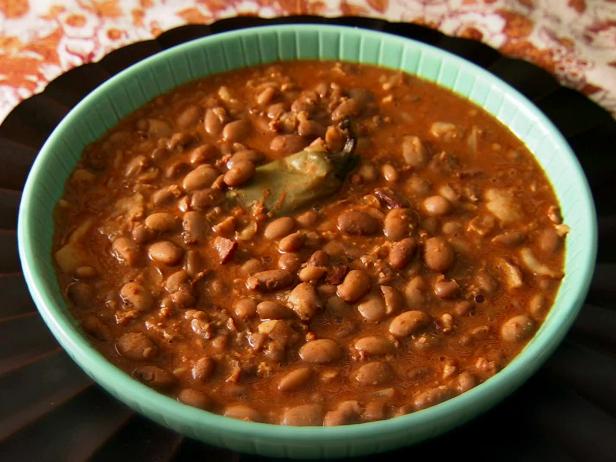
When cowboy beans are ready, saute onion, garlic, green chiles and tomatoes in oil in a large soup pot or Dutch oven over medium-high heat. Add water or stock and ham hock; bring to a boil. Add beans, coriander seed, bay leaf and dried chiles. Continue to boil for 30 minutes, then lower heat, cover and simmer for three to four hours, until beans are tender. Season with salt and pepper to taste. Makes 16 servings.
Murder at Yellowstone City – Old West Film Out Now
Murder at Yellowstone City, directed by Richard Gray (Robert the Bruce), is a Old West film written by Eric Belgau (Robert the Bruce) sees a former slave arrive in Yellowstone City, Montana—a desolate former boomtown now on the decline—looking for a place to call home. On that same day, a local prospector discovers gold—and is murdered. It was the first production to be shot on a new Western backlot at the site that was once the real Yellowstone City. Gabriel Byrne (Hereditary), Thomas Jane (The Expanse), Isaiah Mustafa (It Chapter Two), Richard Dreyfuss (Jaws), Nat Wolff (The Fault in Our Stars), Anna Camp (Pitch Perfect), Aimee Garcia (Lucifer), Scottie Thompson (The Blacklist), Emma Kenney (The Conners) and Zach McGowan (Shameless) star.
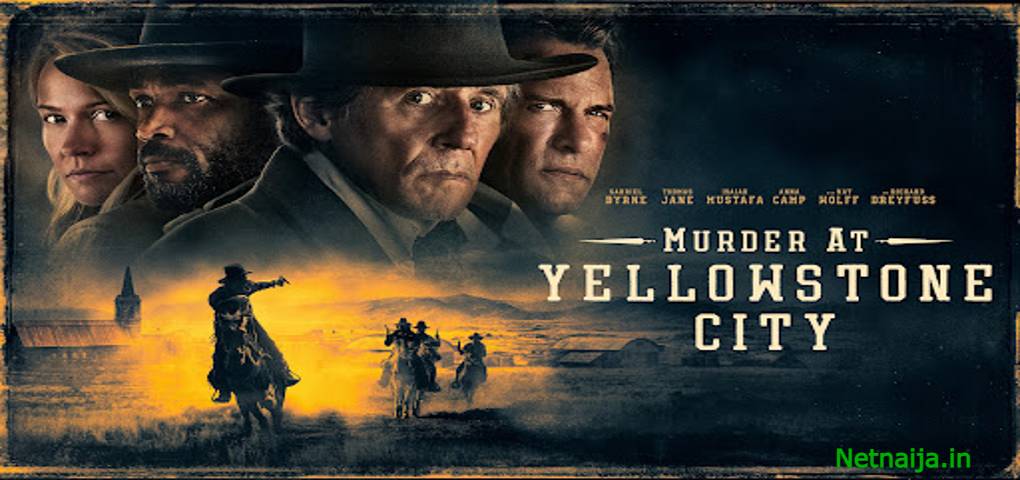
Murder at Yellowstone City was produced by Gray, Robert Menzies (The Blackcoat’s Daughter), Kelly Frazier (From Black) and Lisa Wolofsky (Fatman). Jane and Courtney Lauren Penn of Renegade Entertainment exec produced alongside Carter Boehm, Julie Stagner, Will Lowery and Alexis d’Amecourt.
“I’ve dreamed about the wild west since I was a kid, so to make this film with such a talented cast at our own western backlot in Montana is beyond my wildest dreams,” said Gray. “It’s the first film ever shot at the Yellowstone Film Ranch. It’s a really special story – a thrilling western. I can’t wait to share it with everyone.”
“We’re thrilled to be releasing MURDER AT YELLOWSTONE CITY,” added RLJE Films’ Chief Acquisitions Officer, Mark Ward. “This Old West film offers a unique twist on the classic western and we look forward to working with the filmmakers and talented cast.”

RLJE Films is a business unit of AMC Networks. Its recent and upcoming films include writer-director Riley Stearns’ sci-fi thriller Dual, starring Karen Gillan and Aaron Paul; David Oyelowo’s directorial debut The Water Man; Amber Sealey’s Ted Bundy pic No Man of God, starring Elijah Wood and Luke Kirby; and the apocalyptic holiday dramedy Silent Night from writer-director Camille Griffin,which stars Keira Knightley, Matthew Goode and Roman Griffin Davis.
Old West Gamblers
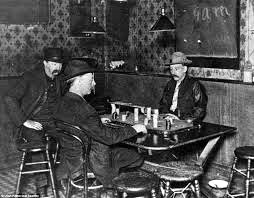 Old West gamblers who came out west wagered everything on the hopes of becoming prosperous and having a good life. That same spirit led them into gambling halls, and games of chance. One such game started on June 15, 1853 and ended 24 years later.
For people of the Old West gambling was a way of life. They risked their life by going into Indian Territory for furs, precious metal or land. They staked everything they owned on a herd of cattle being driven north. And for sure they enjoyed a game of chance.
There was faro, euchre, monte, casino, and, of course, poker…which, incidentally, was always dealt to the left of the player to make it easier to pull a gun with the right hand in case of irregularities. The origin of most games of chance came from Europe, with the exception of the old three walnuts and a pea, which started in America, probably on the streets of New York, where it still prospers.

Not only did cowboys loose their wages, but whole herds of cattle, and a cattleman’s entire wealth would change hands over night. A few wives were even offered to “match the pot.”
On June 15, 1853, in Austin, Texas Major Danelson and Mr. Morgan sat down to play poker, and evidentially with little to go home to, forgot to quit. The game went on for a week… then a month… a year became years. The Civil War broke out, was fought and lost, but these two Texas gentlemen still dealt the cards. Finally in 1872, 19 years after it started, both men died on the same day…but the game continued. Their two sons took over, and played for 5 more years.
Finally the game ended in 1877 when a railroad train killed one of the sons, and the other went crazy. Not that all these Old West gamblers weren’t crazy in the first place.
Old Henry (2021) – Great Old West Film
 With the gorgeous and stark grasslands of Waterford, Tennessee, standing in for 1906 Oklahoma, “Old Henry” opens with a scene worthy of Clint Eastwood’s Old West film such as “Pale Rider” and “Unforgiven”. Henry (Tim Blake Nelson) plays a widowed farmer and his estranged son Wyatt (Gavin Lewis), living out their days in a small, isolated patch of fertile land from which they scratch out a meager living. Things however, take an unexpected turn when a grievously injured stranger named Curry (Scott Haze) stumbles into their midst with a cash loot. Henry nurses the man back to health but is suspicious of Curry and the story he conjures. Soon enough a posse of unsavory characters headed by their vicious ringleader Ketchum (Stephen Dorff) turns up on their doorstep and all proverbial hell break loose.
By this point, we’ve come to suspect there’s more to Old Henry than meets the eye. He’s adept at tending to Curry’s wounds, he punches out Curry with fast efficiency at one point, he’s lightning-fast with a gun and he sure isn’t acting like a scared farmer when he’s told there’s a trio of killers headed this way. Writer-director Potsy Ponciroli does a magnificent job of creating a slow build of tension, punctuated by the occasional and stunning moment of violence. (There’s even a measure of dark and grisly humor, e.g., when a body is disposed of and hungry pigs are fed, and those are not disconnected occurrences.)

With beautiful, widescreen cinematography by John Matysiak, impeccable production design and a pitch-perfect score from Jordan Lehning, “Old Henry” is a well-paced and engrossing story — and that’s even before there’s a revelation that’s great (that we saw coming as soon as we heard a certain character’s name). The ensemble is uniformly excellent, but this is Tim Blake Nelson’s showcase from the moment he appears onscreen, and he delivers world-weary greatness every step of the way.
Billy the Kid Photo
 Years ago I commented on the Billy the Kid PBS special and how the famous Billy the Kid photo kept appearing on the screen over and over. That’s because there are only two authentic photographs of Billy the Kid presently in existence. The most famous one is a two-by-three-inch ferrotype or tintype, taken by an unknown itinerant photographer outside Beaver Smith’s Saloon in Old Fort Sumner, around 1880…Because it portrays Billy as a very unattractive person, many have called it his visa picture.
Originally people didn’t realize that since it was a tintype, the image was actually reversed. So, everyone though Billy the Kid was left handed. This misconception even inspired the 1958 movie “The Left Handed Gun,” starring Paul Newman as Billy.
Finally firearms experts looked at the Kid’s Winchester and noticed its spring plate, where the cartridges are loaded, was on the left side. But Winchester produced firearms with spring plates only on the right side. So, later books and publications have the reversed image reversed, so it’s correct.
Recently the Billy the Kid photo went on the auction block and a retired Wichita industrialist who collects everything from Wild West memorabilia to Picassos bought it for $2 million…Incidentally, it was thought it would go for about $300,000.
Heard Around the Bunkhouse #9 – Old West Speak
 In our feature Heard Around the Bunkhouse we bring you Western and Old West Speak that they used back in the Wild West. Even we are amazed by the humor and originality they used. Hope you enjoy them, and send us your favorite terms from those past times.
COLD AS A WAGON WHEEL: A person who has been dead for several days.
DEAD MEAL: A corpse.
NOT ONE’S FUNERAL: None of one’s business.
SHOTGUN CHAPS: Leather leggings that encased the whole leg. The looks are similar to a double barreled shotgun.
SHOTGUN HOUSE: A house built with all the rooms in a row.
Chuckwagon: Fricasseed Racoon Recipe
Fricasseed Racoon Recipe
 1 Raccoon
1 onion, sliced into rings
1/2 C vinegar
1 1/2 C water
2-3 T lard or other fat
1 bay leaf
For the Fricasseed Racoon Recipe skin the raccoon, remove the musk glands and dress out the carcass. Soak in salt water overnight to draw out the blood. Baking soda can be added to the water to remove any gamey smell. Cut raccoon into serving pieces and dredge in flour seasoned with salt and pepper. Brown in hot fat. Add remaining ingredients. cover and simmer 2 hours or until tender. Thicken the juice with flour and water mixture for gravy. Serve hot with cornbread.
Outer Range: Sci Fi Western Television Series
Outer Range is an American science fiction Sci Fi Western television series created by Brian Watkins and starring Josh Brolin. It premiered on Amazon Prime Video on April 15, 2022.
Royal Abbott is a Wyoming rancher, fighting for his land and family, who discovers a mysterious black void in the pasture, following the arrival of Autumn, a drifter with a connection to Abbott’s ranch. While the Abbott family copes with the disappearance of their daughter-in-law Rebecca, they are pushed further to the brink when a rival family, the Tillersons, try to take over their land.

In February 2020, it was announced that Josh Brolin had signed on to star in Outer Range. The Western television series is executive produced by Brolin, Brian Watkins, Zev Borow, Heather Rae, Robin Sweet, Lawrence Trilling, Amy Seimetz, Tony Krantz, and Brad Pitt through his Plan B Entertainment. In December 2020, it was announced that Lewis Pullman, Noah Reid, Shaun Sipos, and Isabel Arraiza had joined the cast, alongside Brolin, Imogen Poots, Lili Taylor, Tamara Podemski, and Tom Pelphrey.
The series marks Brolin’s first television series role in nearly 20 years. The Western Sci Fi series was filmed over the course of eight months in Las Vegas, New Mexico.
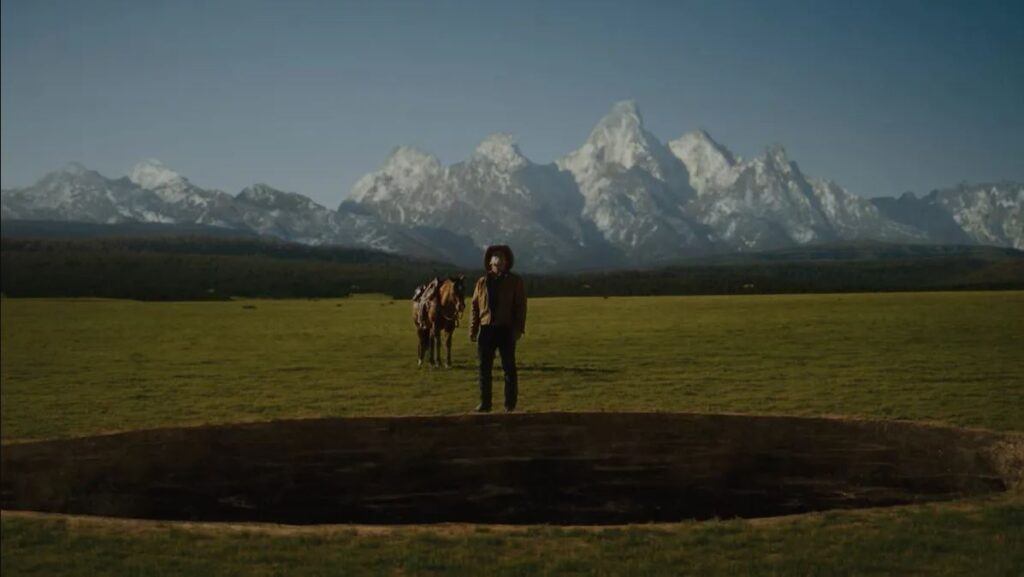
Creator Brian Watkins says: “That part of Wyoming is like God’s country. The soil is so rich. The topography is so beautiful. It’s one of the most miraculous, wondrous places on earth. And I think the reason it was important to keep them as a traditional ranching family that was really humble was to really explore characters that stand on values, that stand on principles that really embody what it means to not care about money, but to rather care about people and land and animals and things like that. I think over the course of the season, we also see how those principles are thrown into question and they’re challenged and they’re faced with the unknown in a certain way that it really helps each character look at the very ground that they’re standing on and what it means to them in the midst of an inexplicable world.”